
Reviving Expertise: Ford’s Bold Embrace of Experience in the Age of AI
A Shift in Strategy
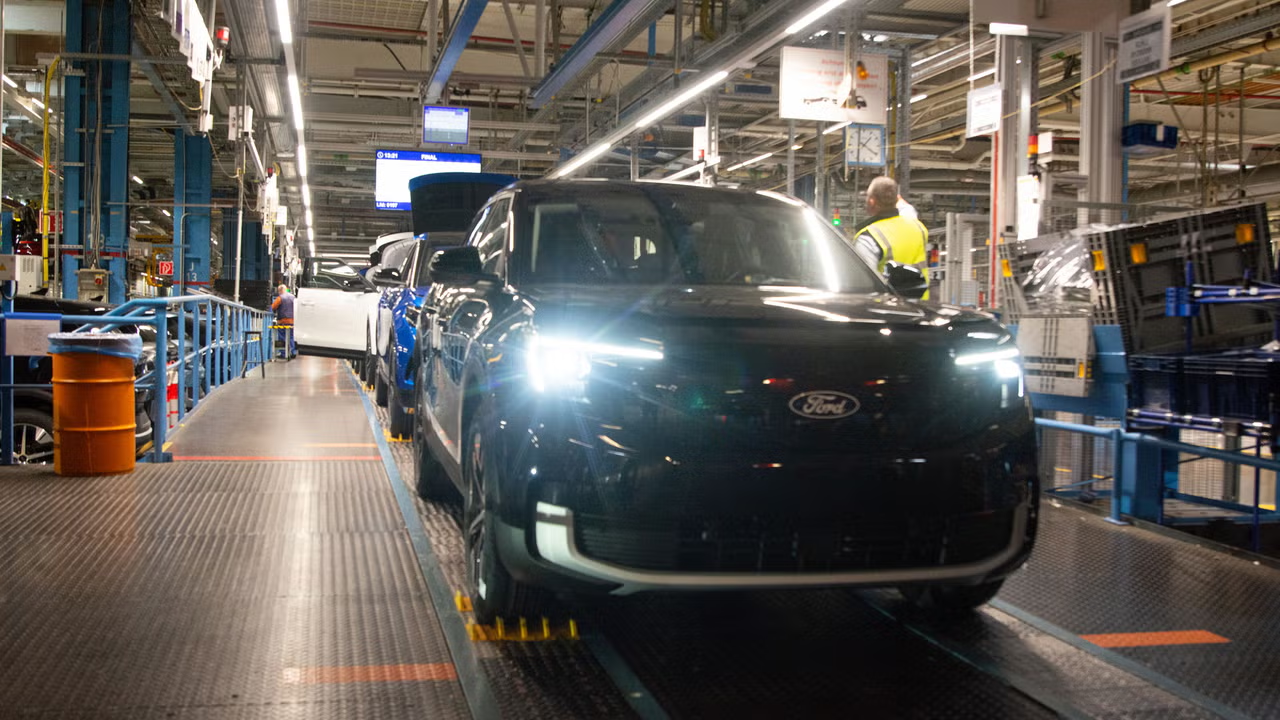
In an era where artificial intelligence is heralded as the panacea for corporate challenges, Ford Motor Company has taken an unconventional step that reaffirms the irreplaceable value of human expertise. Amidst a backdrop of record recalls and persistent quality control issues, Ford executives recently made headlines by acknowledging that AI alone could not rectify their production shortcomings. This revelation not only challenges the prevailing narrative surrounding technological advancement but also underscores the importance of experienced personnel in shaping quality outcomes.
The Unforeseen Consequence of AI Dependency
In pursuit of efficiency and shareholder satisfaction, many companies have rushed to integrate AI into their operations, often overlooking the foundational knowledge that seasoned employees bring to the table. Ford’s VP, Charles Poon, remarked that the automaker’s reliance on artificial intelligence to enhance product quality had faltered primarily due to a lack of institutional knowledge infused into these systems. “Artificial intelligence is a fantastic tool, but it’s only as good as the information you use to train it,” he stated, highlighting a critical gap in their approach.
Bridging the Knowledge Gap
To address these challenges, Ford has made a strategic decision to rehire approximately 350 veteran engineers, affectionately termed “gray beards.” This move reflects a recognition that the deep-seated expertise of these individuals, many of whom have navigated multiple product cycles, is invaluable. By reintegrating these experienced professionals into their workforce, Ford aims to create a synergy between traditional wisdom and cutting-edge technology, thereby enhancing the efficacy of their AI-driven tools.
Quality Metrics and Market Performance
Interestingly, Ford’s decision comes at a pivotal moment. While grappling with an unprecedented number of recalls, the company also reported an improvement in its initial vehicle quality ratings, significantly elevating its standing in comparison to mass-market competitors. This duality of experience—dealing with immediate quality issues while simultaneously striving for excellence—paints a portrait of a company in evolution.
Redefining the Value of Experience
The implications of Ford’s strategy extend beyond its assembly lines. In a business landscape increasingly enamored with youth and technological fluency, this move highlights the critical role of older employees. As organizations frequently chase after younger talent, they often overlook the broader context of workforce dynamics. Dan Pontefract, a noted author, emphasizes that older workers provide essential scaffolding for skills transfer, institutional memory, and cultural continuity. Ford’s recent actions serve as a reminder that the experience and wisdom of seasoned professionals are not merely optional in today’s workforce; they are essential for sustaining a competitive edge.
Lessons for the Broader Business Landscape
Ford’s approach offers valuable insights for companies across various sectors grappling with similar challenges. As industries evolve, the intersection of technology and human capital will define future success. Businesses must recognize the potential pitfalls of over-reliance on AI and automation without the guiding hand of experienced professionals. As Ford has demonstrated, fostering a culture that values both innovation and experience can lead to transformative outcomes.
In a city like Miami, where innovation and tradition often collide, Ford’s renewed commitment to its seasoned engineers resonates deeply. The local business landscape thrives on a similar ethos, where blending cutting-edge advancements with the rich knowledge of seasoned professionals can create a dynamic environment poised for growth.
Conclusion: A New Paradigm for Innovation
As Ford navigates the complexities of modern automotive manufacturing, its experience-driven strategy offers a refreshing perspective on the value of human insight in an AI-dominated world. This paradigm shift not only paves the way for enhanced product quality but also fosters a more inclusive approach to workforce development. In the quest for excellence, it becomes increasingly clear that the fusion of technology and experience is not just beneficial; it is essential for sustainable success.
Editorial note: This article was created by A Bit Lavish Miami’s Magazine as an original editorial reinterpretation based on publicly available reporting. Original source: fastcompany.com. Read the original article here: https://www.fastcompany.com/91566868/ai-couldnt-fix-quality-problems-so-ford-rehired-its-most-experienced-engineers.
Images are used for editorial reference with source credit. If an image requires correction or removal, please contact A Bit Lavish.










Navigating Decision Fatigue: Strategies for Mental Clarity and Leadership
Explore innovative strategies to combat decision fatigue, preserving mental energy for crucial...
 2 Mins read
The Unexpected Ascendancy of The Cheesecake Factory: A Culinary and Financial Marvel
Explore how The Cheesecake Factory's innovative strategies and robust performance have positioned...
2 Mins read

Navigating the Intersection of Leadership and Motherhood in the Modern Workplace
Karoline Leavitt’s resignation highlights the challenges faced by working mothers amid increasing...
2 Mins read



Revolutionizing School Safety: The Emergence of Smart Evacuation Systems
Explore how innovative evacuation systems like Go To Green are transforming school...
3 Mins read
