
A Harmonious Fusion: Su Xiaobai’s Lacquer Masterpieces in a Historic Setting
 ABLUpdated 5 months Ago2 Mins read145
Where Tradition Meets Modernity
In the heart of a 15th-century palazzo, a captivating exhibition unfolds, showcasing the extraordinary lacquer paintings of contemporary artist Su Xiaobai. This unique display presents an opportunity to witness the fusion of ancient Chinese lacquer techniques with the bold strokes of European abstraction, creating a dialogue that transcends time and geography.
Artistry Rooted in Heritage
Su Xiaobai’s work is steeped in the rich traditions of Chinese art, particularly the meticulous craftsmanship of lacquer painting, a technique that dates back thousands of years. This ancient art form involves layering resinous lacquer, often derived from the sap of the lacquer tree, to create intricate surfaces that are both tactile and visually striking. Su’s dedication to this craft not only honors its historical significance but also reinvents it through a contemporary lens.
European Abstraction: A New Dimension
What sets Su’s lacquer paintings apart is his seamless integration of abstract expressionism—a movement characterized by its emphasis on spontaneous, automatic, or subconscious creation. By marrying the precision of Chinese lacquer techniques with the fluidity and emotional depth of European abstraction, Su creates a body of work that invites viewers to engage with the pieces on multiple levels. Each work is an exploration of color, texture, and form, provoking a visceral response that resonates beyond the visual.
A Palette of Possibilities
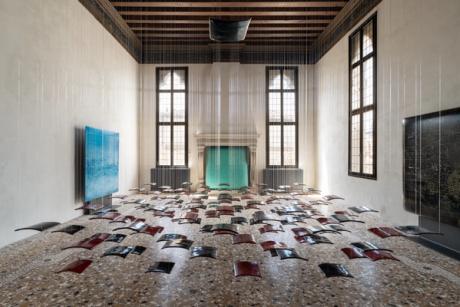
In this exquisite exhibition, viewers are greeted by a vibrant spectrum of colors, ranging from deep reds and blacks to subtle golds and muted earth tones. These hues, so meticulously layered by Su, are more than mere aesthetics; they embody a conversation about cultural identity and artistic innovation. The lacquer, with its rich sheen and reflective quality, transforms the perception of space and light, engaging the viewer in a sensory experience that is both rare and profound.
Provenance and Market Significance
As collectors and investors navigate the evolving art market, Su Xiaobai’s work stands out not only for its aesthetic appeal but also its significance as a cross-cultural narrative. The rarity of true lacquer paintings—especially those that push boundaries in contemporary art—positions Su’s pieces as desirable assets for discerning collectors. His growing recognition within international art circles further enhances the provenance of his work, making it an exciting prospect in the ever-competitive art market.
The Collector’s Perspective
For art collectors, the allure of Su Xiaobai’s lacquer paintings transcends mere investment; it is about acquiring a piece of history and a fragment of an artist’s journey. Collectors are increasingly drawn to works that tell a story, that embody a unique intersection of cultures and traditions. Su’s paintings not only fulfill this desire but also offer a canvas for introspection, dialogue, and exploration of identity in an increasingly globalized world.
Miami’s Cultural Landscape
As Miami continues to establish itself as a vibrant hub for contemporary art, exhibitions like Su Xiaobai’s serve as a reminder of the city’s diverse cultural tapestry. The melding of various artistic traditions resonates deeply with the multicultural fabric of Miami, where influences from Latin America, Europe, and beyond converge. In this context, Su’s work invites local collectors and art enthusiasts to appreciate the beauty of cross-cultural exchanges and the dialogues they inspire.
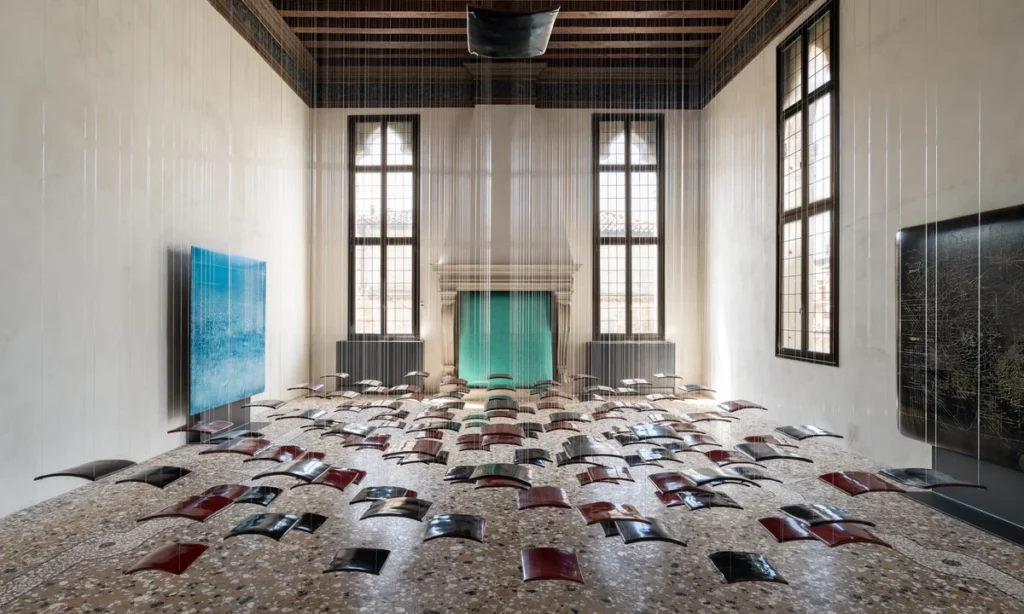
With an exhibition set against the backdrop of a historic European palazzo, Su Xiaobai’s lacquer paintings become more than just art; they transform into a narrative of connection—a celebration of heritage, innovation, and the timeless nature of art itself.
Editorial note: This article was created by A Bit Lavish Miami’s Magazine as an original editorial reinterpretation based on publicly available reporting. Original source: theartnewspaper.com. Read the original article here: https://www.theartnewspaper.com/2026/05/11/melding-chinese-lacquer-with-european-abstraction.
Images are used for editorial reference with source credit. If an image requires correction or removal, please contact A Bit Lavish.




A Celebration of Heritage: The Ukrainian Museum’s 50th Anniversary and Its Artistic Tribute
Explore the Ukrainian Museum in New York's 50th anniversary, highlighting an artistic...
ABL2 Mins read
A Call to Action: The Whitney Museum Workers Stand for Change
Exploring the implications of the Whitney Museum workers' decision to strike, we...
 2 Mins read
Navigating the Waters of Art Restitution: A California Test Case
Exploring the implications of recent lawsuits concerning Nazi-looted art and the potential...
2 Mins read
A New Era at the Vancouver Art Gallery: Co-Leadership and Vision
Explore the transformative leadership of Eva Respini and Sirish Rao at the...
3 Mins read