

Navigating the Road to Democratic Elections
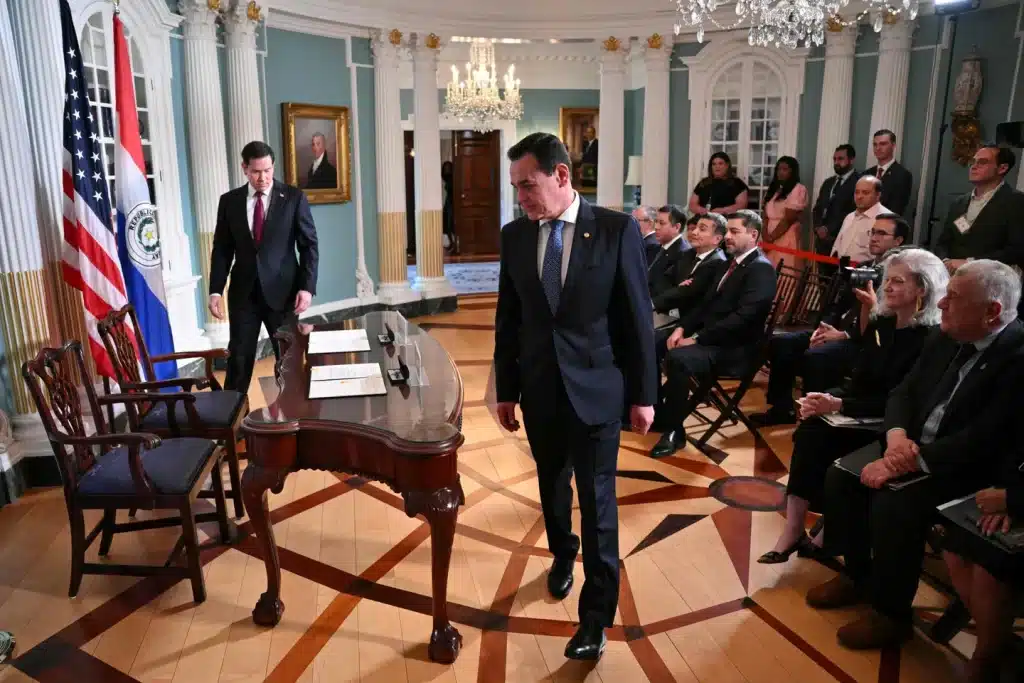
In an era marked by political upheaval and hope for change, U.S. Secretary of State Marco Rubio recently underscored the complexity of Venezuela’s journey towards free and transparent elections. Addressing a gathering of international officials, Rubio emphasized the importance of laying a solid foundation for democracy, which, he asserts, is essential for the country’s future.
The Essential Building Blocks
Rubio outlined several critical prerequisites for a successful democratic transition. He highlighted the necessity of ensuring freedom of the press, the inclusion of multiple political parties, national reconciliation, and a robust electoral body capable of delivering a trustworthy vote count. These elements are crucial for fostering an environment where Venezuelans can exercise their rights and make informed choices at the ballot box.
Patience and Persistence: The Call for Time
Despite the palpable desire for immediate change, Rubio cautioned that the path to democracy is not instantaneous. He reassured stakeholders that while the situation is evolving, it requires both persistence and a measured approach. “Not years, but certainly some time will be needed to achieve this goal,” he stated, conveying a sense of realism about the challenges ahead.

Dual Focus: Economic Recovery and Political Transition
Rubio’s remarks also revealed a two-pronged strategy pursued by Washington: enhancing economic recovery to improve the quality of life for Venezuelans while simultaneously facilitating a political transition that invites participation from all societal sectors. This holistic approach signifies a commitment to not merely replace leadership but to cultivate a more inclusive and representative governance structure.
Engaging the Venezuelan Political Landscape
One of the most significant aspects of Rubio’s discourse was the acknowledgment of the Venezuelan political landscape’s role in this transition. He stated that the engagement of local political actors is paramount to ensure that the future government reflects the will of its citizens. “The Venezuelan political society has a fundamental role to play in this process,” he remarked, highlighting the importance of domestic involvement in shaping a new era for the country.
Looking Ahead: The Vision for Reconciliation
As the international community watches closely, Rubio’s vision extends beyond a simple governmental shift. He advocates for a true national reconciliation process, aiming to unite a divided populace and establish strong institutional foundations. This vision reflects a deep understanding of the complexities involved in transitioning from authoritarian rule to democracy, recognizing that the scars of division must be healed to forge a path forward.
Conclusion: A Shared Responsibility
In his discussions, Rubio has not only articulated the challenges faced by Venezuela but has also illuminated the shared responsibility of both the Venezuelan people and the international community. The journey towards democracy is fraught with obstacles, yet the call for patience, persistence, and collective action resonates as a guiding principle. As Miami continues to be a hub for Venezuelan expatriates and a center for discussions on Latin American politics, the implications of these developments remain profoundly relevant.
Editorial note: This article was created by A Bit Lavish Miami’s Magazine as an original editorial reinterpretation based on publicly available reporting. Original source: efectococuyo.com. Read the original article here: https://efectococuyo.com/internacionales/marco-rubio-paciencia-de-meses-no-de-anos-para-las-elecciones-libres/.
Images are used for editorial reference with source credit. If an image requires correction or removal, please contact A Bit Lavish.








Shooting of Venezuelan DoorDash Driver by ICE Agent in Austin Sparks Protests
The shooting of a Venezuelan DoorDash driver by an ICE agent in...
 2 Mins read
Shooting of Venezuelan Man by ICE Officer in Austin Raises Public Safety Concerns
The shooting incident involving a Venezuelan man by an ICE officer in...
1 Mins read
Venezuela Extradites 18 Suspects in Assassination of Haiti’s President to the U.S.
The extradition of suspects in the assassination of Haiti's president marks a...
2 Mins read


Human Rights Watch Calls on Venezuela to Uphold Basic Rights and Release Political Prisoners
The international human rights organization urges the Venezuelan government to protect fundamental...
2 Mins read
