
Bridging History: A Dialogue Between David Drake and Paul Revere at MFA Boston
A Convergence of Craftsmanship and Legacy
In a remarkable move that underscores the evolving narrative of American art, the Museum of Fine Arts in Boston has curated an exhibition that juxtaposes the works of two figures from vastly different backgrounds: David Drake, an enslaved potter, and Paul Revere, the esteemed silversmith and patriot of the American Revolution. This exhibition is not merely a presentation of artifacts; it is an exploration of the complex interplay between artistry, societal roles, and historical significance.
David Drake: The Voice of a Silenced Artist
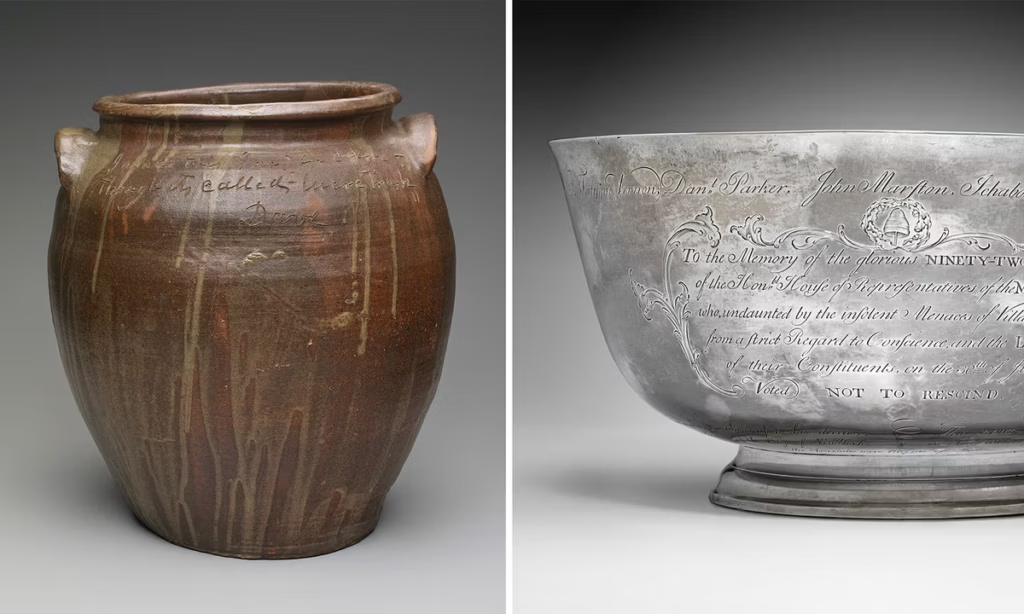
David Drake, often referred to as “Dave,” was not just a craftsman; he was a storyteller, using clay as his medium to express his experiences and observations. His work transcended mere functionality, embodying the rich cultural heritage of African American craftsmanship during a time of profound social injustice. Drake’s clay vessels, inscribed with poetry and personal reflections, serve as poignant reminders of his resilience and creativity under the constraints of enslavement.
Paul Revere: Crafting a New Nation
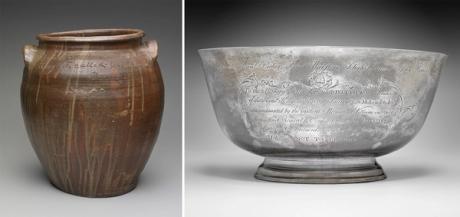
In stark contrast, Paul Revere stands as a symbol of American independence and innovation. Renowned for his role as a silversmith, Revere’s creations are emblematic of the burgeoning American identity in the 18th century. His work reflects not only the technical prowess of colonial artisans but also the spirit of a nation on the brink of revolution. By placing Revere’s exquisite bowl alongside Drake’s jar, the MFA Boston invites viewers to engage in a dialogue about the differing narratives that shaped early America.
Rarity and Market Significance
Both artists represent rarities in the American art market, yet from dramatically divergent perspectives. The pieces crafted by Revere are often regarded as treasures, sought after by collectors and institutions alike, while Drake’s works, though equally significant, present a different challenge in terms of provenance and valuation. Understanding the market for these artists requires a nuanced appreciation of their backgrounds and the historical contexts in which they created.
A Cultural Reflection
This exhibition is not just about showcasing craftsmanship; it is a reflection of the cultural landscape of America. The pairing of Drake and Revere serves to highlight the complexities of American history—where the legacies of oppression and valor intersect. It encourages collectors and art enthusiasts to reassess their understanding of value, not just in monetary terms but as a measure of impact and narrative significance.
Collecting with Purpose
For contemporary collectors, the importance of provenance has never been more pronounced. As art enthusiasts navigate the market, the stories behind the pieces they acquire become integral to their value. The MFA Boston’s exhibition serves as a case study in this regard, illustrating how the legacies of artists like Drake and Revere can add depth to a collection. Collectors are increasingly drawn to works that tell stories and reflect diverse narratives, adding layers of meaning to their investments.
Conclusion: A New Lens on American Art
The Museum of Fine Arts Boston’s innovative exhibition is a testament to the power of art as a medium for storytelling and cultural reflection. By placing the works of David Drake and Paul Revere in conversation, it not only honors their individual legacies but also challenges viewers to consider the broader historical context in which they existed. This exploration deepens our appreciation for the intricacies of American art and history, making it a noteworthy destination for those who seek to engage with the past through the lens of creativity.
Editorial note: This article was created by A Bit Lavish Miami’s Magazine as an original editorial reinterpretation based on publicly available reporting. Original source: theartnewspaper.com. Read the original article here: https://www.theartnewspaper.com/2026/06/15/museum-fine-arts-boston-david-drake-paul-revere-american-galleries.
Images are used for editorial reference with source credit. If an image requires correction or removal, please contact A Bit Lavish.









Navigating Fantasy: The Allure of Rare Literary Cartography
Explore the captivating intersection of literature and cartography in an upcoming Zurich...
 3 Mins read

Cuauhtémoc Medina: Curatorial Visionary Set to Elevate Guatemala’s Bienal de Arte Paiz
Explore the profound impact of Cuauhtémoc Medina's curatorial approach as he prepares...
2 Mins read

Unveiling Deception: The Forgery Scandal Shaking the Art World
An in-depth exploration of the Giuliano Ruffini forgery scandal, its implications for...
2 Mins read



Transition at the Top: A New Era for the Art Gallery of Ontario
As Stephan Jost steps down from his role at the Art Gallery...
2 Mins read
