
Courtroom Controversy: A Judge’s Dismissal in the Trump Library Case
A Shifting Legal Landscape
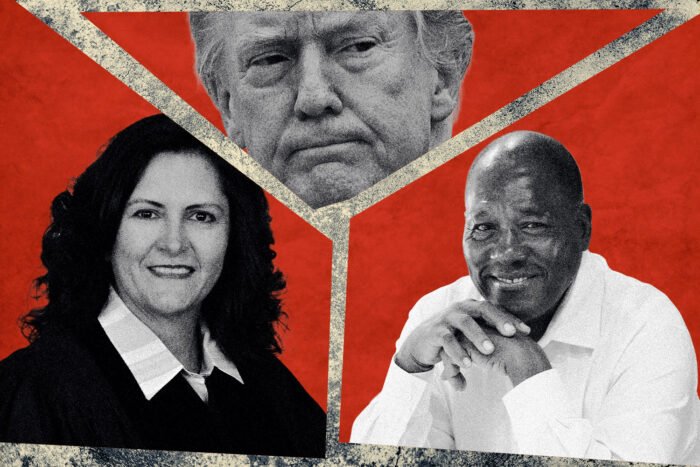
In a notable twist within Miami’s legal arena, the case surrounding Miami Dade College’s controversial land donation for former President Donald Trump’s presidential library has taken a significant turn. The Miami-Dade Circuit Judge Mavel Ruiz has been disqualified from overseeing the proceedings due to allegations of perceived bias, raising questions about the integrity of judicial processes in high-stakes cases.
The Heart of the Dispute
The legal battle centers on a decision made by the board of trustees at Miami Dade College to donate a prime piece of real estate—specifically, a 2.6-acre parcel valued at an estimated $67 million. This land is intended for Trump’s proposed presidential library, a project that has generated both support and opposition within the community. Local historian and activist Dr. Marvin Dunn spearheaded the challenge against this land transfer, arguing that the decision lacked transparency and failed to consider the broader implications for the community.
Judicial Impartiality Called into Question
The turning point in the case arose after a courtroom interaction between Judge Ruiz and Dr. Dunn, which included an embrace following a hearing in December. This seemingly innocuous gesture led an appellate panel to determine that such a display could be interpreted as an indication of bias towards Dunn’s position in the case. The implications of this ruling extend beyond the immediate parties involved, casting a shadow over the proceedings and calling into question the impartiality essential to the legal system.

The Broader Context of the Case
This case taps into the broader conversation surrounding public institutions and their interactions with political figures. The decision by Miami Dade College to partner with a former president is not merely a transactional agreement; it opens a dialogue about the role of educational institutions in political affairs and community sentiment. Critics of the donation argue that such alliances can undermine the mission of educational bodies, while proponents contend that they offer valuable opportunities for growth and visibility.
The Implications for Miami’s Real Estate and Legal Spheres
As Miami continues to evolve into a substantial hub for politics, culture, and real estate, the ramifications of this case are likely to resonate throughout various sectors. Real estate investments, particularly those involving public land and notable figures, often bring heightened scrutiny and public interest, making the transparency of decision-making processes all the more critical.
Furthermore, the legal challenges faced by this case underscore the importance of maintaining judicial integrity in a city that is experiencing rapid growth and development. Stakeholders in the real estate market and local governance must navigate these complexities while ensuring that community interests remain at the forefront.
A Community Divided
The controversy surrounding the library donation has sparked a debate within the community, revealing a divide among residents regarding the appropriateness of such a donation. Supporters argue that a presidential library can enhance Miami’s cultural landscape, potentially attracting tourism and investment. Meanwhile, opponents raise concerns about the ethical considerations of aligning public resources with a figure as polarizing as Trump.
Looking Ahead: The Future of the Library Project
With Judge Ruiz’s disqualification, the path forward for the Trump library project remains uncertain. The legal proceedings will continue with a new judge, and the outcome will likely depend on how well the arguments are presented regarding the land donation’s merits and the community’s concerns. As Miami navigates these challenges, the repercussions of this case will undoubtedly influence future dealings between public institutions and political entities.
Conclusion: A Case Study in Civic Engagement
This unfolding situation serves as a crucial case study in civic engagement, highlighting the need for active participation from residents in local governance. As the legal battles continue, the implications for Miami’s political and real estate landscapes will be significant. Community members are encouraged to remain informed and involved, ensuring their voices are heard in the ongoing dialogue about the future of their city.
Images: Courtesy of therealdeal.com.
This article was created by A Bit Lavish Miami’s Magazine as an original editorial reinterpretation based on publicly available reporting. Original source: therealdeal.com. Read the original article here: therealdeal.com.









A Strategic Move: Phoenix Realty’s $65M Acquisition in South Miami-Dade
Explore Phoenix Realty's recent acquisition of the Bay Pointe Apartments, a strategic...
 2 Mins read

A New Horizon on Watson Island: Fort Partners Joins Forces for a Transformative Miami Development
Explore the latest partnership between Fort Partners, BH3 Management, and Merrimac Ventures,...
2 Mins read

Behind the Curtain: A Deep Dive into Miami’s $6 Million Condo Association Fraud
Explore the intricate web of a recent condo association fraud in Miami,...
2 Mins read



The Intersection of Real Estate and Justice: A Troubling Case in Coral Springs
Exploring the implications of a self-defense claim in a tragic real estate...
2 Mins read
