
alejandro/stock.adobe.com
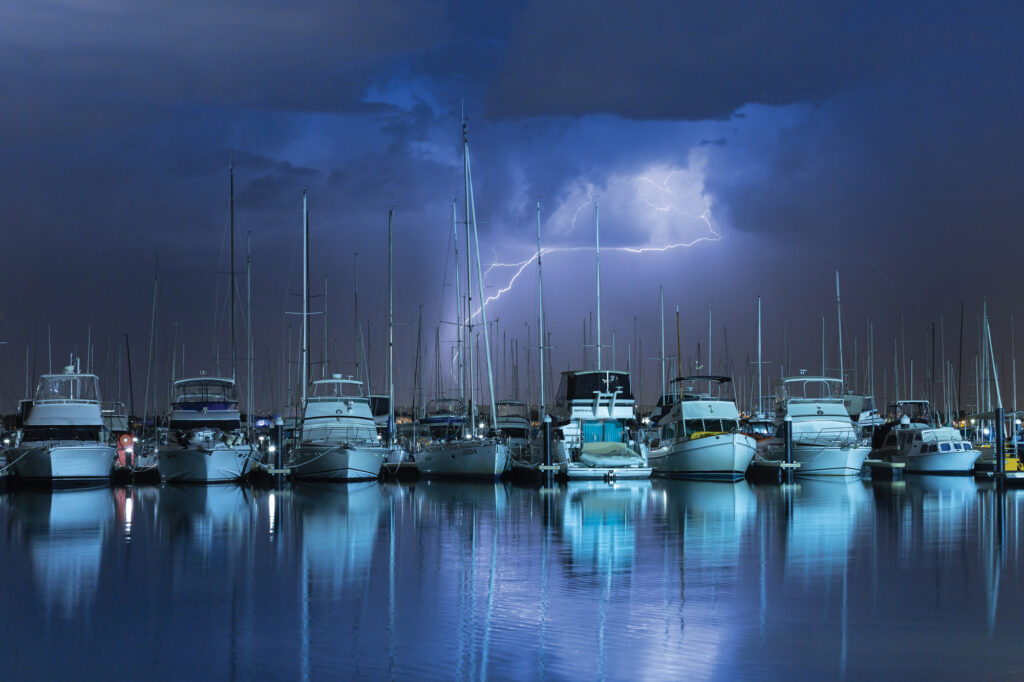
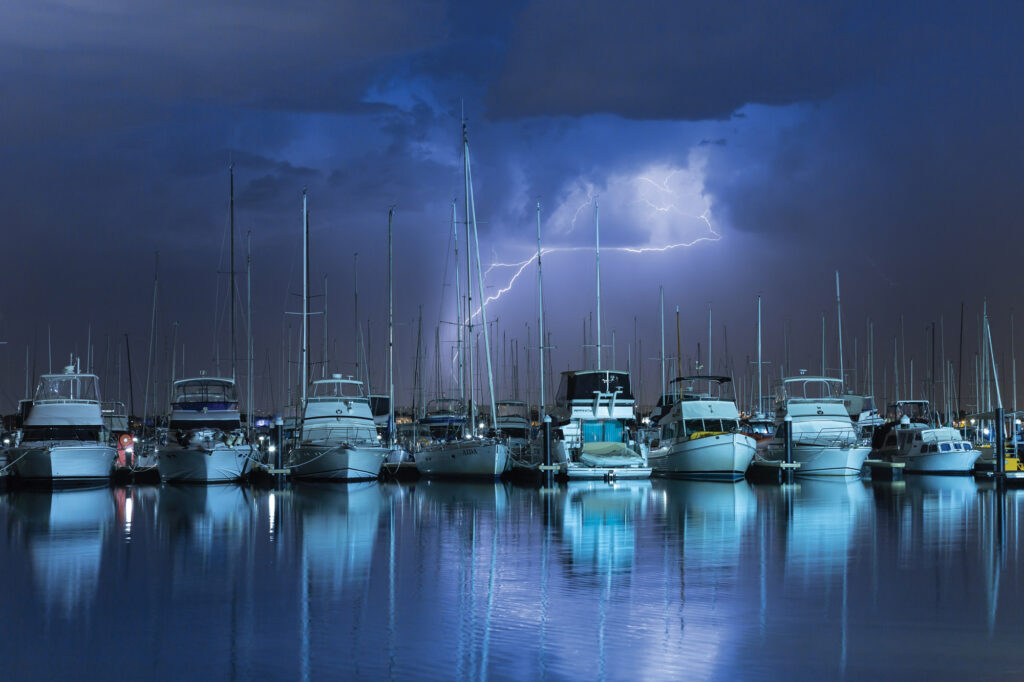
Boating is expensive enough without having to replace all of the onboard electronics unexpectedly. Yet this was my dad’s fate one day in the late 1980s when Windancer, his old C&C 37, sustained a lightning strike while hanging from its mooring.
Granted, Windancer was a modest sailboat, meaning that its discrete electronics were far more basic than the high-tech networked equipment found aboard today’s tricked-out rides, but I still remember my dad’s frustration at having to rebuild his nav station. While we were lucky there wasn’t a fire and that we had insurance, the situation still cost several months of sailing.
Lightning strikes have threatened ships since the days of the ancient mariner. Ben Franklin’s famous lighting rods deliver strike-to-ground protection, but they don’t provide the nicest skyline aesthetics. More important: Energy doesn’t always pass cleanly from Point A to Point B without causing collateral damage.
Dinnteco’s relatively unobtrusive lightning protection system (LPS) constantly deionizes the atmosphere around a yacht, preventing upward leaders from forming. Dinnteco’s LPS also uses filters to minimize the potentially damaging effects of electromagnetic pulses that could enter a yacht from nearby lightning strikes.
This setup is different from a lightning rod. “The principal difference is avoidance of a strike,” says Todd Tally, general manager of Atlantic Marine Electronics, a subsidiary of Viking Yachts and Dinnteco’s US distributor. While lightning rods draw strikes, Tally says, Dinnteco’s LPS functions like a protective shield.

Courtesy Dinnteco
Each Dinnteco LPS installation is customized for a particular vessel or design, but the system is typically composed of a masthead-mounted Electromagnetic Charge Compensation Device, possibly an outrigger-mounted “dinmar” device and usually two or more “dinfil” surge protectors.
The components drain lightning’s potential to ground, Tally says: “They provide a constant, passive deionization process that prevents an upward leader from being created, therefore preventing a strike from hitting the yacht. If there’s no compensation happening, the device is just passively sitting there.”
The Electromagnetic Charge Compensation Device is built from stainless steel and contains polyoxometalates (read: nanosized metal-oxygen clusters) and saline. It doesn’t rely on DC power, moving parts or consumables. Dinnteco estimates that each device has a 20-year lifespan.
Unlike other onboard systems whose efficacy can often be quantified, owners only know their Dinnteco LPS is performing its watchkeeping duties when nothing happens.
The Electromagnetic Charge Compensation Device and the dinmars must be mounted above all other antennas, masts and equipment. Once installed, they collect positive and negative charges from their surrounding environments and atmosphere. These charges are neutralized and then drained to the yacht’s grounding plate below the waterline via a dedicated downwire. This process repeats on a 24/7/365 basis.
Masthead-mounted Electromagnetic Charge Compensation Devices are available in three sizes: 6 inches wide by 10 inches high and weighing 5.4 pounds is the smallest; 10 inches wide by 11.44 inches high and weighing 14.37 pounds is the largest. While their designs are similar and each provides a 164-foot circumference of protection around the yacht, the bigger devices have an increased deionization ratio. This is important, Tally says, because deionization happens fast, and smaller devices can saturate. Tally advises customers to spec the largest version that their vessel can support.
Dinmar devices can be attached to outriggers on sport-fishing rides. They measure 13.97 inches wide by 8.82 inches high and weigh 11.46 pounds. These devices are designed to work in concert with Electromagnetic Charge Compensation Devices.
The protective zone around the yacht starts at the device and then extends downward and outward. Picture a swooping Christmas tree that forms an inverted 90-degree cone at its apex. Here, it’s critical that the Electromagnetic Charge Compensation Device or dinmar is the highest object on a yacht’s skyline by at least 12 inches. No part of the vessel or its equipment should protrude beyond this protective cone.
Dinnteco calculates how many components are required by using the rolling sphere method, which is employed by numerous industries and compliant with international lightning standards.
Additionally, Dinnteco’s LPS uses dinfil surge protectors, which are 18-inch cylindrical devices that measure 3¼ inches in diameter. Even with a Electromagnetic Charge Compensation Device or a dinmar, electromagnetic pulses from nearby lightning strikes can enter a yacht through its ground or other entry point. “It’s really difficult to protect everything that’s in the water,” Tally says, pointing to thrusters and propellers as common culprits.
Dinfil filters are essentially coil protectors that slow the speed of the current that electromagnetic pulses create, and they reduce its high voltage to low voltage. Tally says one dinfil should be installed as close to the ground as possible, while other dinfils can be strategically situated.
Dinnteco’s LPS is basically a system that can be installed and then forgotten, aside from an annual ground-measure test. Tally says Electromagnetic Charge Compensation Devices cost roughly $20,000 apiece (more for the bigger units; less for their little brothers), while dinmars fetch $12,000, and each dinfil filter costs about $3,800, bringing the average installed price of the system to about $50,000.
This represents an investment, of course, but it can be a smart one. An omni sonar for a sport-fishing yacht can command $75,000 to $100,000 or more, while a Seakeeper motion-control system for a midsize yacht can fetch well north of $100,000. Moreover, contemporary electronics and systems are typically interconnected via an NMEA 2000 network. This matters greatly because if an N2K bus suffers a massive voltage surge, networked devices could also be destroyed.
“Twenty-five years ago, if there was a strike, you might have to replace a few pieces of equipment,” Tally says. “Now, everything is interconnected.”
Insurance is another consideration. Tally describes a customer with a $7 million sport-fishing yacht that suffered a strike. His insurer eventually dropped him. By adding a Dinnteco LPS, the customer was able to keep his asset insured, even though he often fishes lightning-prone waters.
As for Windancer, while the insurance company covered the damages, the lost cruising time would have been a convincing sales pitch if Dinnteco’s LPS had existed.
The post Dinnteco Lightning Protection appeared first on Yachting.








Navigating a Safer Future: How Marine Technology Aims to Protect North Atlantic Right Whales
Discover the innovative marine electronics initiatives spearheaded by the WAVS Taskforce to...
 ABL2 Mins read
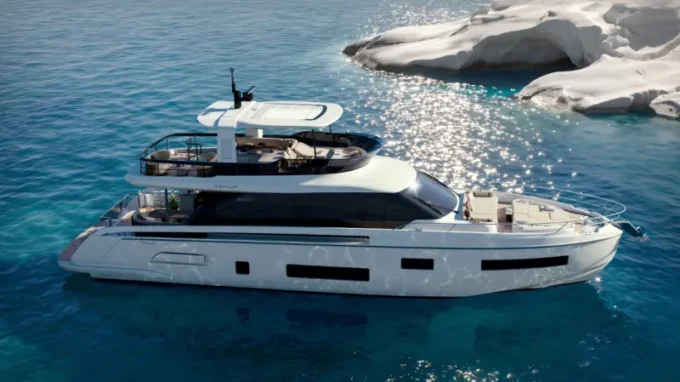
A New Era of Flybridge Elegance: The Azimut Fly 70
Discover the Azimut Fly 70, a revolutionary yacht that redefines flybridge living...
ABL2 Mins read
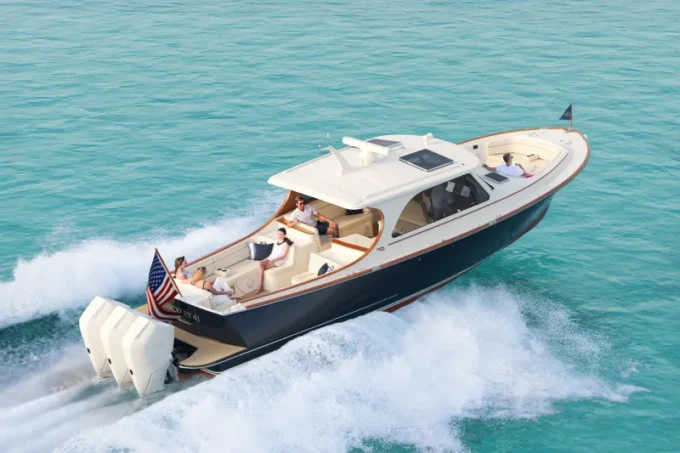
Unleashing Power: The Hinckley 41 Redefines Luxury Outboard Yachting
Discover the Hinckley 41, a high-performance yacht that marries speed, design, and...
ABL2 Mins read
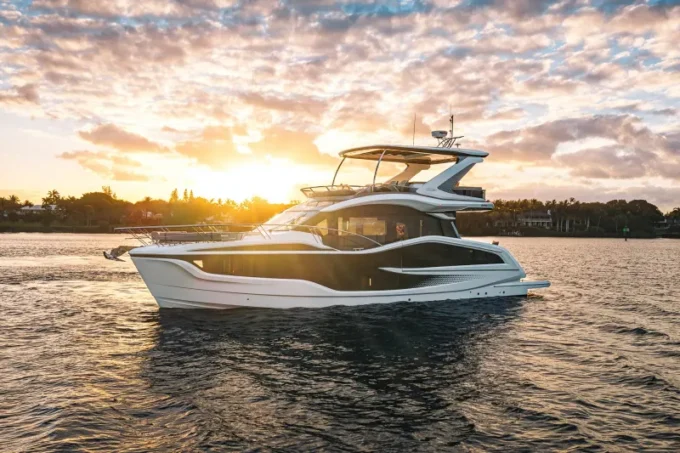


Galeon 520 Fly: A New Standard in Luxury Yachting
Explore the Galeon 520 Fly, a yacht that redefines space, comfort, and...
 3 Mins read
