
Echoes of Conflict: The Recent ELN Attack on Tibú Airport
A Turbulent Landscape
The recent announcement by the Ejército de Liberación Nacional (ELN) regarding their involvement in an explosive attack on Tibú Airport has once again thrust the region of Catatumbo into the spotlight. This northeastern Colombian zone, bordering Venezuela, has long been a battleground for various groups vying for control over lucrative coca plantations, and the recent events starkly illustrate the ever-present threat of violence that looms over its inhabitants.
Details of the Incident
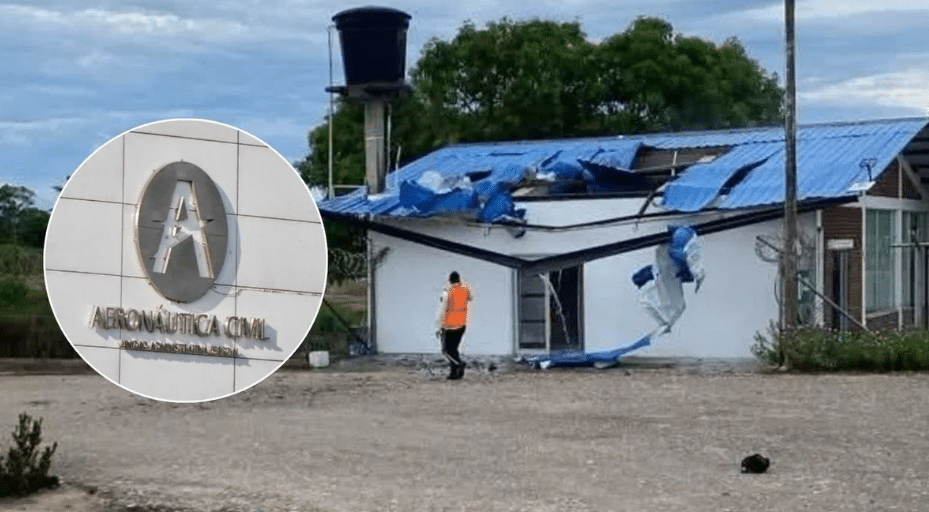
On a fateful Thursday, an explosion rocked the administrative offices of Tibú Airport, injuring three members of the security team. The ELN, in a statement, claimed that the attack was a direct response to what they perceive as the airport’s complicity in facilitating paramilitary operations—specifically those linked to the dissident faction of the FARC, known as Frente 33. The ELN’s assertion highlights a broader narrative of territorial disputes and the violent dynamics that characterize this region.
Political Underpinnings
In a pointed critique, the ELN has condemned Colombia’s current government under President Gustavo Petro, suggesting that his policy of ‘total peace’ has inadvertently provided a shield for paramilitary groups. The guerrilla’s statement articulated a belief that state military forces have manipulated the airport’s infrastructure to serve criminal interests rather than the safety and needs of the local populace.
The Impact on Local Communities
As the violence escalates, the residents of the Catatumbo region find themselves caught in a perilous situation. The ongoing clashes between the ELN and criminal factions not only threaten their safety but also inhibit their ability to live normal lives. With frequent attacks and military responses, the local economy, heavily reliant on agriculture, particularly coca cultivation, suffers immensely.
Connections and Consequences
The proximity of Tibú to the Venezuelan border adds another layer of complexity to this volatile scenario. The porous boundary has enabled various groups to operate across borders, complicating law enforcement and governmental efforts to stabilize the region. The implications of this situation extend beyond Colombia; they resonate within the broader context of international relations in South America, particularly concerning issues of drug trafficking and security.
Miami’s Stake in the Narrative
As a major hub for Venezuelan expatriates and a focal point of Latin American culture, Miami finds itself entwined in the narratives stemming from Colombia and Venezuela. The dynamics of violence and instability in these regions have direct implications for Miami’s social fabric and economic landscape. Communities here are often deeply affected by the flow of migration, drug trafficking, and the need for humanitarian support stemming from the crises in their home countries.
A Forward-Looking Perspective
The ongoing violence in Catatumbo and the recent ELN attack on Tibú Airport serve as a stark reminder of the challenges faced by both Colombia and Venezuela. As local and international stakeholders grapple with the repercussions, the hope for peace and stability remains a distant aspiration. Engaging with these issues from Miami’s vantage point allows for a deeper understanding of the interconnectedness of our worlds, urging us to consider the broader implications of conflict in our neighboring regions.
Editorial note: This article was created by A Bit Lavish Miami’s Magazine as an original editorial reinterpretation based on publicly available reporting. Original source: efectococuyo.com. Read the original article here: https://efectococuyo.com/internacionales/eln-se-atribuyo-ataque-explosivo-contra-aeropuerto-fronterizo-a-venezuela/.
Images are used for editorial reference with source credit. If an image requires correction or removal, please contact A Bit Lavish.







La Urgencia de la Unidad: Un Llamado a la Reconstrucción en Venezuela
A medida que Venezuela enfrenta una encrucijada histórica, se hace imperativo que...
 2 Mins read
El Entretejido de Poder y Riqueza en Venezuela
La intersección entre política y riqueza en Venezuela ha transformado el panorama...
3 Mins read
Marco Rubio Endorses Venezuela Transition Talks Amid Political Turmoil
U.S. Senator Marco Rubio's recent support for transition talks in Venezuela signals...
2 Mins read



U.S. Indicts Nicolás Maduro on Charges of Torture and Human Rights Abuses
The U.S. indictment against Nicolás Maduro marks a significant escalation in international...
2 Mins read
