
Reimagining Intelligence: The Future of AI Terminology
A Shift in Perception
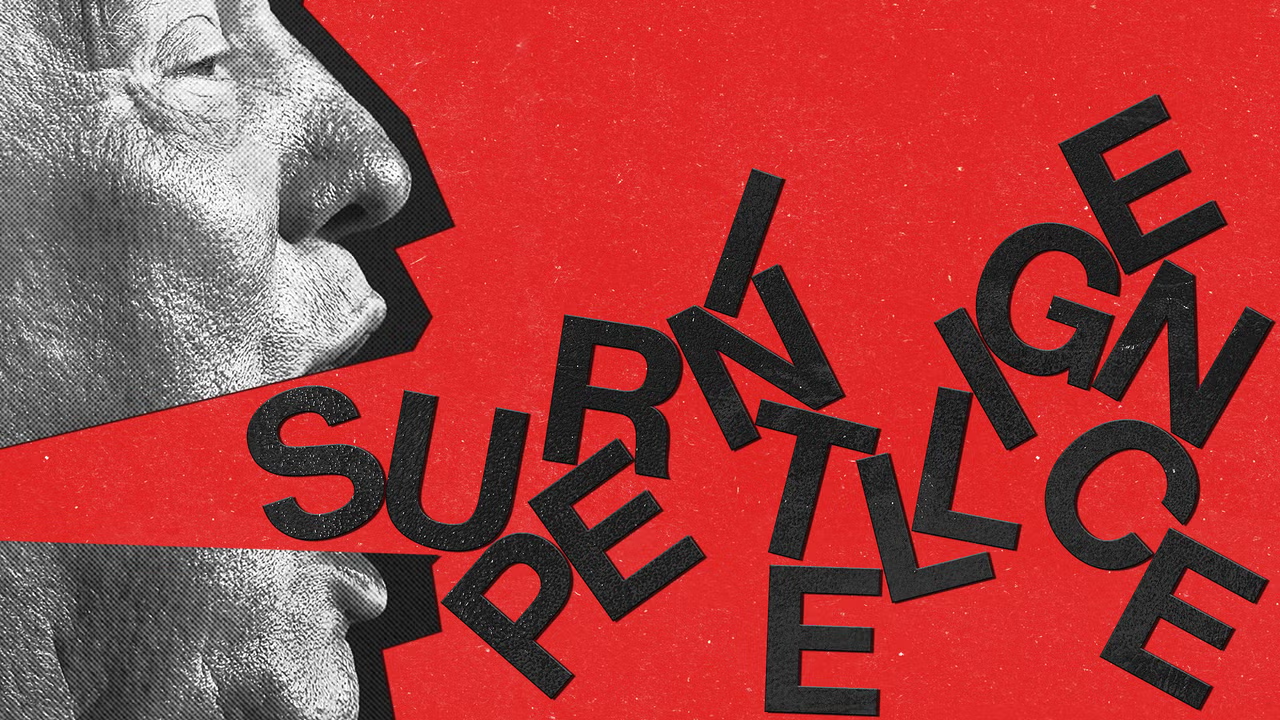
In a bold move that stirred both intrigue and skepticism, former President Donald Trump proposed a radical rebranding of artificial intelligence (AI) to ‘superintelligence’ during his address to the United Nations. This shift was not merely a rhetorical flourish; it was formalized through an executive order mandating federal agencies to adopt the new terminology. This decision, with its far-reaching implications, mirrors a broader conversation about how we understand and engage with the rapidly evolving world of technology.
The Weight of Terminology
The term “artificial intelligence” has long been a fixture in the lexicon of technology, tracing back to a seminal workshop at Dartmouth College in 1956. Yet, as AI systems, especially those driven by recent innovations like ChatGPT, evolve at an unprecedented pace, the adequacy of this label is under scrutiny. The nuances in terminology reflect not just semantic preference but resonate deeply with public sentiment and concern.
Public Sentiment on Rebranding
Recent surveys, including one commissioned by Fast Company, reveal that a significant portion of the American public is hesitant about this rebranding. Only one in nine respondents believe that calling it superintelligence would yield positive outcomes. Furthermore, over half of those surveyed indicated discomfort with the term, suggesting that the shift might not resonate positively with the very audience it aims to engage. This ambivalence underscores the divide between technologists’ aspirations and everyday perceptions of technology.
Language as a Double-Edged Sword
Language plays a pivotal role in shaping our understanding of technology. While the term ‘artificial intelligence’ has its flaws—being vague and imprecise—it has also been instrumental in embedding the concept within the public consciousness. Lexicologist Tony Thorne highlights how the term’s ambiguous nature has allowed the industry to flourish, enabling diverse interpretations and applications of technology. However, this very ambiguity may lead to misconceptions about the capabilities and limitations of AI.
Rethinking the Narrative
Critics, including NYU professor Meredith Broussard, argue that the term ‘intelligence’ inaccurately suggests human-like cognitive abilities in machines. Broussard advocates for a shift towards terminology that reflects the actual functionality of these systems, proposing terms like ‘calculating machine’ to better align with reality. Such redefinitions encourage a clearer understanding of technology and help to mitigate the anxieties associated with human-like attributes being ascribed to machines.
Future Directions in Tech Terminology
As we navigate this complex landscape, the question arises: can we arrive at a nomenclature that accurately encapsulates the reality of these systems while fostering public trust? Suggestions abound, with terms like ‘cognitive computing agent’ emerging as contenders. However, the challenge remains not just in finding a suitable term but in achieving widespread acceptance.
Ultimately, the evolution of language in technology is a reflection of our collective journey in understanding innovation. In a city like Miami, known for its vibrant tech ecosystem, the implications of these discussions are particularly relevant. As local startups and established tech firms grapple with these concepts, the choices they make in how they communicate their products can significantly influence public perception and acceptance.
As we look to the future, it will be crucial to ensure that any new terminology is firmly grounded in reality, fostering a genuine understanding of what these technologies can and cannot do. The stakes are high; our narratives around intelligence will shape not just the industry but the societal fabric in which it operates.
Editorial note: This article was created by A Bit Lavish Miami’s Magazine as an original editorial reinterpretation based on publicly available reporting. Original source: fastcompany.com. Read the original article here: https://www.fastcompany.com/91621442/its-not-ai-and-its-not-superintelligence-so-what-is-it.
Images are used for editorial reference with source credit. If an image requires correction or removal, please contact A Bit Lavish.










Redefining Trust: Elevating Employee Well-Being Beyond HR
Explore how leadership and organizational culture must evolve to prioritize employee well-being,...
 3 Mins read

UAW Leader’s Reelection Signals Shift in Labor Relations in Michigan
The reelection of UAW leader Shawn Fain marks a pivotal moment for...
2 Mins read

Trump and Putin Sign Controversial Diesel Deal Amidst Geopolitical Tensions
The recent diesel deal between Trump and Putin has sparked outrage among...
2 Mins read



Navigating Workplace Culture: The Coffee Controversy and Its Implications
Explore the implications of workplace culture through the lens of a new...
3 Mins read

Leave a comment