
Engineering Urban Transformation: The Complexities of Office-to-Residential Conversions
The Shift in Urban Living
In the wake of the COVID-19 pandemic, urban landscapes have witnessed a profound shift. As remote work took hold, many office spaces lay dormant, prompting city planners and developers to explore adaptive reuse as a viable solution to the pressing housing crisis. This ambitious pivot aims to transform underutilized commercial buildings into vibrant residential spaces, breathing new life into city centers.
A Cautionary Tale from New York
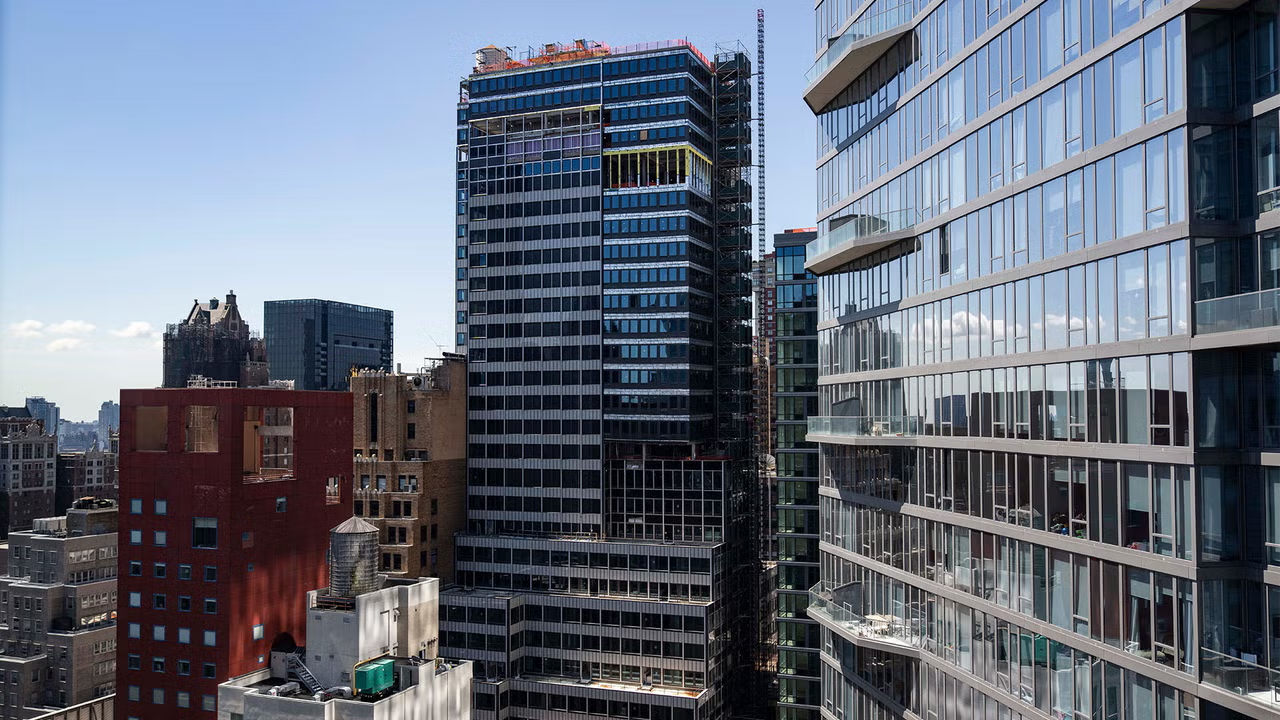
Recent events at the former Pfizer headquarters in Manhattan serve as a stark reminder of the complexities involved in such conversions. When two steel columns buckled during renovation efforts, work halted on one of the nation’s largest office-to-apartment projects. This incident not only prompted evacuations but also highlighted the intricate engineering challenges that underpin these adaptive reuse ventures.
Engineering Challenges and Solutions
The Pfizer transformation involves converting two distinct office buildings, one dating back to 1909 and the other from the 1960s, into a total of approximately 1,600 residential units. The project aims to add over a dozen stories atop the older structure while reconfiguring the newer one. However, the buckling of steel columns has raised questions about the structural integrity of such ambitious designs.
Experts emphasize that while the setback is significant, it should not overshadow the capabilities of engineering teams tasked with these conversions. Ben Schafer, a structural engineering professor, explained that the process involves ensuring that older buildings can support additional loads while accommodating the unique requirements of residential living.
The Case for Adaptive Reuse
In densely populated urban areas, the trend towards adaptive reuse is gaining momentum. As cities like New York implement zoning changes and offer tax incentives, the transformation of office spaces into housing is not merely a trend but a necessary response to housing shortages. This approach not only maximizes existing infrastructure but also minimizes environmental impact, a crucial consideration in an era increasingly focused on sustainability.
James LaFave, a structural engineering professor, noted that steel-framed buildings from the mid-20th century often provide a solid foundation for conversions, making them ideal candidates for this kind of redevelopment.
Evaluating Risks and Rewards
While the engineering challenges are significant, so too are the potential rewards. Joshua Harris from Fordham University’s Real Estate Institute emphasizes the importance of these projects in addressing urban housing shortages. Yet, he acknowledges the risks involved. Engineering such transformations can often be likened to performing intricate surgical procedures on aging structures, where the stakes are high, and the complexities are manifold.
Despite the inherent risks, experts maintain that the benefits of adaptive reuse—both economic and environmental—far outweigh the challenges. The ability to repurpose existing buildings not only preserves the character of urban landscapes but also reduces the carbon footprint associated with demolition and new construction.
Looking Ahead: The Future of Urban Development
As cities continue to adapt to the evolving landscape of work and living, the importance of innovative engineering solutions will only grow. The recent construction scare in New York serves as a pivotal moment for the industry, prompting a reevaluation of current methodologies and designs. Following this incident, stakeholders will likely scrutinize other adaptive reuse projects to ensure similar issues do not arise.
Ultimately, the drive toward converting office spaces into residential units is redefining urban living, transforming once-sleepy business districts into thriving neighborhoods. As cities like Miami also explore similar initiatives, the lessons learned from New York’s challenges will undoubtedly resonate, guiding future projects and fostering a more sustainable urban future.
Editorial note: This article was created by A Bit Lavish Miami’s Magazine as an original editorial reinterpretation based on publicly available reporting. Original source: fastcompany.com. Read the original article here: https://www.fastcompany.com/91571734/new-york-city-construction-scare-highlights-challenges-converting-offices-into-housing.
Images are used for editorial reference with source credit. If an image requires correction or removal, please contact A Bit Lavish.









Navigating the New Landscape of Home Affordability: A Deep Dive into Market Trends
Explore the evolving dynamics of home affordability in the U.S. housing market...
 2 Mins read

Rethinking Economic Narratives: The End of the K-Shaped Economy?
Treasury Secretary Scott Bessent declares the end of the K-shaped economy, but...
2 Mins read
Fantasy Baseball Trade Deadline Spurs Strategic Shifts in Bullpen Dynamics
The August 2026 trade deadline reshapes bullpen roles, impacting team strategies and...
1 Mins read



Jefry Yan Celebrations Mark a New Era in Major League Baseball
The global sports community recognizes Jefry Yan's achievements, highlighting the evolving landscape...
1 Mins read
