
Flying the unfriendly skies: A business ethicist says goodbye to Spirit Airlines
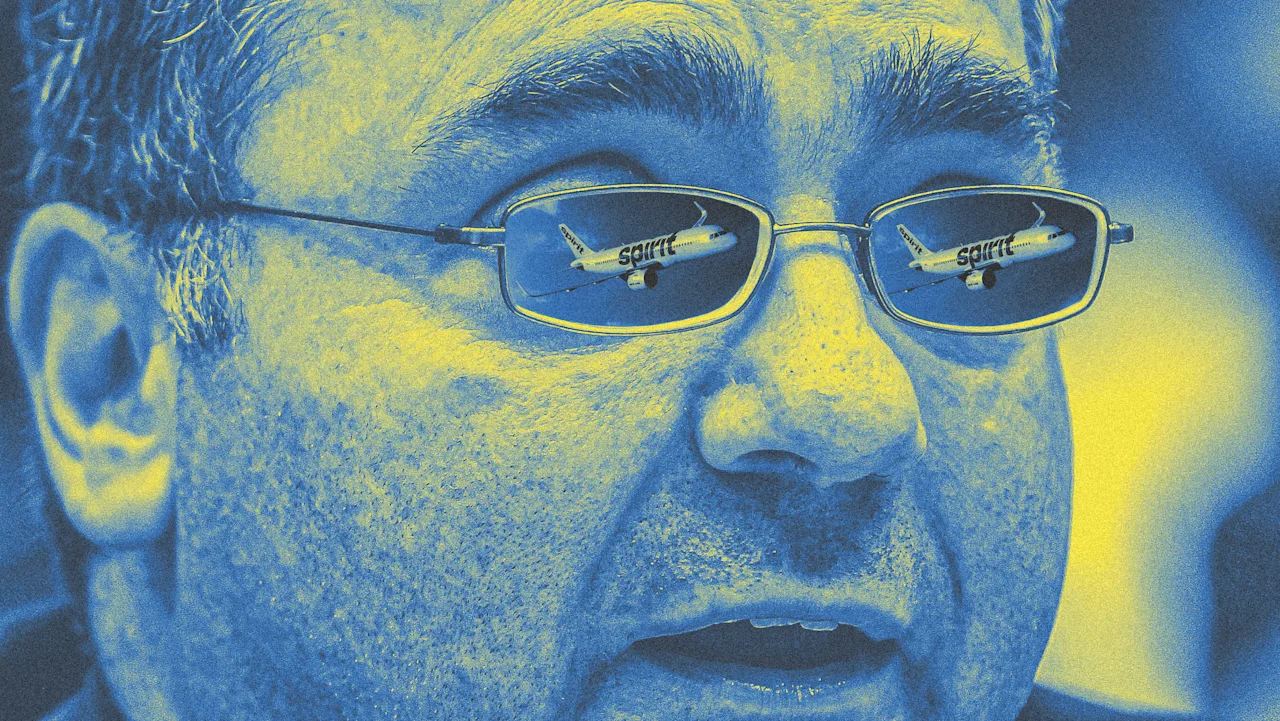
I flew Spirit Airlines out of LaGuardia on April 28th. With the announcement just days later that the carrier was shutting down, it felt a little like catching the last chopper out of Saigon. Then again, every time you flew Spirit felt a little like catching the last chopper out of Saigon. There were the improbably tiny bags, people packed tightly in seats, and an everpresent sense that the simmering confusion could at any moment break out into full blown calamity. Like most people, I’ve always had a love/hate relationship with Spirit. Unlike most people, I once expressed it to the face of Ben Baldanza, the former CEO of Spirit. In 2015, I wrote an essay for The New Republic with the subtitle “A business school professor studies the world’s worst airline.” Within an hour of it appearing online, the CEO of said airline had emailed me to propose a debate. We met a few weeks later at the downtown campus of the University of Chicago Booth School of Business, where I still teach business ethics, and before a large crowd that included his executive team, we debated the moral hygiene of Spirit’s unusual business practices. By then, Baldanza had been the head of Spirit Airlines for nearly a decade, and he was the driving force behind its transformation from merely a low-cost carrier, like Southwest or Jet Blue, to an ultra-low-cost carrier. The distinction between them turns on relative deprivation. No one will ever confuse the cabin of Jet Blue for a Learjet, but at least in 2015, air travel on both involved choosing your seats, bringing your bags aboard, and chowing down on snacks. Not Spirit. Not for free, at least. The ‘bare fare’ Spirit pioneered à la carte pricing in American air travel with the introduction of what it called the “bare fare.” When you bought a ticket to fly on Spirit, you didn’t get snacks, seat choice, or (God forbid) a carry-on. These were privileges. You had to pay for them. You got a seat. Period. Baldanza ballyhooed this invention as a cost-saving strategy for customers. “All of our differences are about saving our customers money,” he maintained in our debate, a declaration that seemed more a rhetorical sleight of hand than an accurate description of the carrier’s practices. Yes, Spirit could typically get you from place to place more cheaply than other airlines, but to buy what Ben was selling, you had to assume a different understanding of air travel. Sitting with your kids, packing more than a single set of drawers, and noshing on peanuts were all part of what it meant to fly. Yes, flying was the essential part of flying, but eating is also the essential part of eating, and if a waiter tries to sell you a knife and fork at a restaurant, you will still feel an urge to tell him to stick his frittata where the sun don’t shine. Back in 2015, it didn’t seem like Spirit was selling tickets for air travel, not in any way that didn’t seem ridiculous. Indeed, I argued in our debate that Baldanza had effectively bet his company’s future on the idea that Spirit could change customary expectations around flying, that it could make the “bare fare” seem less like barely a fare than a legitimate baseline for air travel. ‘Eccentric, opaque, or simply indecipherable’ But that was only one half of Spirit’s innovative approach – the better half, in fact. Hand-in-hand with these changes seemed to me a sustained effort to stay one step ahead of customers trying to figure out exactly what was going on. The previous fall, I had flown Spirit a dozen times between New York and Chicago, and for all of the time I put in to understanding the company, their charges still seemed incredibly confusing to me or, as I put it more piquantly in my opening remarks of the debate, the company seemed stubbornly committed to being “eccentric, opaque, or simply indecipherable.” At the time, Spirit had five price points for a carry-on bag, depending on when you decided to purchase that privilege, and their website often made it seem like you had no choice but to pay for certain options, such as seat selection, by making the opt out selection the font size of an eye exam. More importantly, Spirit seemed to profit handsomely from this confusion. In the years before our debate, more than 40% of Spirit’s revenue had come from non-ticket sales—in other words, passengers paying for the very things they had otherwise gotten for free—and let’s just say that, in my experience, it was not uncommon to see a young traveler dissolve into tears when she discovered at the gate that her carry-on bag was going to cost her $100. Altogether, by October 2014, such practices had made Spirit, according to analysts at Morgan Stanley, the “Most Profitable Airline in the World.” Two months later, the stock price reached an all time high of $85.35. Oh, how things change. Baldanza, who passed away in 2024, was forced out of Spirit in January 2016, less than a year after our debate. The stock price had tumbled into the low $40s, but there was also a sense that some of Spirit’s shenanigans had gone too far. The à la carte approach to pricing would stay, together with the rows of seats that were (quite literally) tighter than the benches in a Roman slave galley, but the carrier eased off its prurient approach to marketing (Strippermobiles, anyone?) and undertook sincere efforts to make its alarming array of upcharges, if not necessarily consumer friendly, then a lot less confusing. Yet it also benefited from a change in baseline expectations among passengers. Travelers learned to expect less, not only or even principally because Spirit made them cry uncle, but because all other carriers have followed its example. Today, every major domestic airline has adopted some version of Spirit’s à la carte model for its “Basic Economy” class. United doesn’t give you a carry-on. American won’t let you choose your seats. And if you buy a ticket on Delta, the carrier announced in December that you don’t deserve any air miles. And where did such changes leave Spirit? A victim of its own success. All of these carriers are now more or less doing what Spirit has done but without the slave’s galley and the stigma of being a trailblazer in debasing domestic air travel. This will be the enduring legacy of Spirit Airlines. It set off a race to the bottom, one that made air travel a little cheaper, perhaps, but also a lot more miserable. It’s bankrupt now, and we’re all the poorer for it.
Editorial note: This article was created by A Bit Lavish Miami’s Magazine as an original editorial reinterpretation based on publicly available reporting. Original source: fastcompany.com. Read the original article here: https://www.fastcompany.com/91539756/flying-the-unfriendly-skies-a-business-ethicist-says-goodbye-to-spirit-airlines-spirit-airlines-shutting-down.
Images are used for editorial reference with source credit. If an image requires correction or removal, please contact A Bit Lavish.









Limited-Time Kamaʻāina Discounts Announced at Hyatt Buffet
Hyatt's discount initiative highlights the importance of local tourism recovery amidst ongoing...
 1 Mins read

Freddy Krueger Returns to Pop Culture Spotlight Amidst Global Nostalgia
The resurgence of Freddy Krueger reflects a significant cultural moment, highlighting evolving...
1 Mins read
The Transformative Power of AI: Insights from JPMorgan’s Leadership
JPMorgan Chase's CEO Jamie Dimon discusses the impact of AI on employment...
2 Mins read



A New Era in Sports Broadcasting: Elevating Women Athletes Beyond the Lens
Explore how new broadcasting guidelines aim to reshape the portrayal of women...
2 Mins read
