
Navigating Change: H&M’s Strategic Retreat from Physical Retail
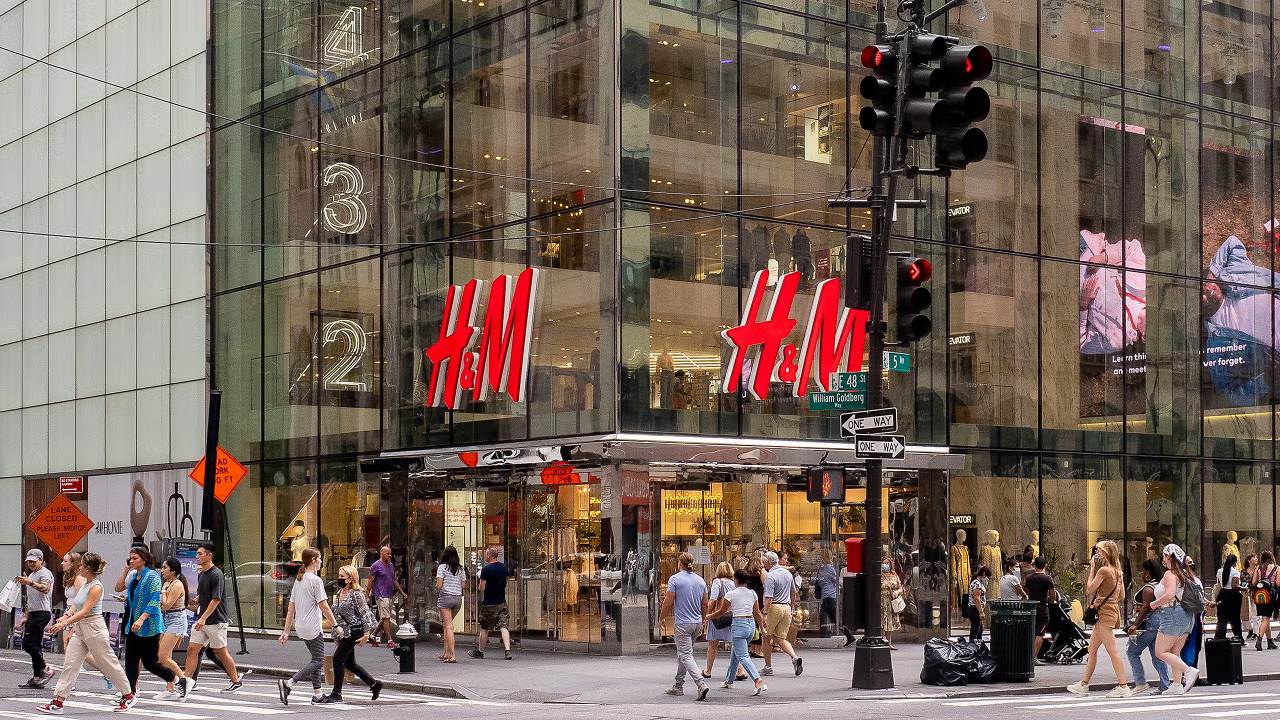
The Evolution of Fast Fashion
H&M, the iconic Swedish fast-fashion retailer, has long been a staple in shopping districts worldwide, boasting a rich portfolio of over 4,000 stores across 81 markets. However, recent trends indicate a significant shift in its operational strategy. With the recent unveiling of its six-month earnings report for 2026, H&M reveals a concerted effort to redefine its retail presence by closing underperforming locations and adapting to the evolving landscape of consumer behavior.
Assessing the Landscape
In its latest financial disclosure, H&M reported net sales of approximately 54.8 billion SEK, translating to around $5.6 billion. While these figures demonstrate a steady performance relative to the previous year, the retailer has reduced its store count by nearly 3%. This reduction is not merely a consequence of economic pressures but a strategic realignment to remain competitive in a rapidly changing industry.
Footprint Reduction: A Comprehensive Strategy
Over the past twelve months, H&M has executed a net reduction of 128 retail locations, a reflection of its broader optimization strategy. Notably, the regions most affected include Asia, Oceania, and Africa, which collectively saw a loss of 97 stores. Meanwhile, Southern Europe gained two stores, and North and South America collectively welcomed eight new locations. This dynamic shift is indicative of H&M’s ongoing attempt to balance its retail footprint while investing in more profitable markets.
Adapting to Consumer Preferences
As online shopping continues to surge, H&M is shifting its focus away from brick-and-mortar establishments. The rise of digital-first competitors like Shein and Temu has intensified this trend, forcing traditional retailers to reevaluate their physical presence. With consumer habits evolving, H&M’s decision to close stores is part of a strategic initiative aimed at enhancing its online platform, which has become increasingly essential in today’s marketplace.
Future Outlook: A Hybrid Retail Model
Looking ahead, H&M plans to open approximately 90 new stores in 2026, but this will be offset by the closure of 170 locations, resulting in a projected net loss of 80 retail stores. This dual approach underscores a commitment to a more agile retail model that aligns with current consumer expectations while ensuring that the brand remains relevant in a competitive landscape. By investing in both physical and digital realms, H&M aims to foster a shopping experience that resonates with a new generation of consumers.
Stock Market Performance Amidst Transformation
H&M’s stock remains a focal point for investors, trading on Nasdaq Stockholm under the ticker HM-B. As of recent reports, shares are priced around 165 SEK (approximately $17), reflecting a year-to-date decline of about 11.2%. However, the past year has shown a promising uptick of over 22%, indicating investor confidence in the company’s long-term strategic vision.
The Miami Connection
In Miami, where the fashion scene thrives amid a backdrop of cultural diversity and innovation, H&M’s evolving strategy is particularly relevant. The city’s dynamic consumer base, characterized by a blend of local and international shoppers, presents unique opportunities for brands that adapt quickly to market changes. As H&M navigates its transformation, the influence of this vibrant city could play a pivotal role in shaping its approach to retailing and consumer engagement in the years to come.
Editorial note: This article was created by A Bit Lavish Miami’s Magazine as an original editorial reinterpretation based on publicly available reporting. Original source: fastcompany.com. Read the original article here: https://www.fastcompany.com/91565601/hm-closing-stores-2026-list-locations-across-regions.
Images are used for editorial reference with source credit. If an image requires correction or removal, please contact A Bit Lavish.










Yordan Alvarez Leads 2026 Fantasy Baseball Rankings as Ronald Acuña Jr. Makes Top 10 Return
The latest fantasy baseball rankings reflect shifting player dynamics, influencing global sports...
 1 Mins read

Injury Updates for Sparks-Sky Game: Key Players Kamilla Cardoso and Skylar Diggins Questionable
The status of key WNBA players Kamilla Cardoso and Skylar Diggins could...
1 Mins read

Redefining Design: How Inclusive Solutions Elevate the Everyday
Exploring how designing for specific challenges leads to innovations that benefit everyone,...
3 Mins read



Navigating the Smoke: The Growing Challenge of Wildfire Air Quality
Explore the implications of Canadian wildfires on air quality in urban centers,...
2 Mins read
