
Navigating the AI-Infused Entertainment Landscape: The Rise of ‘Bad Cat’
The Nostalgic Allure of AI
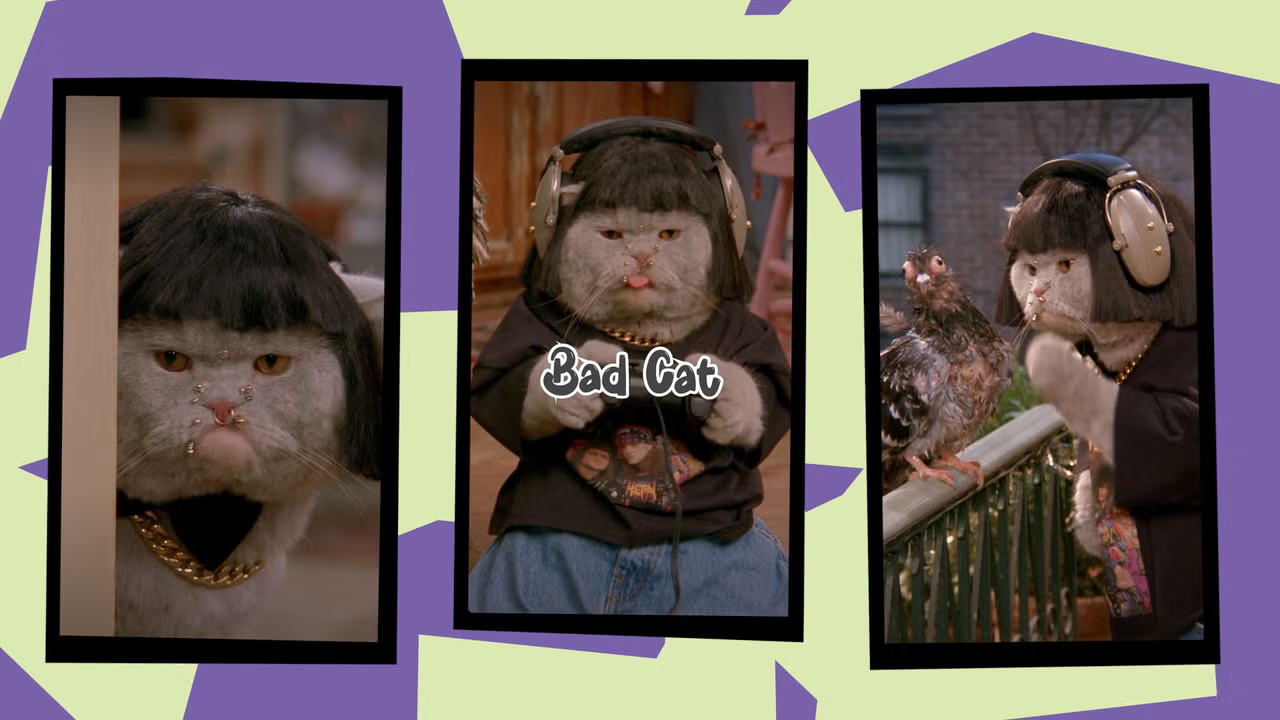
In the ever-evolving landscape of digital entertainment, nostalgia often serves as a powerful draw. The latest sensation to capture the attention of social media users is ‘Bad Cat,’ an AI-generated sitcom that pays homage to the iconic 1990s series ‘Friends.’ While the original show’s charm was rooted in its relatable characters and comedic scenarios, ‘Bad Cat’ injects a modern twist with a cast that includes a gray Persian cat sporting micro bangs and its human counterpart, reminiscent of Monica Geller. This combination of whimsy and familiarity has led to millions of views across various social platforms.
AI Meets Humor
The creator of ‘Bad Cat,’ Daria Zabnieva, has ingeniously utilized AI technology to craft short, engaging clips that evoke a sense of nostalgia while simultaneously embracing contemporary absurdities. Each one-minute episode unfolds in a familiar setting, where the antics of the anthropomorphic feline and its quirky owner unfold in hilariously relatable scenarios. For instance, in one viral clip viewed by nearly 10 million users, the cat dons a band T-shirt and headphones, engaging in humorous antics that resonate with viewers on various levels.
Community Engagement in a Digital Age
The success of ‘Bad Cat’ extends beyond mere viewership; it has fostered a vibrant community of engaged fans. Comments on each video reflect a blend of humor, curiosity, and a desire for more content, with viewers expressing their eagerness for an extended series. This interaction exemplifies how digital platforms have transformed consumer behaviors, allowing for direct feedback and real-time engagement. The series’ ability to generate such enthusiasm highlights a broader trend where audiences are not just passive consumers but active participants in the creative process.
The Dichotomy of AI Content
Despite the enthusiasm surrounding shows like ‘Bad Cat,’ there exists an undercurrent of skepticism regarding AI-generated content. Social media users are grappling with the implications of AI in creative fields, leading to a phenomenon known as ‘AI slop’—content that is perceived as lacking substance or originality. Platforms like LinkedIn have even introduced features that allow users to flag AI-generated content, reflecting a growing concern over the quality and authenticity of digital media. Yet, paradoxically, ‘Bad Cat’ has emerged as a guilty pleasure for many, prompting viewers to confront their mixed feelings about AI in entertainment.
Balancing Innovation and Authenticity
The reception of ‘Bad Cat’ raises essential questions about the future of entertainment in an increasingly automated world. Justine Moore, a partner at Andreessen Horowitz, exemplified the ambivalence towards AI content, stating that ‘Bad Cat’ has become a personal favorite despite the AI origins. This highlights a crucial tension: as audiences reject inferior AI creations, they simultaneously embrace those that manage to evoke genuine emotion and connection. The challenge lies in balancing innovation with authenticity, ensuring that technological advancements do not compromise the essence of storytelling.
Miami’s Role in the Digital Narrative
As the epicenter of culture and creativity, Miami stands as a vital player in this evolving narrative. The city’s diverse artistic community is uniquely positioned to explore the intersection of technology and creativity, potentially serving as a breeding ground for innovative projects like ‘Bad Cat.’ Local creators can leverage Miami’s vibrant atmosphere to experiment with AI-driven narratives, tapping into the global discourse surrounding digital content while fostering a rich cultural dialogue.
Ultimately, ‘Bad Cat’ is not just a quirky series; it represents a microcosm of the broader conversations surrounding AI in entertainment. As audiences navigate their feelings about AI-generated content, the series serves as a reminder that amidst the debates about authenticity and quality, there remains a space for creativity and joy in unexpected places.
Editorial note: This article was created by A Bit Lavish Miami’s Magazine as an original editorial reinterpretation based on publicly available reporting. Original source: fastcompany.com. Read the original article here: https://www.fastcompany.com/91600783/bad-cat-ai-slop-sitcom-spin-1990s-friends-people-cant-look-away.
Images are used for editorial reference with source credit. If an image requires correction or removal, please contact A Bit Lavish.




Intel Stock Plummets Following Elon Musk’s Comments on Terafab Partnership
Elon Musk's remarks regarding a potential partnership between Terafab and a rival...
 1 Mins read
Emerging Dynamics in Brazilian Financial Markets: A Pre-Election Surge
Exploring the recent surge in Brazilian financial stocks ahead of the runoff...
2 Mins read
Navigating Turbulent Waters: The Steady Hand of Oil Exporters Amid Global Disruption
As geopolitical tensions ripple through the oil market, OPEC+ members maintain production...
3 Mins read
Escalating Tensions: Iran War Triggers Investment in Red Sea Energy Infrastructure
Recent attacks on energy infrastructure in the Red Sea highlight escalating geopolitical...
2 Mins read