
Navigating the Geopolitical Waters: The Implications of a U.S.-Iran Deal
The Promise of Peace
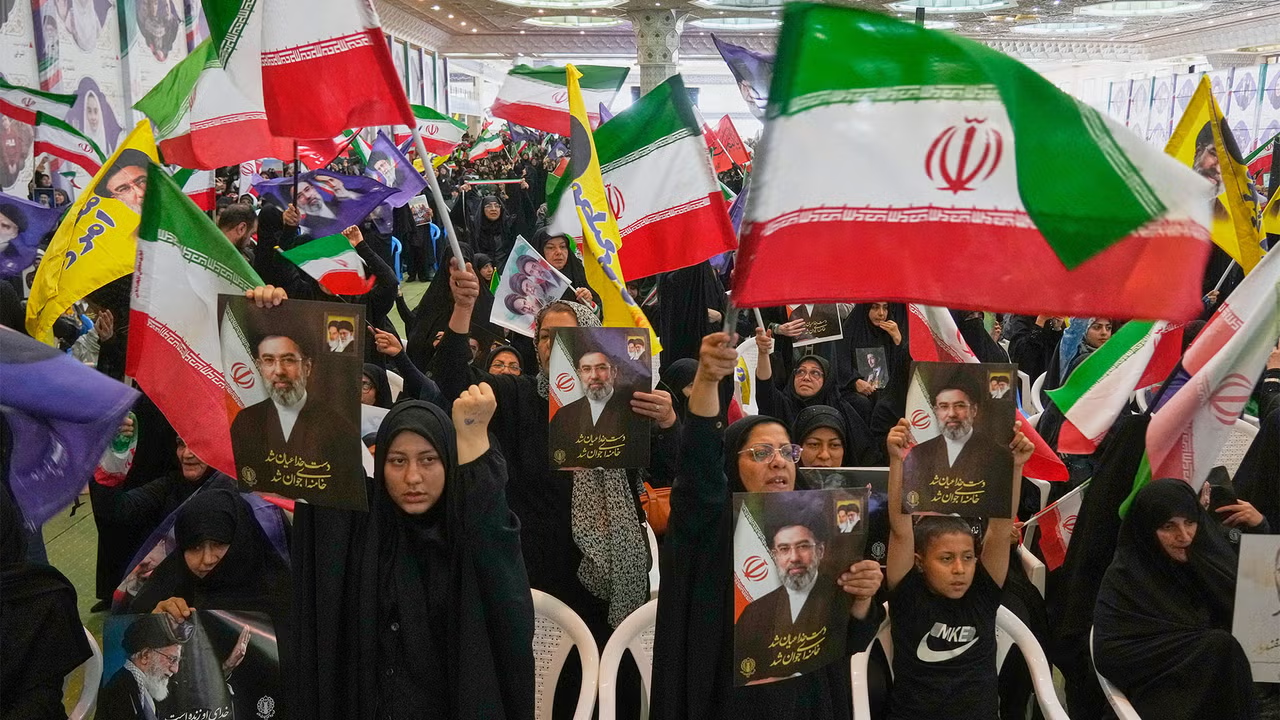
In a world often overshadowed by conflict, the prospect of a peace agreement between the United States and Iran emerges as a beacon of hope. Recent statements from U.S. President Donald Trump suggest that a deal to end the ongoing war and restore stability in the vital Strait of Hormuz is ‘largely negotiated.’ This development carries immense implications, not only for the nations directly involved but also for global markets and regions like Miami, a city that thrives on international trade and energy flow.
A Fragile Ceasefire and Regional Stability
The war, which escalated significantly over the past months, has produced a rare ceasefire since April 7, signaling a potential turning point in a conflict that has destabilized the Middle East. The cessation of hostilities not only aims to protect Gulf nations, including the United Arab Emirates—key partners in global trade—but also to ensure the unimpeded transit of nearly 20% of the world’s oil and natural gas through the Strait of Hormuz. For Miami, a city heavily intertwined with global shipping routes, the implications of restored stability in this region are profound, promising to revitalize economic activities that depend on these crucial maritime pathways.
Energy Infrastructure and Economic Recovery
Central to the emerging deal is the commitment to end hostilities between Iran and its regional adversaries, notably Israel and Hezbollah. This agreement is expected to facilitate the rebuilding of critical energy and infrastructure, providing a much-needed boost to the economies of affected nations. As global energy markets recalibrate, Miami’s position as a logistical hub for energy distribution could be significantly enhanced, attracting international investments and fostering new business opportunities.
Sanctions Relief and Economic Repercussions
The proposed arrangement includes provisions for sanction relief, which would permit Iran to resume oil sales and access frozen funds. This move is anticipated to stabilize Iran’s beleaguered economy, which has suffered under extensive sanctions. For Miami’s business community, this reopening of Iranian markets could yield new avenues for trade and investment, particularly in sectors reliant on energy imports and technological exchanges.
Nuclear Concerns and Diplomatic Nuances
While the potential deal presents promising avenues for economic collaboration, it is not without its complexities. A critical component of the negotiations involves Iran’s nuclear program, which remains a contentious issue for the U.S. and its allies. The commitment for Iran to relinquish its stockpile of highly enriched uranium is essential for all parties involved. The stakes are high; failure to reach a consensus could lead to re-escalation of tensions, with significant repercussions for global security and economic stability.
The Broader Picture: Leadership and Future Negotiations
Amidst the progress, several unresolved issues linger on the negotiating table. Notable among these are discussions regarding Iran’s missile program and the presence of U.S. forces in the region. The absence of resolutions on these fronts suggests that while the path to peace may be paved, it is fraught with challenges that necessitate continued dialogue and diplomatic engagement. As Miami’s businesses watch these developments unfold, the city’s leaders must prepare to navigate an increasingly complex geopolitical landscape that could redefine its economic future.
Editorial note: This article was created by A Bit Lavish Miami’s Magazine as an original editorial reinterpretation based on publicly available reporting. Original source: fastcompany.com. Read the original article here: https://www.fastcompany.com/91547931/u-s-iran-deal-end-war-largely-negotiated-trump-says-heres-what-know.
Images are used for editorial reference with source credit. If an image requires correction or removal, please contact A Bit Lavish.









The Evolution of the Foldable Smartphone: A New Era of Personalization
As the foldable smartphone revolution unfolds, we analyze its implications for user...
 3 Mins read
Navigating Change: KCRW’s Blueprint for Public Media Resilience
Explore how KCRW in Los Angeles is redefining public media engagement amidst...
2 Mins read

Strategic Escapes: The Art of Vacationing as a Solopreneur
Explore the essential strategies for solopreneurs to effectively plan vacations without sacrificing...
2 Mins read



Navigating the Ethical Frontier: Claude’s Evolution in AI Agency
Exploring the implications of agentic AI through Amanda Askell's insights on Claude,...
3 Mins read
