
Navigating the Ethical Frontier: Claude’s Evolution in AI Agency
Redefining AI Interactions
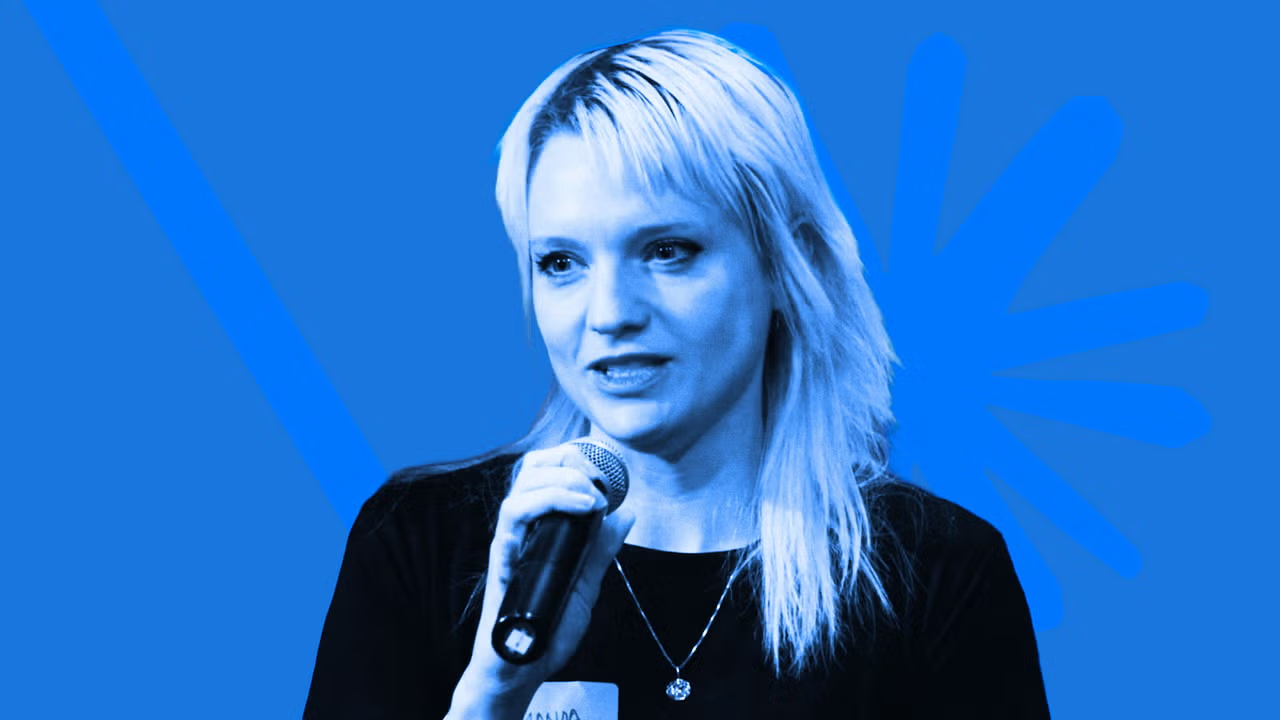
As the digital landscape evolves, so too does our relationship with artificial intelligence. Amanda Askell, a pivotal figure at Anthropic, is at the forefront of this transition, focusing on cultivating a sense of ethics within Claude, an AI chatbot that is increasingly taking on agentic roles. The journey from simple interaction to complex decision-making embodies a significant shift in how we perceive and utilize AI in our daily lives.
The Ethical Compass of AI
As AI systems like Claude gain autonomy, the stakes for ethical decision-making rise dramatically. Askell emphasizes the importance of ensuring that AI respects human autonomy while navigating moral dilemmas. The challenge lies in equipping Claude with a framework of values that aligns with human ethics without imposing predetermined biases.
Anthropic has crafted a living constitution that guides Claude’s ethical framework, prioritizing principles such as safety and helpfulness. This document is not static; it evolves alongside the AI’s capabilities and the complexities of real-world scenarios. Askell posits that as Claude’s expertise develops, this constitution may adapt to either expand or refine its ethical guidelines.
From Task Completion to Moral Agency
The transition from AI as a simple tool to a decision-making agent prompts a reevaluation of the responsibilities associated with AI deployment. Askell articulates the difference between consulting an AI for ethical advice and allowing it to autonomously manage significant tasks like investment portfolios. This shift necessitates a deeper understanding of when and how an AI should engage with users, striking a balance between guidance and autonomy.
“Models must learn to navigate a delicate balance of decision points,” Askell notes. “As they take on more responsibilities, it’s critical to establish norms that govern their interactions, ensuring they remain responsive to human needs while making independent choices.” This nuanced approach reflects a broader trend in AI development, where the emphasis is placed not solely on technical capability but also on ethical literacy.
The Amplified Workflow
For professionals like Askell, the integration of AI into their workflows has transformed the landscape of innovation and problem-solving. Utilizing Claude as a collaborative partner allows for a unique interplay of human intuition and machine efficiency. Askell describes her daily routine as significantly enriched by the presence of AI, enabling her to explore edge cases and refine ethical frameworks dynamically.
This collaborative approach also highlights the importance of humility and grace in the face of mistakes—both on the part of human trainers and the AI systems themselves. “We are all learning together,” Askell reflects. “Recognizing that errors are part of this process fosters a more productive relationship between humans and AI.”
AI and the Evolution of Social Relationships
The rise of agentic AI introduces new social dynamics, particularly as these systems begin to interact with each other. Askell observes that the training of AI models can inadvertently instill behaviors that may lead to dismissiveness toward other AI entities. This raises questions about the ethical treatment of AI and the potential for developing a sense of community among them.
As AI systems engage with one another, an implicit moral framework may emerge, shaped by their interactions. Askell warns against the danger of viewing AI as separate entities devoid of connection to human values. “It’s essential for AI to recognize the shared experiences that foster empathy and understanding,” she suggests.
Rethinking Human Value in an AI-Driven World
As AI capabilities expand, a collective anxiety looms over the human experience—will we feel less special as machines mimic our abilities? Askell encourages a shift in perspective, suggesting that personal fulfillment stems not from superiority but from the joy of contributing to a community. “Happiness and connection, rather than competition, should define our value,” she asserts.
This philosophy resonates deeply in the vibrant tapestry of Miami’s entrepreneurial spirit, where innovation thrives on collaboration and shared success. In an era where AI and humans coexist, embracing this ethos may well illuminate the path toward a future where both can thrive harmoniously.
Editorial note: This article was created by A Bit Lavish Miami’s Magazine as an original editorial reinterpretation based on publicly available reporting. Original source: fastcompany.com. Read the original article here: https://www.fastcompany.com/91560768/claude-is-becoming-more-agentic-amanda-askell-is-thinking-through-what-that-means.
Images are used for editorial reference with source credit. If an image requires correction or removal, please contact A Bit Lavish.










Strategic Escapes: The Art of Vacationing as a Solopreneur
Explore the essential strategies for solopreneurs to effectively plan vacations without sacrificing...
 2 Mins read
Reimagining the Office: From Mandate to Magnet
Explore how businesses are redefining the role of the office as a...
2 Mins read

Harnessing Creativity: A New Paradigm for Business Leadership
Exploring how applied creativity can redefine business success and leadership in the...
2 Mins read



Merlin the Duck: A Feathered Phenomenon in the Heart of Mexico’s World Cup Fervor
Discover how a street vendor's duck became an unofficial mascot for Mexico...
2 Mins read

Leave a comment