

Understanding Rising Inflation
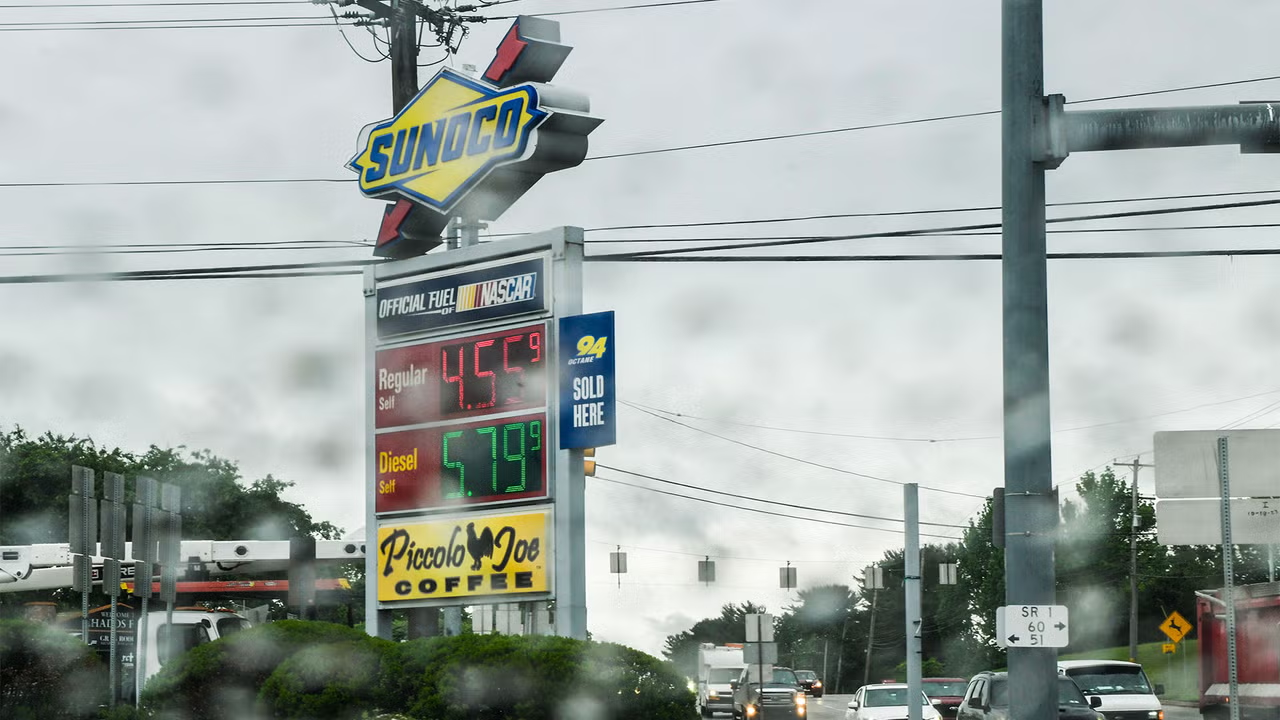
In recent months, the specter of inflation has loomed large over the American economy, casting a shadow across various sectors. While Miamians can easily notice the higher gasoline prices—hovering around $4 per gallon—this is merely one symptom of a deeper economic challenge. Inflation, as indicated by recent reports, has surged by 3.8% year-over-year, marking the fastest increase since 2021. This trend is not an isolated phenomenon; it encompasses a range of costs from housing to utilities and consumer goods.
The Broader Economic Implications
The data reveals a concerning picture for business leaders, particularly in a vibrant economy like Miami’s, where discretionary spending is crucial. As inflation extends beyond energy costs, its repercussions are felt in everyday expenditures. The core Personal Consumption Expenditures (PCE) index, which excludes volatile categories such as food and energy, also saw a rise, further indicating that inflationary pressures are entrenched. The Federal Reserve is closely monitoring these trends, as they signal the potential for persistent inflation that could stifle economic growth.
Energy Costs and Consumer Behavior
Energy prices serve as both a direct measure of inflation and a bellwether for future economic conditions. The rise in energy costs translates to higher prices for necessities such as groceries and utilities, prompting a shift in consumer behavior. Miami’s residents, who are accustomed to a dynamic lifestyle, are now faced with altered spending habits as they navigate increased costs. The inflationary cycle can lead to wage demands as workers seek to offset rising expenses, thereby creating a feedback loop that perpetuates inflation.
Monetary Policy Dilemmas
With the recent leadership transition at the Federal Reserve, all eyes are on the new chair, Kevin Warsh. His approach to addressing inflation will be pivotal. The Fed’s traditional response to inflation is to raise interest rates, but this strategy is fraught with complications. As inflation remains elevated, the challenge lies in balancing the dual mandate of controlling inflation while fostering economic growth. The impact of higher energy prices can act like a tax on consumers, reducing their disposable income and curtailing spending in sectors critical to Miami’s economy, such as hospitality and retail.
The Intersection of Technology and Inflation
Interestingly, the rise of artificial intelligence (AI) investment presents an unexpected variable in this inflation equation. While consumers grapple with increasing prices, AI-related advancements may bolster business growth and infrastructure spending. This dichotomy creates a complex landscape where sectors thrive while households face economic pressure. Warsh suggests that AI may also be a tool to help reduce prices in the long run, potentially allowing for a more favorable monetary policy environment.
A Complex Outlook Ahead
As the Federal Reserve gears up for its next meeting, the focus will be on how to articulate its strategy amidst these inflationary challenges. The delicate balance between inflation control and economic growth requires astute navigation. For Miami’s business leaders, understanding these dynamics is essential. They must remain vigilant as they adapt to shifting consumer behaviors and market conditions, all while keeping an eye on broader economic indicators that could shape the future of their industries.
In conclusion, the ongoing inflationary pressures present both challenges and opportunities. Miami’s economic landscape is uniquely positioned to respond to these shifts, but it will require innovative thinking, strategic planning, and a keen awareness of the interconnections between energy prices, consumer sentiment, and monetary policy.
Editorial note: This article was created by A Bit Lavish Miami’s Magazine as an original editorial reinterpretation based on publicly available reporting. Original source: fastcompany.com. Read the original article here: https://www.fastcompany.com/91550147/inflation-gas-prices-us-economy-pce.
Images are used for editorial reference with source credit. If an image requires correction or removal, please contact A Bit Lavish.










The Evolution of the Foldable Smartphone: A New Era of Personalization
As the foldable smartphone revolution unfolds, we analyze its implications for user...
 3 Mins read

Navigating Change: KCRW’s Blueprint for Public Media Resilience
Explore how KCRW in Los Angeles is redefining public media engagement amidst...
2 Mins read

Strategic Escapes: The Art of Vacationing as a Solopreneur
Explore the essential strategies for solopreneurs to effectively plan vacations without sacrificing...
2 Mins read



Navigating the Ethical Frontier: Claude’s Evolution in AI Agency
Exploring the implications of agentic AI through Amanda Askell's insights on Claude,...
3 Mins read
