

A Return to Roots
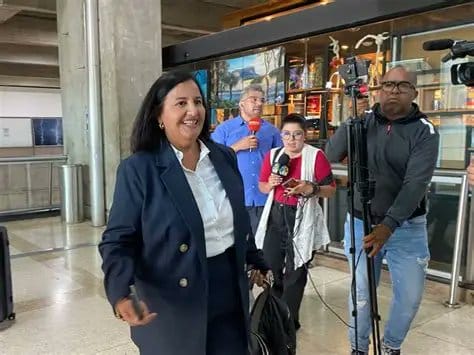
In a significant development for Venezuela’s politically charged atmosphere, the delegation from the 2015 National Assembly has returned to the country, led by the determined Dinorah Figuera. This carefully orchestrated homecoming is not merely a symbolic gesture; it sets the stage for essential dialogues aimed at addressing the nation’s pressing issues.
Arriving at José Antonio Anzoátegui International Airport from Spain, Figuera is joined by key figures including Marco Aurelio Quiñones and Juan Miguel Matheus. Their mission is clear: to finalize the logistics and political frameworks necessary for their upcoming discussions with the current regime, headed by Jorge Rodríguez, the president of the National Assembly of 2020.
Internal Divisions and Their Implications
However, this return does not occur in a vacuum. The opposition coalition, known as the Plataforma Unitaria Democrática (PUD), is grappling with significant internal divisions that threaten to undermine its collective strength. While support for Figuera remains strong among some factions, others, such as Acción Democrática and La Causa R, have distanced themselves from these negotiations, expressing concerns over the process’s inclusivity.
These fractures within the opposition raise critical questions about the feasibility of a united front against the government. The disagreement over negotiation strategies and priorities highlights the challenges faced by the opposition as they strive to present a cohesive agenda.
Setting the Agenda: Key Focus Areas
The delegation’s recent discussions have revealed a prioritization of several key issues that are crucial for Venezuela’s future. Among these are electoral guarantees for upcoming elections, the release of political prisoners, and the evaluation of humanitarian agreements. These topics are vital not only for the opposition’s credibility but also for the nation’s path toward stabilization.
The government, on the other hand, has made its demands clear. It seeks the lifting of international sanctions and the restoration of foreign assets as prerequisites for any substantive agreement. This dynamic creates a challenging negotiation landscape, where the stakes are high, and the room for compromise may be limited.
The Quest for Unity
As the delegation prepares for further discussions in Caracas, the urgency for a unified approach becomes more apparent. The members of Primero Justicia and Voluntad Popular, who spearhead these negotiations, must navigate a complex web of political allegiances and dissenting voices within the PUD to forge a path forward.
In this context, fostering open channels of communication becomes essential. The opposition must not only present a unified front but also address the concerns of those hesitant to engage in the current negotiation framework. The success of these talks hinges on the ability to reconcile differing viewpoints while maintaining a focus on the broader objective: a democratic Venezuela.
Looking Ahead: The Role of International Observers
As these discussions unfold, the role of international observers and allies will be critical. Their presence can provide not only oversight but also support for the democratic processes in Venezuela. The international community’s engagement could serve as a catalyst for fostering dialogue and ensuring that the voices of the Venezuelan people are heard.
The upcoming meetings are poised to be pivotal, and the delegation’s ability to communicate effectively with both the government and their own supporters will determine the trajectory of Venezuela’s political landscape. Will they emerge as negotiators of hope, or will the fractures within the opposition deepen? Time will tell as the nation watches closely.
Conclusion: A Nation at a Crossroads
Venezuela stands at a crossroads, with the potential for dialogue offering a glimmer of hope amidst a backdrop of division and uncertainty. The return of the 2015 National Assembly delegation symbolizes a moment of possibility, one that requires both courage and compromise. As the nation grapples with its challenges, the path forward will demand not only strategic negotiation but an unwavering commitment to unity and democratic principles.
Editorial note: This article was created by A Bit Lavish Miami’s Magazine as an original editorial reinterpretation based on publicly available reporting. Original source: efectococuyo.com. Read the original article here: https://efectococuyo.com/politica/delegacion-de-la-an-de-2015-regresa-a-venezuela-para-afinar-el-dialogo/.
Images are used for editorial reference with source credit. If an image requires correction or removal, please contact A Bit Lavish.






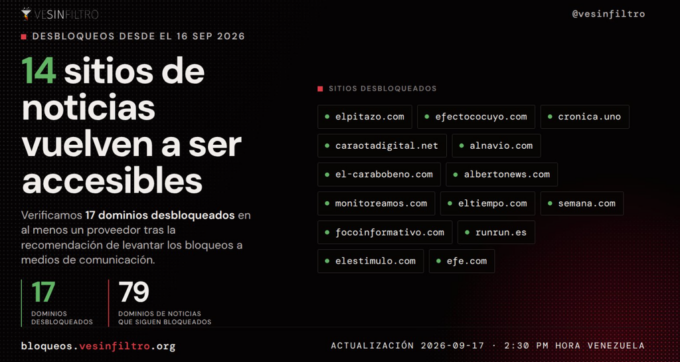
A Glimmer of Hope: The Partial Unblocking of Media Domains in Venezuela
In a recent move, Venezuela's government has unblocked a small percentage of...
 2 Mins read
A Call for Justice: The Tragic Case of Wilber Rafael Garcés
The harrowing incident involving Venezuelan migrant Wilber Rafael Garcés raises urgent questions...
2 Mins read

Trump Meets Venezuela’s Delcy Rodríguez to Finalize Historic Oil Deal
The meeting between Trump and Rodríguez marks a pivotal moment in U.S.-Venezuela...
2 Mins read


Trump Engages in Diplomatic Talks with Venezuela’s Delcy Rodríguez at UN General Assembly
The meeting between former President Donald Trump and Venezuela's Acting President Delcy...
2 Mins read
