
Niu Lai: The Unexpected Champion of Creative Authenticity in an AI-Driven World
A New Kind of Cinematic Experience
As the summer season draws to a close, moviegoers find themselves drawn not just to star-studded features or viral sensations, but to an unexpected gem in the realm of animated films: the Chinese production Niu Lai. Despite its questionable animation quality, or perhaps because of it, this film has emerged as an emblem of a burgeoning anti-AI sentiment in the arts. The film’s trajectory from underdog to cult classic illustrates a shifting landscape in consumer preferences, particularly in Miami, where art and design collide with technology.
The Journey of Niu Lai
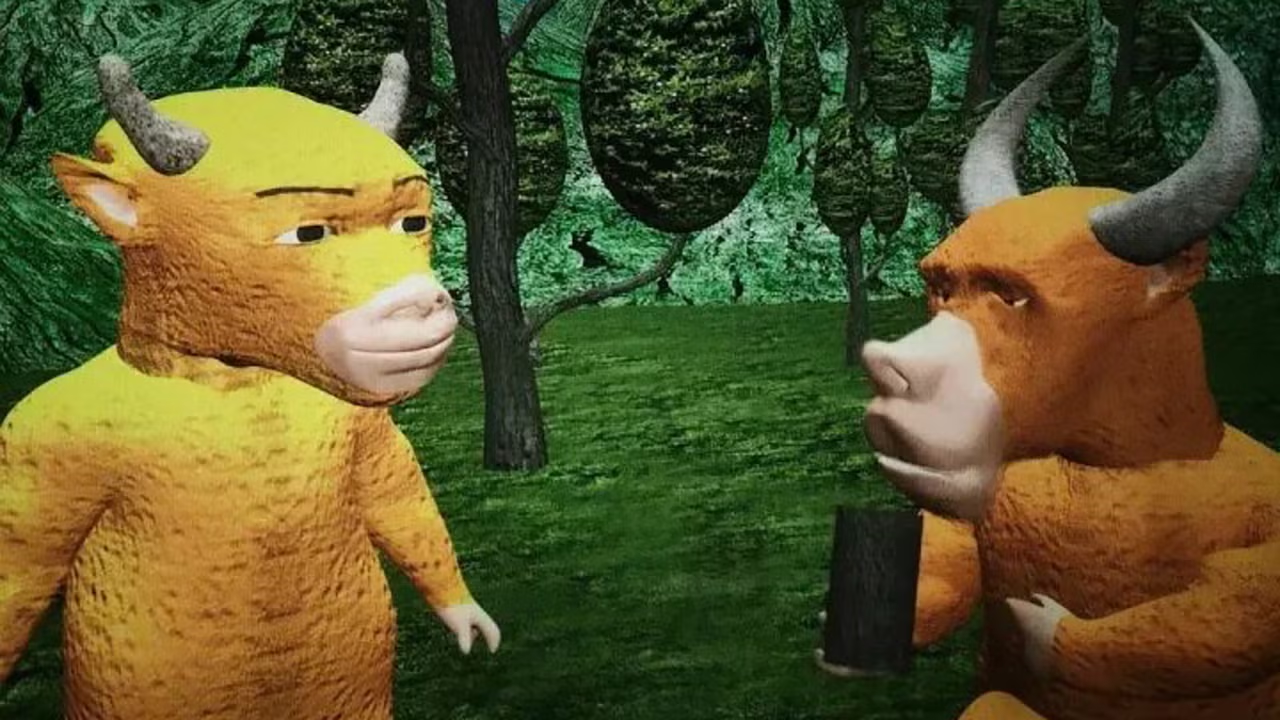
At its core, Niu Lai tells the simple yet poignant story of a timid calf on a journey of self-discovery, navigating friendships with a skylark and a leopard. Created over five years by a mother-son duo with a modest budget of just $200, the film initially struggled to find its footing, earning a mere 7,700 yuan (approximately $1,145) in its first ten days. However, thanks to the power of social media, it has catapulted to unexpected success, particularly following its U.S. debut, raking in over $2.2 million—an impressive feat for any low-budget film, let alone one that faced early ridicule for its amateurish visuals.
Social Media’s Role in Cultural Phenomena
The digital age has transformed how films gain traction, and Niu Lai is no exception. Social media platforms have played a crucial role in the film’s rise, with users sharing clips and generating buzz around its famously poor animation style. Instead of traditional marketing campaigns, grassroots advocacy has turned the film into a viral sensation. It’s a phenomenon reminiscent of Miami’s own vibrant cultural scene, where community-driven movements often trump corporate strategies.
An Icon of Authenticity
Critics may have initially panned the film for its low-tech 3D animations, comparing its animal characters to poorly rendered video game models. Yet, this perceived flaw has morphed into a badge of honor for many fans, positioning Niu Lai as a refreshing alternative to the polished yet often soulless output of AI-generated content. Users on platforms like X have noted that, despite its imperfections, the film represents a vital distinction: art produced by human hands. One enthusiastic viewer remarked, “I prefer my slop quality animation… MADE BY MAN.” This sentiment resonates powerfully in a world increasingly dominated by artificial intelligence.
The Rise of the Anti-AI Movement
As the film garners acclaim, it simultaneously ignites a conversation about what audiences truly desire from their cinematic experiences. In an era where AI can produce flawless visuals and narratives, Niu Lai‘s rough edges serve as a rallying cry for those who value the human touch in art. Reviewers on platforms like Letterboxd have lauded the film for its authenticity, dubbing it a potential “cult classic” and a leading figure in the anti-AI movement. One user even proclaimed it “the movie of the year,” underscoring the film’s impact beyond mere entertainment.
Lessons for the Future of Creativity
Niu Lai’s journey is emblematic of broader market shifts, shedding light on a growing consumer preference for authenticity over perfection. In a city like Miami, where creativity flourishes amidst a backdrop of innovation, the film serves as a reminder that great art can emerge from the simplest of beginnings. The film’s success challenges businesses and creators to rethink their strategies, emphasizing the importance of genuine human expression in an increasingly automated world.
As the anti-AI conversation continues to gain momentum, Niu Lai stands as a testament to the enduring power of human creativity, a narrative that resonates deeply with audiences yearning for connection, authenticity, and a return to the heartfelt storytelling that defines great cinema. In a landscape dominated by advanced technology, the film invites us to consider what we truly value in the art we consume and the stories we share.
Editorial note: This article was created by A Bit Lavish Miami’s Magazine as an original editorial reinterpretation based on publicly available reporting. Original source: fastcompany.com. Read the original article here: https://www.fastcompany.com/91593948/niu-lai-animation-quality-anti-ai.
Images are used for editorial reference with source credit. If an image requires correction or removal, please contact A Bit Lavish.









Funding Compassion: The Unfolding Narrative of Lindsay Clancy’s GoFundMe Campaign
Explore the intricacies of the GoFundMe campaign supporting Lindsay Clancy's family amidst...
 2 Mins read
Revolutionizing Fast Casual: California Pizza Kitchen’s Bold Leap into Vending Technology
Explore California Pizza Kitchen's innovative approach to expanding its brand through autonomous...
3 Mins read
Ross Stores Plans Ambitious Expansion Amid Strong Earnings
Explore Ross Stores' strategic expansion plans for 2026, driven by impressive earnings...
2 Mins read



Leadership Redefined: What Employees Truly Desire from Their CEOs
Explore the evolving expectations employees have for their CEOs, highlighting key traits...
3 Mins read

Leave a comment