

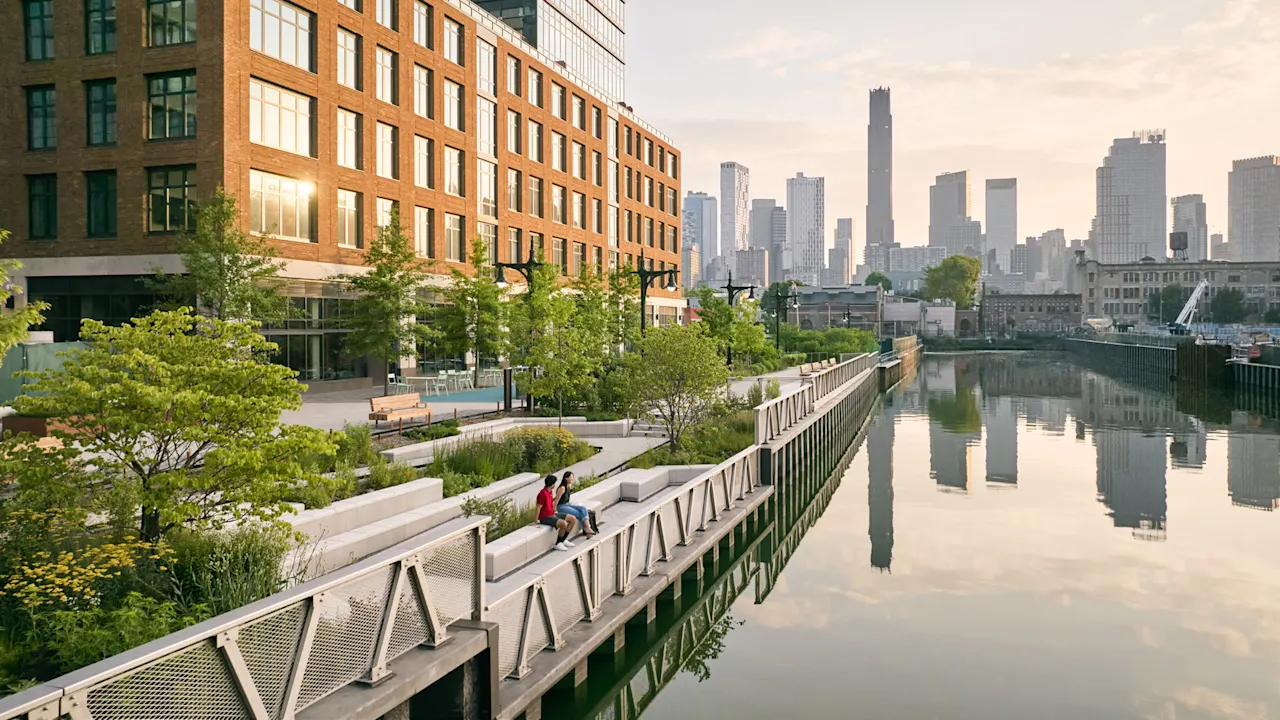
A New Chapter for Gowanus
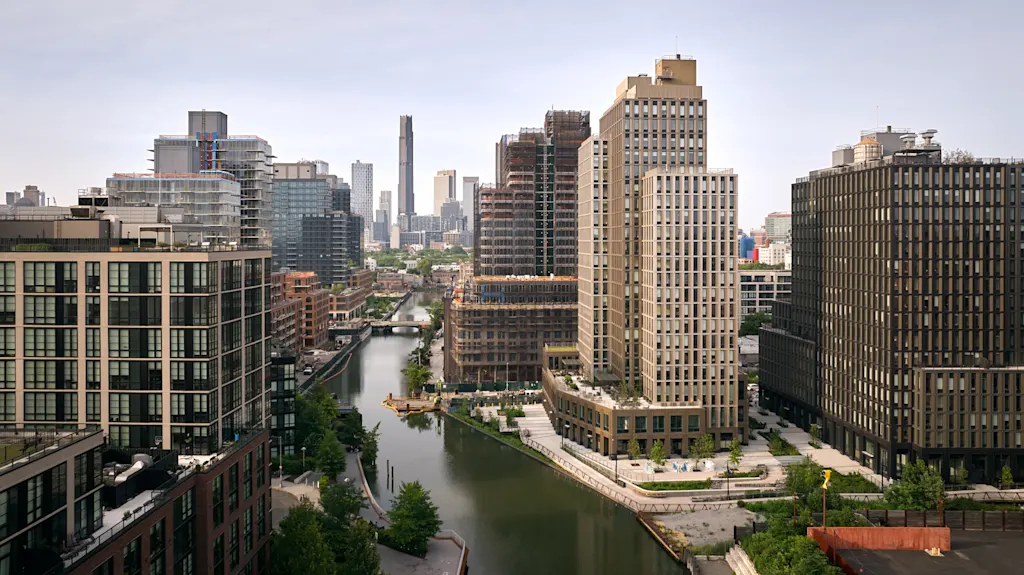
Once synonymous with pollution and neglect, the Gowanus Canal in Brooklyn is undergoing a remarkable renaissance. Through a blend of community effort and innovative design, this historic waterway is being transformed into a vibrant urban landscape. The restoration efforts have been propelled by a series of public and private initiatives aimed at revitalizing the area, resulting in new public spaces that reconnect residents to the waterfront.
Community-Led Transformation
The genesis of this metamorphosis can be traced back to grassroots movements advocating for environmental justice and ecological restoration. Since its inception in 2006, the Gowanus Canal Conservancy has played a pivotal role in leading cleanup efforts, emphasizing the importance of community engagement in urban planning. Andrea Parker, the Conservancy’s executive director, notes the significance of understanding local biodiversity, which has informed the development of new landscapes that can thrive post-cleanup.
Designing for Resilience
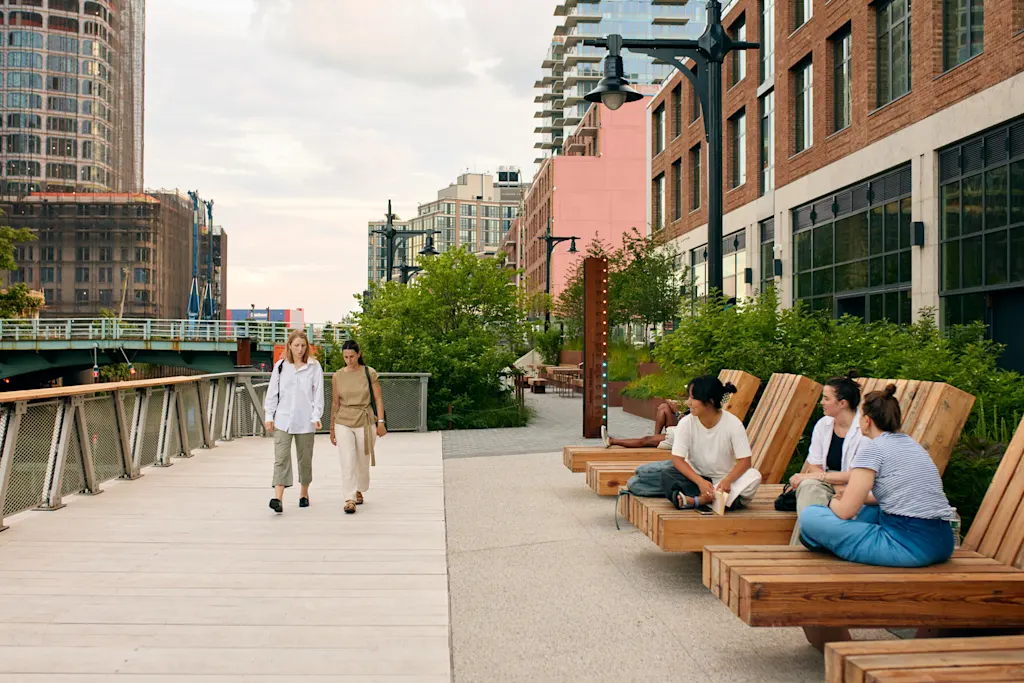
At the forefront of this transformation is the landscape architecture firm Scape, which has collaborated with the Conservancy to craft a visionary master plan. The 2019 Lowlands master plan not only sets standards for future development but also establishes legal frameworks for public and private projects along the canal. This plan is a guiding force behind over a dozen development projects, including two recently opened public spaces that exemplify the area’s new identity.
Ecological Integration
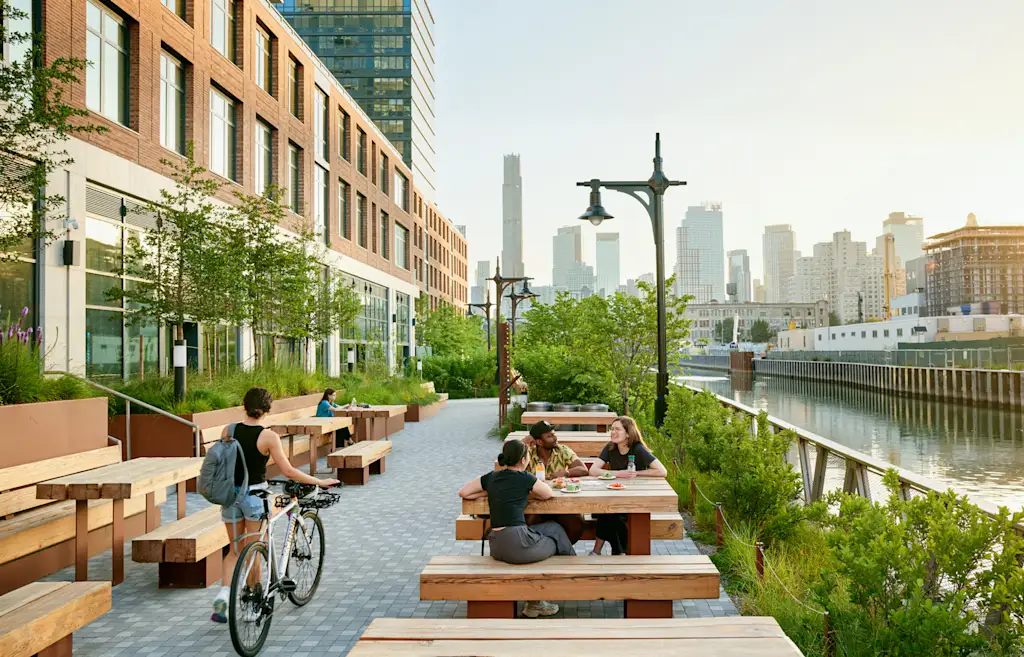
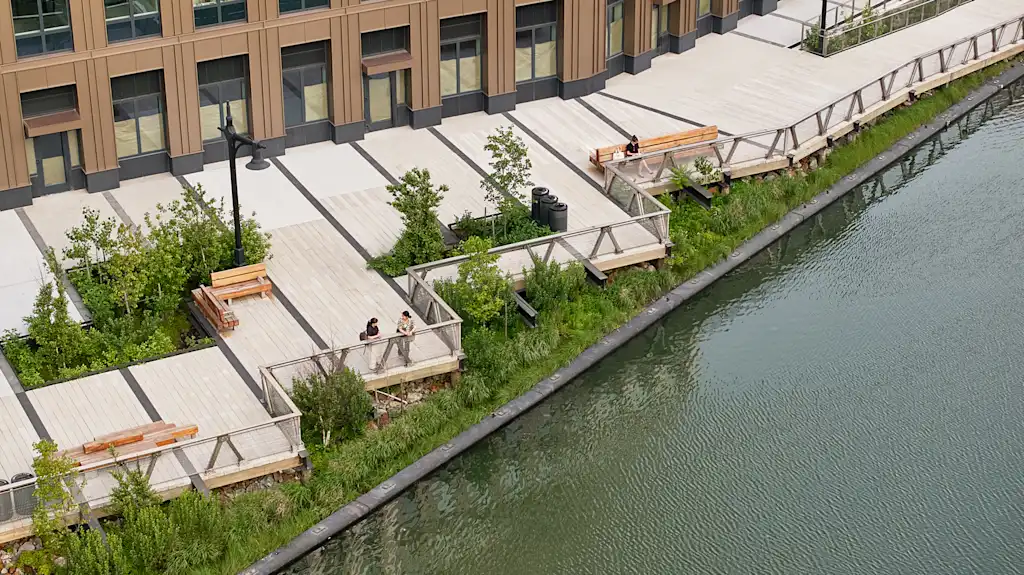
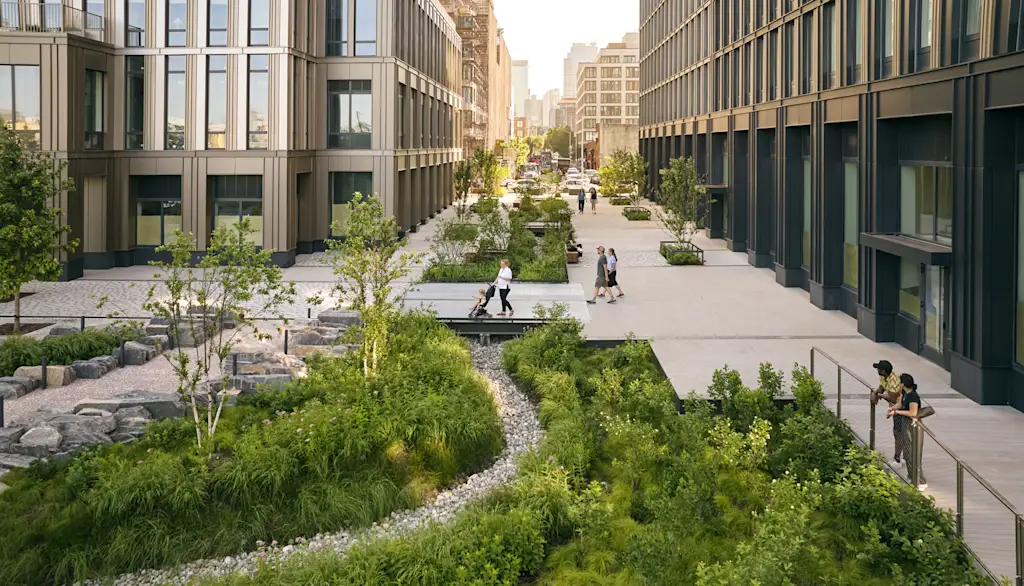
The recently completed waterfront plaza and esplanade near 420 Carroll Street is a testament to innovative design thinking. Described by Gena Wirth, design principal at Scape, as an “eco basin,” this recessed garden integrates natural rainwater management into its design. The strategic use of greenery allows rainwater to filter through the landscape before entering the canal, replicating the natural drainage patterns of the area’s historic tidal wetlands.
Connecting the Community
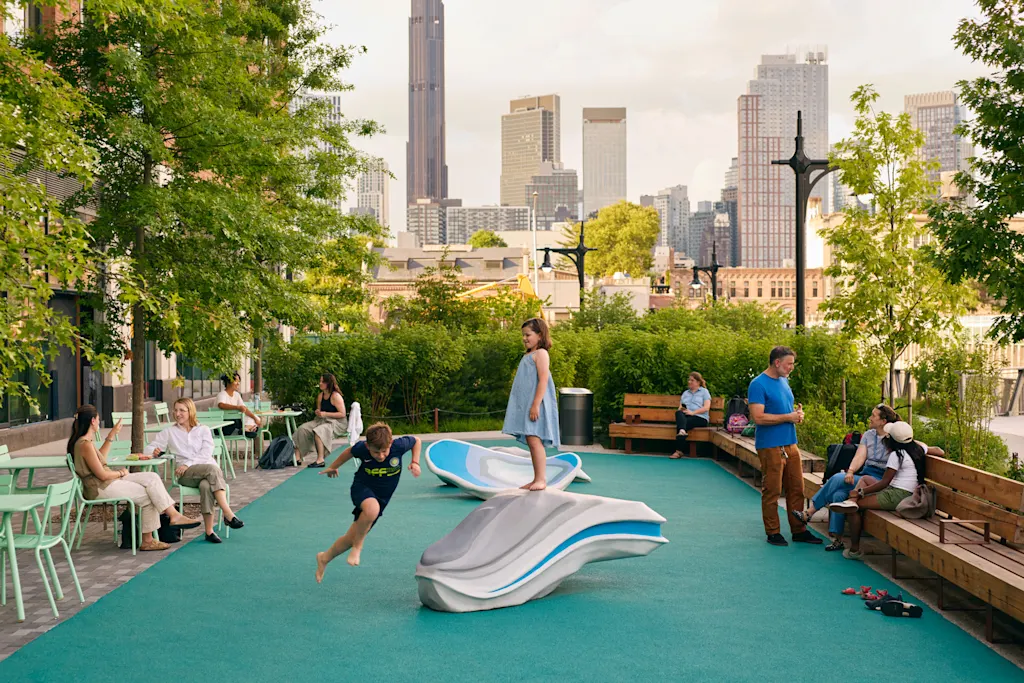
Moreover, the linear park adjacent to Sackett Place enhances access to the waterfront, providing picnic areas and playgrounds that overlook the canal. Although the water remains unsafe for direct contact, this new space is designed to foster a connection between residents and the revitalized environment, with plans for kayak access once the canal’s water quality improves. The inclusion of various levels in the landscaping allows for diverse experiences, catering to both casual visitors and nature enthusiasts alike.
A Vision for the Future
The efforts to restore the Gowanus Canal are not merely about beautification; they represent a broader movement towards sustainable urban living and ecological awareness. As Parker aptly states, “The vision is coming together,” with hopes that the completed landscapes will transform public perception and interaction with the canal. With numerous projects in the pipeline, the Gowanus Canal is poised to become a model for urban revitalization, demonstrating how collaborative efforts can turn a polluted site into a thriving community resource.
Lessons for Miami
Miami, as a coastal city grappling with its own environmental challenges, can draw valuable lessons from the Gowanus Canal’s transformation. The emphasis on community involvement, innovative design, and ecological restoration can inform future developments in Miami’s waterfront areas. As cities worldwide confront issues of sustainability and resilience, the Gowanus Canal stands as a shining example of what is possible through collaborative efforts and visionary planning.
Editorial note: This article was created by A Bit Lavish Miami’s Magazine as an original editorial reinterpretation based on publicly available reporting. Original source: fastcompany.com. Read the original article here: https://www.fastcompany.com/91535727/a-waterfront-glow-up-is-transforming-brooklyns-polluted-gowanus-canal.
Images are used for editorial reference with source credit. If an image requires correction or removal, please contact A Bit Lavish.









The Evolution of the Foldable Smartphone: A New Era of Personalization
As the foldable smartphone revolution unfolds, we analyze its implications for user...
 3 Mins read

Navigating Change: KCRW’s Blueprint for Public Media Resilience
Explore how KCRW in Los Angeles is redefining public media engagement amidst...
2 Mins read

Strategic Escapes: The Art of Vacationing as a Solopreneur
Explore the essential strategies for solopreneurs to effectively plan vacations without sacrificing...
2 Mins read



Navigating the Ethical Frontier: Claude’s Evolution in AI Agency
Exploring the implications of agentic AI through Amanda Askell's insights on Claude,...
3 Mins read
