

The Spectacle of Modern Warfare
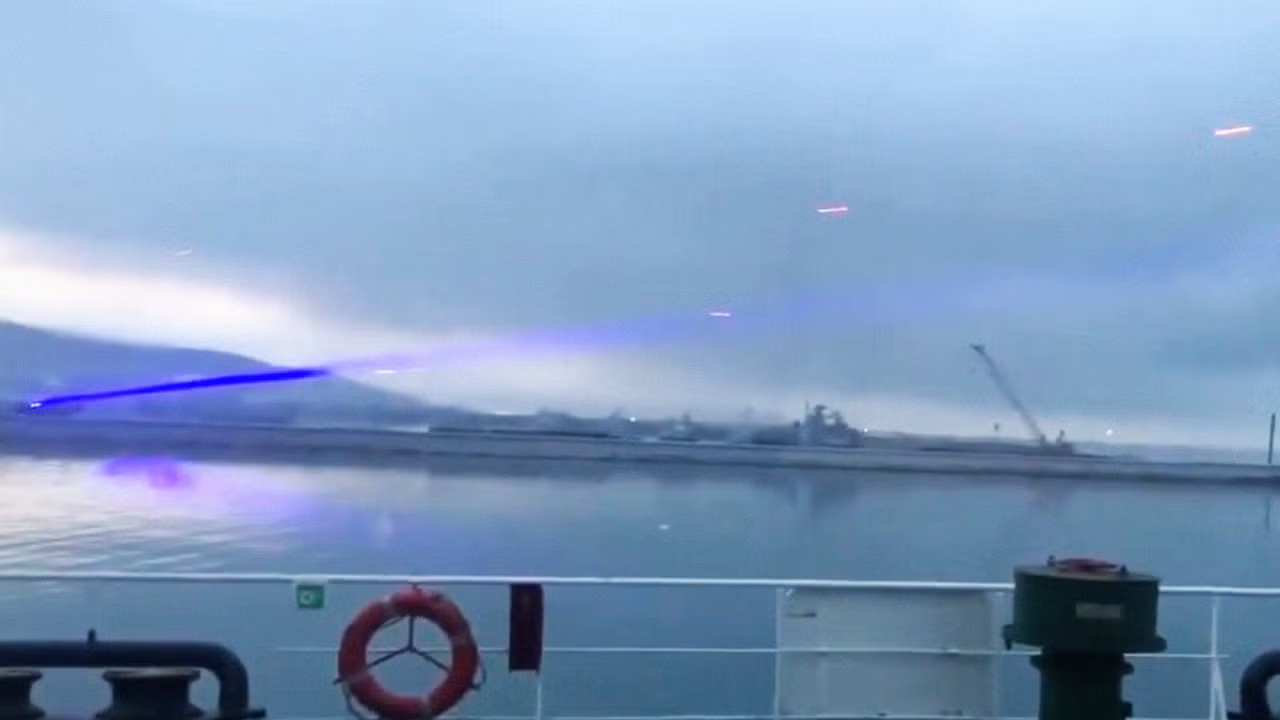
In a dramatic episode that unfolded over the fog-laden waters of the Black Sea, a recent Ukrainian drone attack has sparked a conversation about the effectiveness of laser technology in modern military engagements. Footage shared widely on social media showcased a Ukrainian drone flying towards a Russian warship, only to be met with an array of vivid blue laser beams aimed to intercept its path. However, despite the dazzling display, the drone successfully completed its mission, striking its target amidst a backdrop of tracer fire and shimmering harbor lights.
Unpacking the Attack
Details surrounding the attack remain murky, with conflicting reports on the damage inflicted on Russian naval assets. Nonetheless, the incident underscores a significant limitation of laser systems as countermeasures against unmanned aerial vehicles. The engagement revealed that Russian forces employed low-power laser dazzlers—intended to blind the drone’s cameras—but failed to prevent the strike. This event serves as a pivotal case study, illustrating both the promise and the shortcomings of laser technology in contemporary warfare.
Understanding the Technology Behind the Dazzle
The laser dazzlers used by Russian forces likely operated at a wavelength of 445nm, a commercially available blue laser capable of overwhelming the sensors of many drones. The concept hinges on the vulnerability of silicon-based imaging systems, prevalent in modern drones. In low-light environments, such as the overcast conditions of the Novorossiysk harbor, these sensors can be rendered ineffective when exposed to bright light sources. Yet, in this scenario, the dazzlers were unable to thwart the drone’s approach, raising questions about their viability in real-world applications.
Challenges in a Changing Battlefield
The failure of the dazzler can be attributed to several factors, including the type of sensors used in the Ukrainian drone and the environmental conditions present during the attack. The drone’s use of thermal imaging—not reliant on visible light—allowed it to operate effectively despite the dazzling beams aimed at it. Additionally, the inherent limitations of laser technology in adverse weather conditions, such as fog and humidity, further complicated the defense strategy, demonstrating that the effectiveness of dazzling systems is contingent upon a variety of situational factors.
The Evolution of Countermeasures
The Novorossiysk incident is a critical reminder that as drone technology advances, so too must the countermeasures employed to combat them. The proliferation of laser dazzlers across global military forces highlights a shift in defense strategies, yet the recent engagement reveals that these systems are not foolproof. Countries like the United States and China have invested heavily in laser technology, employing systems designed to disrupt or destroy UAVs. However, the emerging narrative suggests that military forces must continuously innovate to adapt to evolving threats.
Implications for the Future of Warfare
The dynamics of modern warfare are changing, as traditional tactics face challenges from low-cost drone technology. The integration of laser systems, while promising, must be viewed through the lens of practicality and adaptability. The spectacle of dazzling blue beams may capture the imagination, but their recent shortcomings in operational settings remind us of the complexities involved in warfare today. As nations grapple with these emerging threats, the dialogue surrounding laser technology and drone warfare will undoubtedly continue to evolve, shaping the future landscape of military engagements.
Editorial note: This article was created by A Bit Lavish Miami’s Magazine as an original editorial reinterpretation based on publicly available reporting. Original source: fastcompany.com. Read the original article here: https://www.fastcompany.com/91553180/lasers-were-supposed-to-stop-the-drones-they-havent.
Images are used for editorial reference with source credit. If an image requires correction or removal, please contact A Bit Lavish.









Barclays Stock Rises as Traders Anticipate Further Fed Rate Hikes
Traders are reacting to expectations of additional Federal Reserve rate hikes, positively...
 1 Mins read

Court Ruling Allows American Prairie Bison to Remain in Montana
The ongoing legal battle over the bison population in Montana highlights broader...
1 Mins read

Unlocking the Genius Within: Debunking Myths of Human Potential
Explore the neuroscience behind human potential and learn how to harness your...
3 Mins read



Bridging the Gap: The Imperative for Inclusive AI in Skin Cancer Detection
Explore the urgent need for inclusive AI in skin cancer detection, as...
2 Mins read
