
Unlocking the Genius Within: Debunking Myths of Human Potential
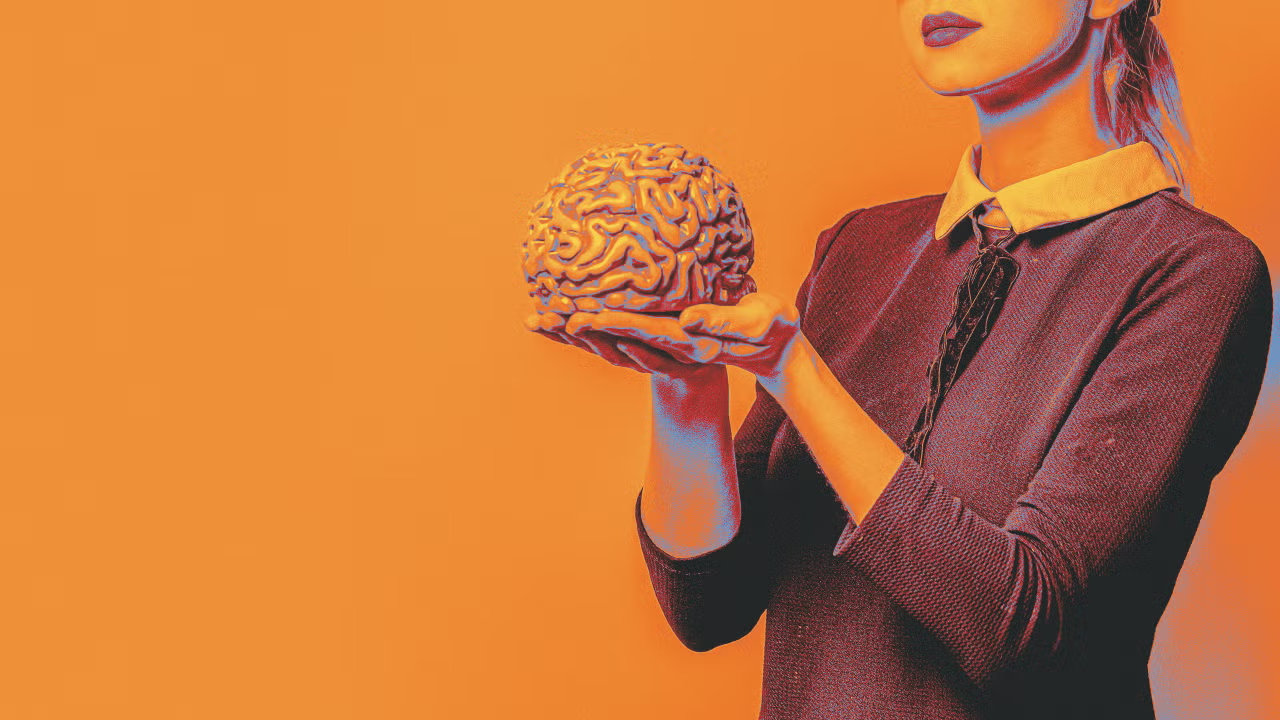
A Shift in Perspective
In the bustling environment of Miami, where innovation and creativity thrive, the notion of genius often casts a long shadow. Dr. Josh Turknett, a distinguished neurologist and founder of the Institute for Performance Neurology, invites us to reconsider our understanding of genius through his insights drawn from neuroscience. In his recent work, The Genius and the Impostor: The Neuroscience of Unlocking Human Potential, Turknett dismantles five prevalent myths that have long misled us about our cognitive capabilities.
Illusions of Simplicity
At the heart of Turknett’s argument lies the premise that every individual possesses the same extraordinary learning engine as celebrated geniuses. Our brains perform remarkably complex tasks with ease—decoding language, recognizing faces, and navigating social interactions are just a few examples. These are cognitive feats that, until recently, eluded the grasp of artificial intelligence, which struggled to replicate the effortless nature of human cognition.
Turknett highlights a crucial insight: the mastery we achieve in various skills can lead us to underestimate their complexity. As we become proficient, the effort required diminishes, creating an illusion that the task is simple. This misconception often stifles our belief in our own capabilities. In the vibrant Miami landscape, where creative pursuits abound, recognizing the intricacies behind our skills can empower us to pursue further mastery.
The Ordinary Brain Behind Extraordinary Minds
One of the most striking revelations from Turknett’s research is the idea that extraordinary minds are built from ordinary brains. The myth that geniuses possess unique neurological structures is debunked through the example of Albert Einstein. Despite his monumental contributions to science, examinations of his brain revealed no remarkable differences from the average human brain. Instead, Einstein’s genius stemmed from a relentless curiosity and a commitment to lifelong learning—a notion that resonates with Miami’s entrepreneurial spirit.
This perspective encourages individuals to embrace their learning journeys, understanding that genius is not an innate gift but a cultivated skill. In a city known for its diverse talents and innovation, the ethos of curiosity-driven exploration can lead to personal and professional breakthroughs.
The Impostor Within
Turknett introduces the concept of the internal narrative—the voice that acts as a self-appointed public relations agent, often misrepresenting our capabilities. This inner critic can undermine our confidence and inhibit our willingness to explore new challenges. Neuroscientific studies suggest that this voice can construct plausible explanations for our actions, even when it is unaware of the underlying motivations.
In Miami’s fast-paced business environment, where competition is fierce and self-doubt can creep in, understanding this internal narrative is crucial. Recognizing that the impostor is not a truth-teller but rather a storyteller can liberate individuals to pursue their ambitions without the shackles of self-limiting beliefs.
Embracing Change and Growth
Turknett emphasizes that our brains are not static; they operate in various modes, each with unique strengths and weaknesses. This variability can impact our cognitive performance throughout the day. The moments of clarity and creativity that often strike when we least expect them are testament to the brain’s different operational settings.
Miami’s culture of innovation thrives on adaptability and exploration. By understanding that our cognitive capabilities can shift based on our mental state, we can create environments that promote creative thinking and problem-solving. Whether through a stroll along the beach or a casual brainstorming session at a local café, the space to think differently can unlock new ideas.
A Lifelong Journey of Curiosity
Finally, Turknett challenges the long-held belief that our brains cease to change as we age. Far from the notion that “you can’t teach an old dog new tricks,” he posits that our brains remain plastic throughout life. The key to unlocking this potential lies in curiosity and the willingness to learn.
In a city that celebrates diversity and innovation, fostering a culture of curiosity can lead to a renaissance of ideas. Miami’s vibrant art scene, culinary landscape, and entrepreneurial ventures serve as reminders that the pursuit of knowledge and skills can occur at any stage of life. The more we engage our brains in learning, the more we stimulate their capacity for change.
As we reflect on Turknett’s insights, we realize that the genius we seek has always been within us, waiting to be unlocked. The path to realizing our potential is paved with curiosity, perseverance, and the courage to challenge the narratives we tell ourselves. In embracing this journey, we can harness the full force of our cognitive brilliance and contribute meaningfully to the ever-evolving tapestry of Miami’s dynamic landscape.
Editorial note: This article was created by A Bit Lavish Miami’s Magazine as an original editorial reinterpretation based on publicly available reporting. Original source: fastcompany.com. Read the original article here: https://www.fastcompany.com/91595374/5-myths-about-being-a-genius.
Images are used for editorial reference with source credit. If an image requires correction or removal, please contact A Bit Lavish.




Dow Jones Drops 300 Points Amid Fed Rate Uncertainty
The Dow Jones Industrial Average fell sharply by 300 points on October...
 1 Mins read
Roundhill Launches S&P 500 Target 10,000 ETF: A Strategic Move in Financial Markets
The launch of the S&P 500 Target 10,000 ETF by Roundhill marks...
2 Mins read
Luis Silberwasser Exits TNT Sports Amid Paramount-Warner Bros. Merger Closure
The departure of Luis Silberwasser from TNT Sports marks a pivotal moment...
2 Mins read
Nasdaq Hits Record Highs Driven by Tech Stock Gains
The Nasdaq Composite Index reached unprecedented heights today, fueled by significant gains...
2 Mins read