
The Hidden History Behind Clothing Fastenings: A Gendered Tradition
Unraveling the Fabric of Fashion
In the vibrant tapestry of Miami’s fashion landscape, the subtleties of clothing design often go unnoticed. One such detail, the orientation of buttons and zippers, reveals a rich historical narrative intertwined with gender roles and societal norms. As consumers become more discerning, understanding these nuances can deepen our appreciation for the garments we wear.
A Historical Lens on Fasteners
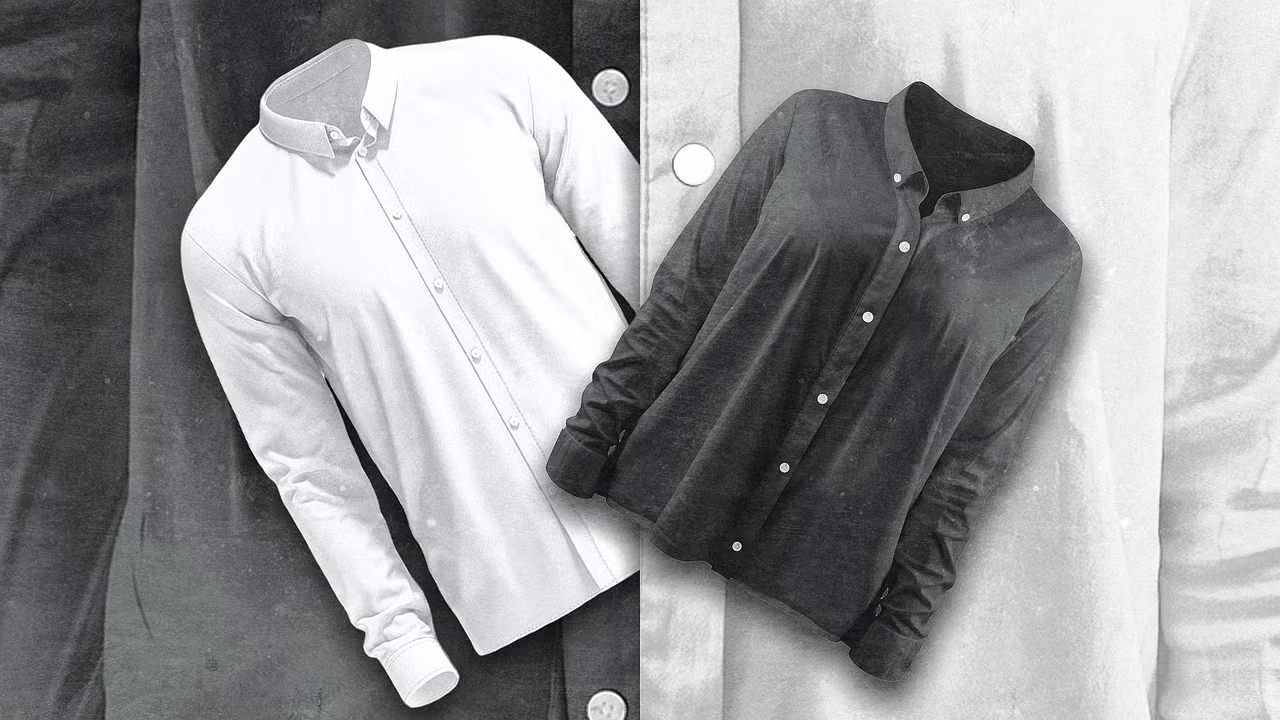
The divergence in fastening styles—men’s clothing typically featuring buttons on the right and women’s on the left—stems from historical practices that have shaped our modern fashion landscape. The roots of this tradition can be traced back to European nobility, where elaborate garments required assistance in dressing. For wealthier women, the intricate designs necessitated the help of servants, who would find it easier to fasten clothing tailored with buttons on the left side, allowing them to utilize their dominant right hand.
Practicality Meets Tradition
Contrastingly, men’s garments evolved with practicality in mind. Historically, men donned their attire without assistance, and thus, buttons were designed for ease of use by the wearer himself, typically fastening on the right. This practical approach also found its roots in military tradition, where the arrangement facilitated the drawing of weapons from the left hip. Such considerations illustrate how functionality in fashion is deeply embedded in historical context.

The Evolution of Manufacturing and Its Impact
As the industrial revolution ushered in a new era of clothing production in the 19th century, consistency became paramount. Factories thrived on standardized designs, leading to the perpetuation of these established fastening traditions. When zippers emerged in the early 20th century, manufacturers opted to maintain the same conventions of button placement, further embedding these gendered norms into the fabric of fashion.
Breaking the Mold in Contemporary Fashion
Today, the fashion industry is witnessing a shift towards inclusivity and gender neutrality. Unisex clothing lines are on the rise, challenging the archaic traditions of button and zipper placement. Designers are now free to experiment with closures in ways that resonate with modern sensibilities, moving beyond the rigid codes of the past. This evolution reflects a broader societal shift towards dismantling gender norms and embracing individuality.
A Canvas for Innovation
In Miami’s dynamic marketplace, designers are seizing opportunities to redefine clothing conventions, crafting pieces that cater to diverse identities. This trend not only highlights a growing acceptance of fluid gender expression but also encourages creativity in design thinking. The freedom to place fasteners wherever one desires allows for a more personal engagement with fashion, inviting consumers to express themselves authentically.
Conclusion: Fashion as Reflection
The way we fasten our clothing is more than a mere detail; it is a reflection of the historical, cultural, and societal narratives that shape our identities. As Miami continues to be a melting pot of innovation and tradition, understanding these intricacies fosters a deeper connection to the garments we choose to wear. The evolution of clothing fastenings serves as a reminder that fashion is not static but rather a living dialogue with our past and present.

Editorial note: This article was created by A Bit Lavish Miami’s Magazine as an original editorial reinterpretation based on publicly available reporting. Original source: fastcompany.com. Read the original article here: https://www.fastcompany.com/91547311/mens-womens-clothes-buttons-zippers-different-sides-explained.
Images are used for editorial reference with source credit. If an image requires correction or removal, please contact A Bit Lavish.










The Evolution of the Foldable Smartphone: A New Era of Personalization
As the foldable smartphone revolution unfolds, we analyze its implications for user...
 3 Mins read

Navigating Change: KCRW’s Blueprint for Public Media Resilience
Explore how KCRW in Los Angeles is redefining public media engagement amidst...
2 Mins read

Strategic Escapes: The Art of Vacationing as a Solopreneur
Explore the essential strategies for solopreneurs to effectively plan vacations without sacrificing...
2 Mins read



Navigating the Ethical Frontier: Claude’s Evolution in AI Agency
Exploring the implications of agentic AI through Amanda Askell's insights on Claude,...
3 Mins read
