
The Legacy of the Stars and Stripes: A Deep Dive into Flag Day 2026
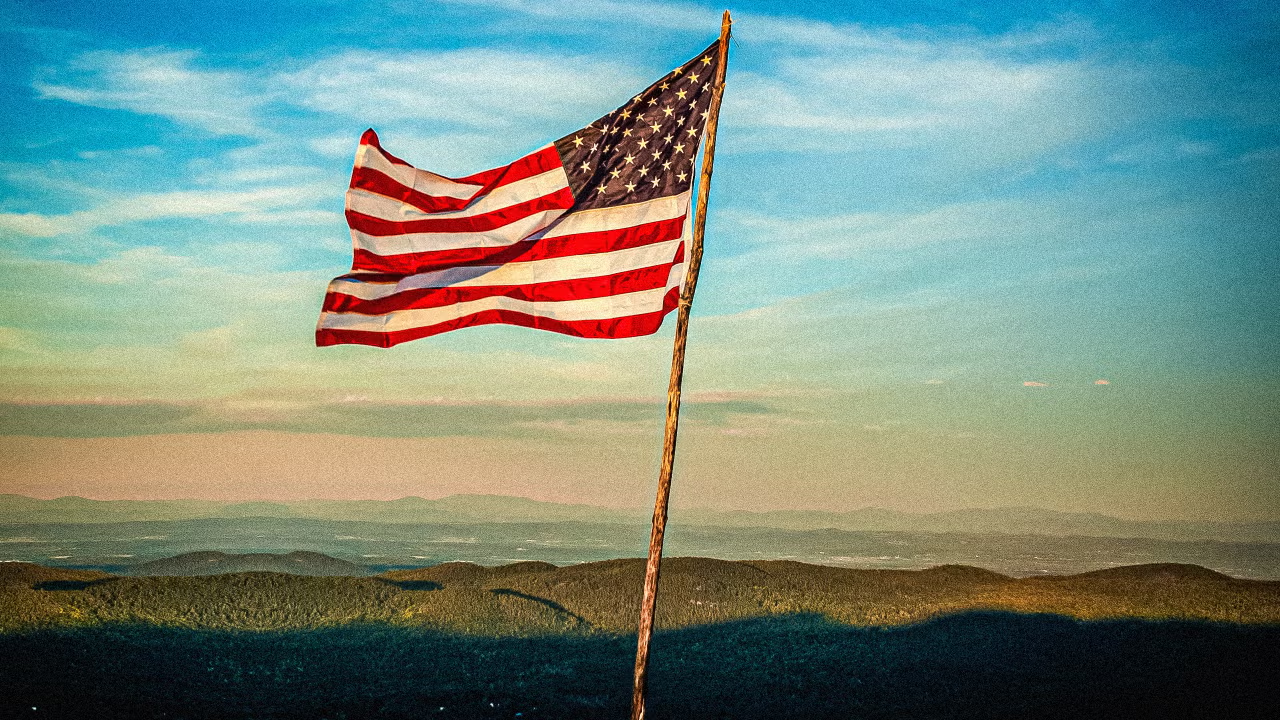
Emblem of Unity and Pride
The American flag, with its iconic stars and stripes, transcends mere fabric. It serves as a powerful symbol of unity, evoking a sense of national pride and shared purpose among citizens. As we approach Flag Day on June 14, 2026, the occasion prompts reflection on the history, evolution, and cultural resonance of this cherished emblem.
Historical Origins of Flag Day
Flag Day commemorates the moment in 1777 when the Second Continental Congress officially adopted the stars and stripes as the national banner. For many years, the day passed without much recognition until a schoolteacher named Bernard J. Cigrand ignited a movement in 1885. He engaged his students in discussions about the flag’s significance, fostering a sense of patriotism and awareness.
His efforts blossomed into a nationwide celebration, culminating in President Woodrow Wilson’s proclamation in 1916, designating June 14 as Flag Day. This act was solidified in 1949 when President Harry S. Truman signed a law affirming the observance, ensuring that the day would be marked in honor of the flag’s historical importance.
The Story Behind the Flag
While many associate Betsy Ross with the creation of the first American flag, the narrative is more nuanced. Although Ross undoubtedly sewed flags and moved within influential circles, including that of George Washington, there remains ambiguity regarding her role in the creation of the initial design. Historians generally credit Francis Hopkinson, a signer of the Declaration of Independence, as the flag’s original designer. His vision, featuring 13 stripes and 50 stars, represents the nation’s journey from 13 colonies to a union of states.
The flag’s design has undergone transformations, yet its core ethos has remained constant. The 13 stripes symbolize the original colonies, while the 50 stars signify the states that comprise the nation. This enduring representation has inspired artistic expressions, most notably Francis Scott Key’s evocative lyrics to “The Star-Spangled Banner,” penned during the British bombardment of Fort McHenry in 1814. This anthem became an official symbol of American identity in 1931, further intertwining the flag with the nation’s story.
Modern Celebrations and Cultural Significance
As Flag Day approaches, particularly in 2026, which marks America’s 250th anniversary, its significance is magnified. The day serves as a prelude to Independence Day, allowing citizens to reflect on their national identity while celebrating the ideals of freedom and unity that the flag represents. In contemporary contexts, events vary from community parades to educational programs that delve into the flag’s history.
This year, festivities are expected to be particularly noteworthy. Former President Donald Trump, who will celebrate his 80th birthday on the same day, plans a unique event at the White House, showcasing a UFC ring dubbed “the Claw.” This eclectic celebration, juxtaposed against the backdrop of political protests and a star-studded concert in New York City, highlights the flag’s role as a rallying point for diverse expressions of American identity and values.
A Symbol of Resilience and Reflection
The American flag has weathered the storms of history, standing as a symbol of resilience and hope. In a time when divisions can feel pronounced, Flag Day invites citizens to come together, reflect on shared values, and embrace the diversity that enriches the American narrative. The flag’s presence at athletic events, memorials, and civic gatherings underscores its role as a unifier, reminding us of the collective journey toward a more perfect union.
Looking Forward: The Future of Flag Day
As we honor the flag and the ideals it embodies, the future of Flag Day lies in the hands of the next generation. Educators and community leaders play a crucial role in imparting the flag’s significance, ensuring that its legacy endures. With each passing year, the celebration evolves, adapting to the shifting cultural landscape while remaining anchored in the essence of what the flag represents.
In Miami, where cultural diversity flourishes, Flag Day can serve as a platform for dialogue and unity across different communities. By fostering an appreciation for the flag’s history and meaning, Miamians can contribute to a broader understanding of national identity, reinforcing the importance of embracing both tradition and innovation in our collective narrative.
Editorial note: This article was created by A Bit Lavish Miami’s Magazine as an original editorial reinterpretation based on publicly available reporting. Original source: fastcompany.com. Read the original article here: https://www.fastcompany.com/91558657/flag-day-2026-explained-history-national-not-federal-holiday.
Images are used for editorial reference with source credit. If an image requires correction or removal, please contact A Bit Lavish.









Microsoft’s Strategic Reset: Navigating Challenges in the Gaming Landscape
Explore Microsoft's recent layoffs within its Xbox division as part of a...
 2 Mins read

Klarna’s Ambitious Leap into Banking: A New Era for Fintech
Discover how Klarna's transition from a buy now, pay later service to...
2 Mins read

The Politics of Play: Balogun’s Red Card Reversal and Its Ripple Effects
An analysis of the unprecedented intervention by Donald Trump to lift the...
2 Mins read



The Resurgence of Local Occult Shops: A Modern Alchemy of Community and Commerce
Explore how local occult shops are thriving in the wake of online...
2 Mins read
