
Venezuelan Women: Pioneers of Change and Resilience
The Unseen Architects of Society
In the bustling heart of Venezuela, while discussions swirl around elections, sanctions, and economic turmoil, a quiet yet powerful force is at work—women. These tireless individuals are the backbone of families, providing care for children, navigating economic challenges, and offering emotional support amid the turmoil of migration. Their efforts, often overlooked, have created an invisible yet essential social infrastructure that sustains communities in crisis.
A Call for Inclusion in the Transition
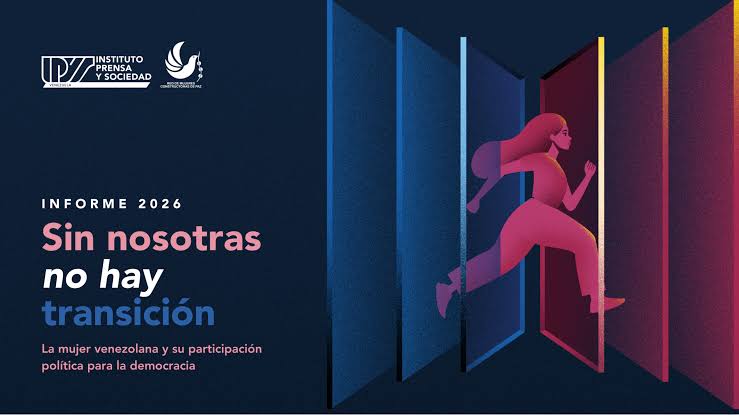
The recent study conducted by IPYS Venezuela highlights the critical need for women’s voices in the impending discussions of transition and reconstruction. It reveals that a staggering 69% of women believe their participation is vital for genuine change. This sentiment is even stronger among older generations, with 80% of women over 55 recognizing their indispensable role. Yet, a glaring contradiction remains: only 2% of these women identify with political parties. This gap indicates a disconnect between the desire for involvement and the traditional political frameworks that fail to engage them meaningfully.
Redefining Political Engagement
What does political participation truly mean? The study suggests that these women are already engaged in politics outside conventional definitions—through their roles as caregivers, problem-solvers, and community leaders. They are the emotional anchors of their families and the managers of scarce resources, often executing complex tasks that blur the lines of traditional political activity. Yet, despite their crucial contributions, access to formal decision-making spaces remains limited. Over 68% of mothers with young children dedicate more than eight hours a day to caregiving, leaving little room for political engagement.
Challenges and Opportunities for Young Women
Alarmingly, younger women, particularly those aged 18 to 34, display a notable disconnect from political participation, with only 56% viewing their involvement as critical. Barriers such as economic instability, early family responsibilities, and a lack of relevance in traditional political discourse contribute to this disengagement. However, they do rally around concrete community issues, suggesting a pathway to reconnecting them to the political process. To engage this demographic, the political landscape must demonstrate tangible benefits that resonate with their daily experiences.
The Path Forward: From Resilience to Representation
As Venezuela stands on the brink of potential transition, it is crucial to recognize that women are not mere bystanders; they are the architects of the future. Having borne the brunt of economic decline and social upheaval, they possess unique insights and solutions. The study underscores that 39% of women see peacebuilding as a vital area for their contributions, while 30% advocate for reconciliation, and 29% focus on economic recovery. For a transition to be meaningful, women must be included not symbolically but as active participants in negotiations and decision-making processes.
A Vision for Inclusive Democracy
To construct a robust democracy, the agenda for women’s rights must not be an afterthought but an integral part of the transition framework. Issues such as equal pay, political representation, security, and economic autonomy should be embedded in the very definition of democracy. The implications are clear: a transition that ignores the voices and contributions of women risks perpetuating the same exclusionary systems that have long dominated Venezuelan politics. For those at the helm of shaping the future, it is essential to recognize that empowering women is not about conceding space; it is about enhancing the nation’s capacity for better governance.
Venezuelan women stand ready—not waiting for rescue but actively crafting the narrative of their country. They have been the resilient force amid adversity, and now they must be at the forefront of rebuilding Venezuela. A transition devoid of their participation may shift power but fail to foster the profound changes necessary for a truly transformed society.
Editorial note: This article was created by A Bit Lavish Miami’s Magazine as an original editorial reinterpretation based on publicly available reporting. Original source: efectococuyo.com. Read the original article here: https://efectococuyo.com/opinion/las-venezolanas-estamos-listas/.
Images are used for editorial reference with source credit. If an image requires correction or removal, please contact A Bit Lavish.




Venezuela Reports 8.4% Inflation Rate for September 2026
The Central Bank of Venezuela has announced an inflation rate of 8.4%...
 2 Mins read
A Shift in the Winds: Flávio Bolsonaro’s Call for Change in Brazil
Explore Flávio Bolsonaro's vision for Brazil's future following his strong showing in...
2 Mins read
A Surprising Turn in Brazilian Politics: Lula’s Unexpected First-Round Results
Brazil's President Luiz Inácio Lula da Silva reacts to unexpected election results,...
2 Mins read
Venezuela’s Inflation Rate Hits 8.4% in September 2026
The Central Bank of Venezuela has reported an inflation rate of 8.4%...
2 Mins read