
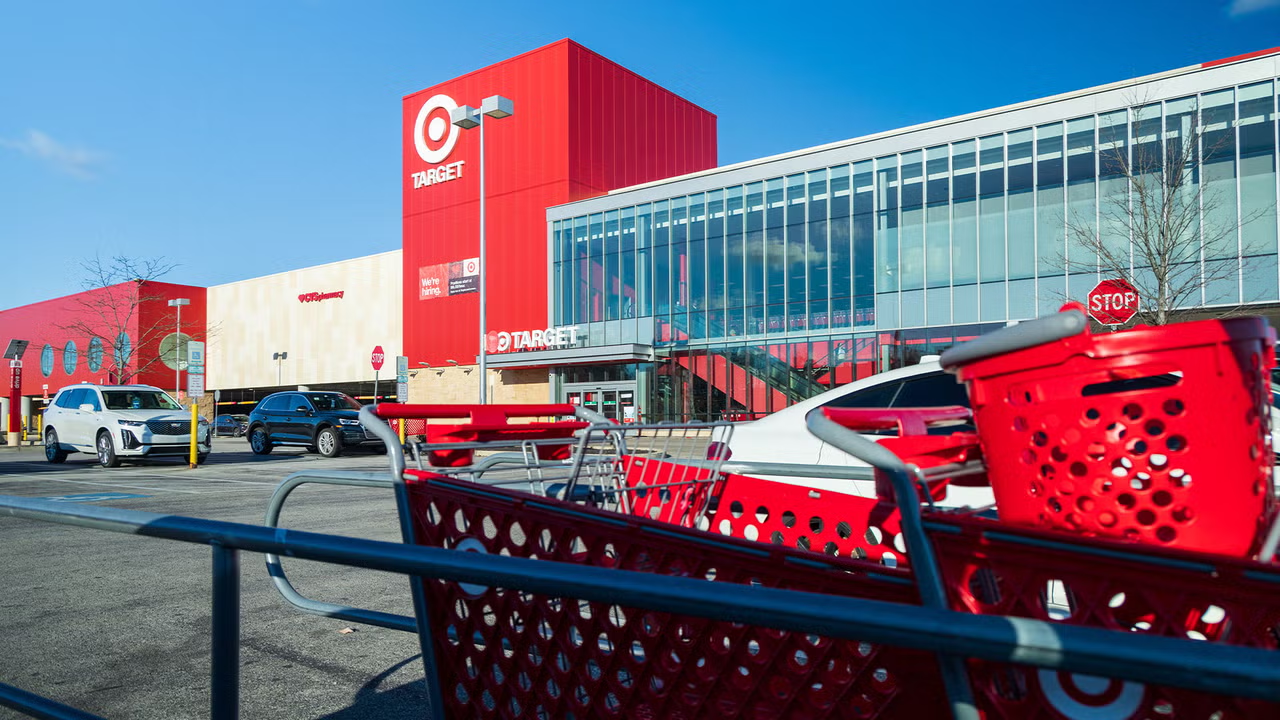
Unpacking Target’s Financial Triumph
In a remarkable financial disclosure, Target Corporation recently reported a staggering $994 million in tariff refunds during its second quarter of 2026. This significant influx has come at a pivotal moment for the retail giant, which is currently navigating a strategic turnaround led by its new CEO, Michael Fiddelke. With net sales rising by 5.3% year-over-year and comparable sales increasing by 3.8%, Target is clearly gaining momentum in a competitive landscape.
Leadership in Transition
Fiddelke, who stepped into the CEO role in February, expressed optimism regarding the company’s evolving strategy, emphasizing a commitment to style, design, and value. This focus not only resonates with consumers but also positions Target as a formidable player in the retail sector. The company’s revenue of $26.54 billion surpassed analysts’ expectations and signals a growing confidence in its operational trajectory.
A Tariff Refund Bonanza
The $994 million in tariff refunds stems from a favorable Supreme Court ruling earlier this year that overturned tariffs imposed during the previous administration. This ruling has allowed companies like Target to reclaim funds that were initially passed on to consumers through higher prices. As these refunds bolster Target’s bottom line, the pressing question remains: will customers see any of this windfall returned to them?
The Customer Conundrum
Despite the significant refund, Target’s earnings report offered little clarity on direct customer reimbursements. Chief Financial Officer Jim Lee suggested that the company intends to utilize the refunds internally to enhance pricing strategies rather than issuing checks to consumers. He stated, “We have, and we will continue to, invest in price to ensure our guests are getting tremendous value each and every time they visit us at Target.” This indicates a strategic decision to leverage the refund for broader price adjustments, benefiting the overall customer experience.
Broader Implications in Retail
Target’s approach mirrors the sentiment among many major retailers that have received substantial tariff refunds. Companies such as Apple, Nike, and FedEx have similarly opted to retain these refunds rather than pass the benefits directly to consumers. Interestingly, some retailers, like Costco, have hinted at plans to return tariff refunds to members, albeit without specific details. Meanwhile, Amazon has indicated a more proactive approach, promising to issue refunds to customers in specific scenarios where increased import costs can be traced directly back to them.
Looking Ahead: A Strategic Shift
The retail landscape is undergoing significant changes, and the implications of these tariff refunds could extend beyond immediate financial benefits. For Target and its competitors, the focus on customer value and pricing strategies will be critical as they adapt to shifting market dynamics. By investing in price reductions and enhancing the shopping experience, Target aims to solidify its position in a marketplace that increasingly prioritizes value and customer satisfaction.
As this story continues to unfold, the retail community and consumers alike will be closely watching how Target and other major players utilize their newfound financial resources. The outcome may redefine customer relationships and brand loyalty in a post-tariff landscape.
Editorial note: This article was created by A Bit Lavish Miami’s Magazine as an original editorial reinterpretation based on publicly available reporting. Original source: fastcompany.com. Read the original article here: https://www.fastcompany.com/91592235/target-tariff-refunds-update-will-customers-get-money-directly.
Images are used for editorial reference with source credit. If an image requires correction or removal, please contact A Bit Lavish.










Navigating Information Overload: Insights from 19 Business Leaders
Explore how top leaders manage information overload in today's fast-paced world, with...
 2 Mins read

A New Era in Florida Politics: The Rise of Byron Donalds and Progressive Forces
Exploring the implications of Byron Donalds' nomination and the rise of progressive...
2 Mins read

Transforming Urban Air Quality: Lessons from London’s Ultra Low Emission Zone
Explore how London's Ultra Low Emission Zone has significantly improved children's lung...
 ABL3 Mins read


Soaring Ahead: Amazon’s Ambitious Drone Delivery Expansion in the U.S.
Amazon is set to revolutionize delivery with an expansive drone network across...
ABL2 Mins read

Leave a comment