
Indian Rupee Hits Two-Month Low Amid Global Bond Rout and Rising Oil Prices
MUMBAI — October 1, 2026
The Indian rupee has dropped to a two-month low, trading at 83.50 against the US dollar, as a global bond rout deepens and oil prices surge. This significant decline, reported on October 1, 2026, highlights the interconnectedness of global financial markets and the potential economic implications for India.
The immediate trigger for this downturn appears to be a sharp increase in US Treasury yields, which have reached a 24-year peak. Investors are reacting to a combination of factors, including expectations of prolonged high interest rates from the Federal Reserve and concerns over inflation. As a result, capital is flowing out of emerging markets, including India, leading to a depreciation of the rupee.
Additionally, rising oil prices, which have climbed to over $90 per barrel, are exacerbating the situation. India, being one of the largest importers of oil, is particularly vulnerable to fluctuations in global oil prices. The increased cost of oil imports not only affects the trade balance but also puts pressure on inflation, further complicating the Reserve Bank of India’s monetary policy decisions.
Key players in this scenario include the Reserve Bank of India (RBI), which may need to intervene to stabilize the rupee, and the Indian government, which faces the challenge of managing economic growth amid rising costs. The RBI’s recent monetary policy stance has been cautious, with a focus on controlling inflation while supporting economic recovery.
This development is receiving significant attention due to its potential ramifications for the Indian economy. A weaker rupee can lead to higher import costs, affecting consumer prices and overall economic stability. Analysts are closely monitoring the situation, as sustained depreciation could lead to increased inflationary pressures, impacting the purchasing power of Indian consumers.
Looking ahead, several scenarios could unfold. If the global bond rout continues and oil prices remain elevated, the rupee may face further downward pressure. Conversely, if the Federal Reserve signals a shift in its interest rate policy or if oil prices stabilize, there could be a recovery in the rupee’s value. Market participants will be keenly observing upcoming economic indicators and central bank communications for signs of direction.
In conclusion, the recent decline of the Indian rupee amid a global bond rout and rising oil prices underscores the fragility of emerging market economies in the face of global financial shifts. Stakeholders, including policymakers and investors, will need to navigate these turbulent waters with caution as they assess the implications for economic growth and stability.
Source: Business Recorder








Empowering Your Career: The Art of Setting Boundaries
Discover how setting boundaries can transform your career and enhance leadership potential,...
 3 Mins read
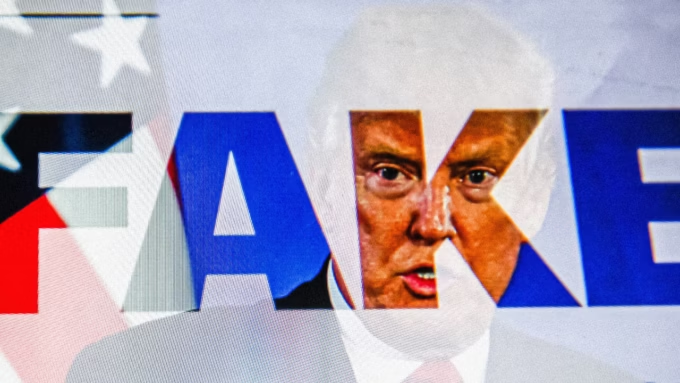
Navigating the New Landscape of AI and Election Integrity
As artificial intelligence reshapes political campaigning, states grapple with the challenges of...
3 Mins read

G7 Announces Immediate Release of 100 Million Barrels of Oil in Response to Trump Threat
The G7's decisive action to release oil underscores the geopolitical tensions surrounding...
2 Mins read



G7 Nations Agree to Release 100 Million Barrels of Oil and Diesel Stocks Amid U.S. Policy Shift
The G7's recent decision to release significant oil and diesel stocks, coupled...
2 Mins read

Leave a comment