
Navigating the New Landscape of Voting Rights: Implications of Recent Court Rulings
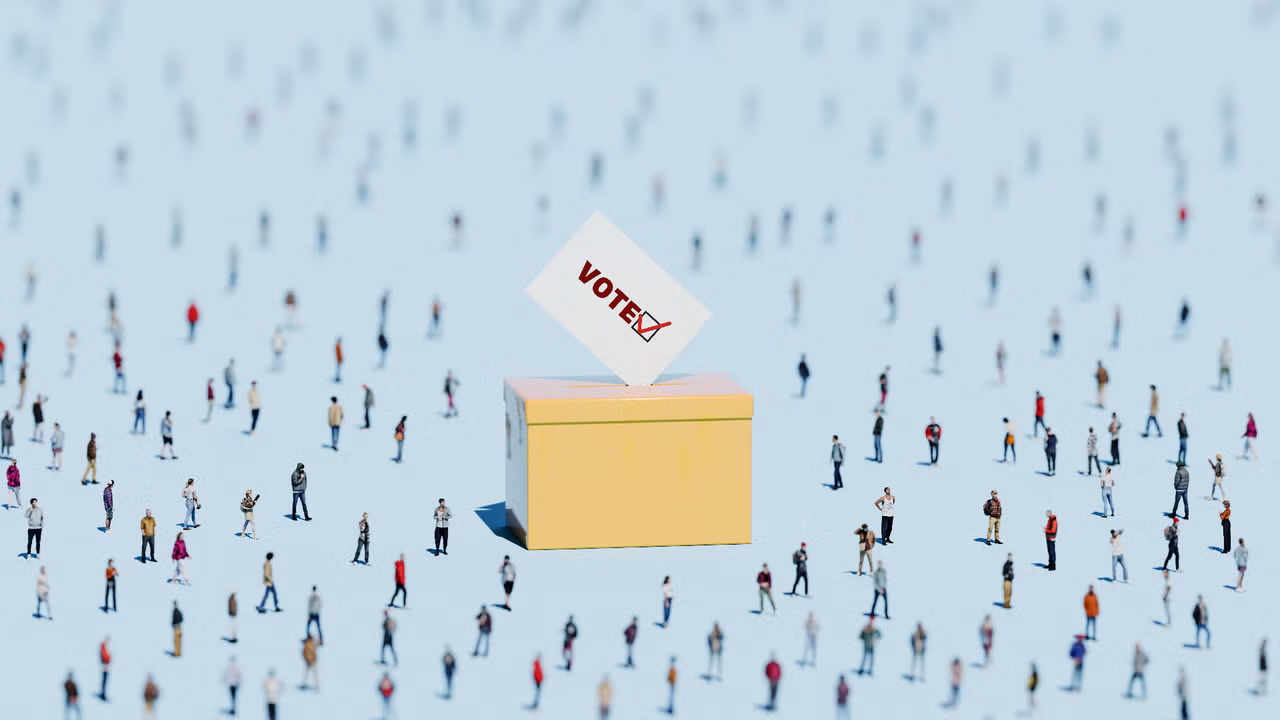
Shifting Powers in the Election Arena
The recent federal court ruling has introduced a significant pivot in the ongoing discourse surrounding mail-in voting in the United States. In a notable decision, U.S. District Judge Indira Talwani blocked directives from the Trump administration aimed at restricting mail-in ballot access, reinforcing the constitutional boundaries between state and federal powers in managing elections.
A Constitutional Check on Federal Authority
Judge Talwani’s ruling is not merely a legal victory for a coalition of 23 states but a reaffirmation of the principle that the Constitution entrusts states with the authority to determine voter eligibility. This judicial intervention underscores a critical moment in the governance of elections, as the Trump administration’s attempts to exert greater federal control have been halted.
In her ruling, Talwani emphasized that the federal government lacks the jurisdiction to dictate voter eligibility criteria or impose restrictions on mail-in voting. This legal interpretation serves as a reminder of the foundational structure of American governance, where states maintain autonomy over the electoral process.
Mail-in Voting: A Safe and Accessible Method
Despite the controversy surrounding mail-in voting, numerous studies and historical data suggest it is a secure and effective means of facilitating elections. States like Oregon have championed universal vote-by-mail systems for over two decades with minimal instances of fraud, thereby demonstrating its reliability.
This method of voting has gained traction particularly in Western states, which tend to lean Democratic. California, Colorado, and Washington are prime examples of jurisdictions where mail-in voting has become a standard practice, promoting greater accessibility and participation among voters.
The Political Implications of the Ruling
The implications of this ruling extend far beyond legal parameters; they touch upon the very fabric of American political dynamics as the nation heads into pivotal midterm elections. With the ruling providing a boost to states advocating for mail-in voting, the upcoming elections may witness an uptick in voter participation, particularly among demographics that typically benefit from accessible voting methods.
However, the ruling is also expected to ignite further legal battles, as the Trump administration has indicated intentions to challenge this decision. Such challenges could prolong the debate over voting rights, potentially leading to a patchwork of regulations that vary significantly from one state to another.
Public Sentiment and the Future of Voting
As public discourse around voting rights continues to evolve, it is crucial to consider the broader implications of these legal battles. A significant portion of the electorate believes in the importance of maintaining accessible voting mechanisms, especially in a post-pandemic world where traditional voting methods may pose challenges.
With the rise of digital communication and the growing expectation for convenience in civic participation, mail-in voting could very well become a cornerstone of modern electoral strategies. Politicians and parties must address the concerns of their constituents regarding voting access to remain relevant and responsive in an increasingly complex political landscape.
Miami: A Microcosm of National Trends
In Miami, where diverse communities converge, the outcome of such rulings and the ongoing debates over mail-in voting have particular significance. The city’s demographic makeup highlights the necessity for accessible voting options, as various groups may face unique challenges in participating in elections.
The local response to these national trends will be pivotal in shaping future electoral strategies. As Miami embraces innovation in governance and civic engagement, it will be essential for local leaders to advocate for policies that promote inclusivity and accessibility in the electoral process.
As we observe these developments, the intersection of law, politics, and public sentiment will undoubtedly continue to influence how Americans engage with their democratic rights, making it a critical area for ongoing analysis and discussion.
Editorial note: This article was created by A Bit Lavish Miami’s Magazine as an original editorial reinterpretation based on publicly available reporting. Original source: fastcompany.com. Read the original article here: https://www.fastcompany.com/91566009/a-new-court-ruling-could-shape-how-americans-vote-in-the-next-election.
Images are used for editorial reference with source credit. If an image requires correction or removal, please contact A Bit Lavish.










A Sculpture of Controversy: The Unveiling of Messi’s 85-Foot Tribute
Explore the intricacies behind the unveiling of Lionel Messi's monumental statue in...
 3 Mins read

The Ripple Effect: How AI Is Reshaping Consumer Electronics Pricing
Explore how AI-driven shortages are impacting the prices of popular consumer electronics,...
3 Mins read

Reimagining Trust: The Evolving Landscape of News Consumption
Explore the shifting dynamics of news consumption, trust, and brand relevance in...
2 Mins read


Navigating Change: H&M’s Strategic Retreat from Physical Retail
Exploring H&M's recent store closures and strategic shift towards a more sustainable...
2 Mins read

Leave a comment