
A New Dawn in Depression Treatment: tDCS Takes Center Stage
Transforming Mental Health Paradigms
The landscape of mental health treatment is gradually evolving, and a pivotal moment has arrived with the FDA’s recent approval of a revolutionary device designed to combat depression without traditional medications. Transcranial direct-current stimulation (tDCS) has emerged as a viable alternative, offering hope to those who struggle with mental health issues in an increasingly complex world.
FDA Approval: A Milestone for tDCS
In a significant stride for mental health innovation, the FDA has greenlit a device from Swedish company Flow Neuroscience, allowing patients to use this groundbreaking technology from the comfort of their homes. For years, tDCS has existed as a fringe treatment, particularly in the wellness community, but this formal recognition elevates its status as a legitimate medical option. As Anna Wexler, a medical ethics professor at the University of Pennsylvania, emphasizes, this approval redefines tDCS not merely as a wellness gadget, but as a serious medical therapy.
Understanding the Mechanisms
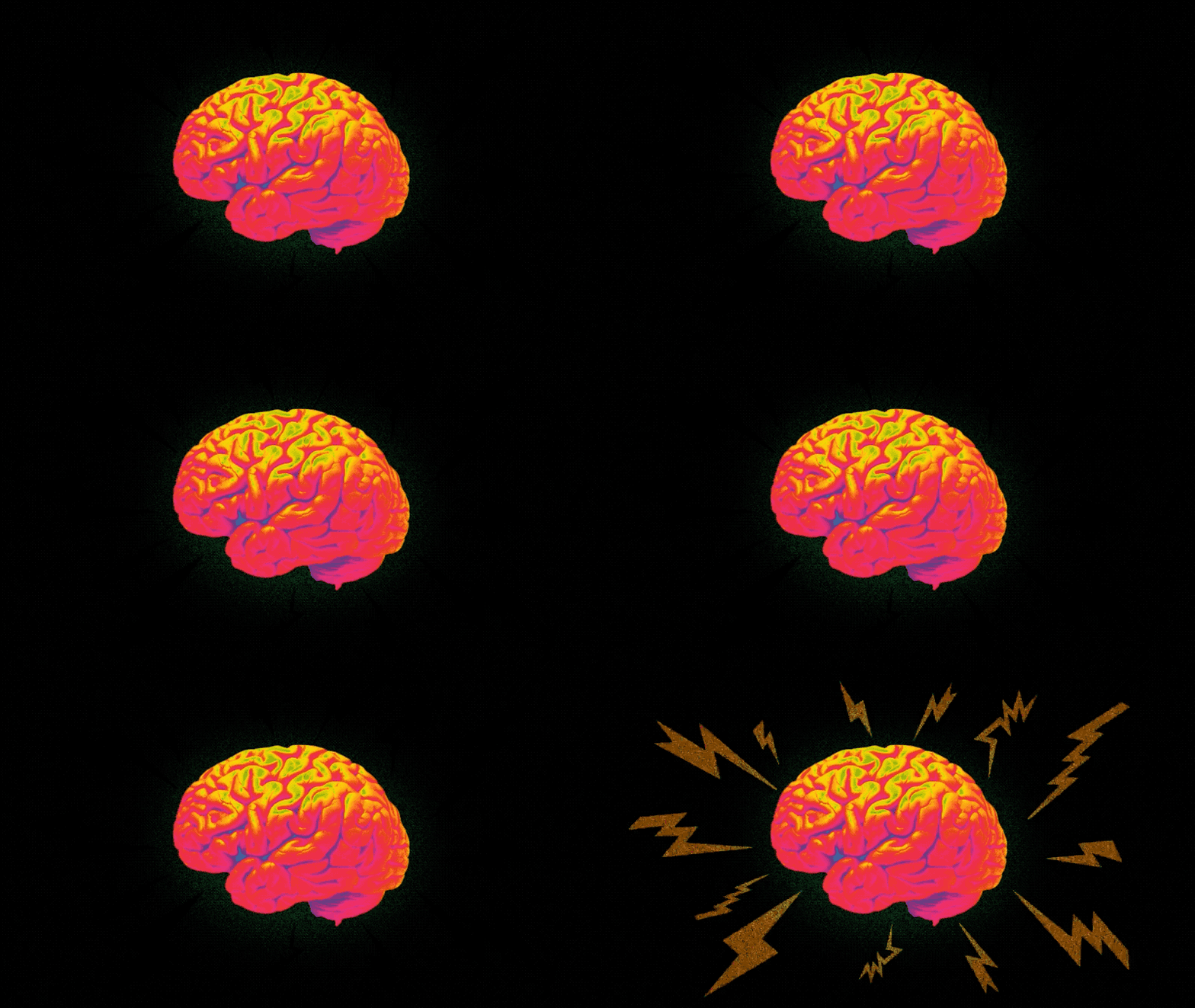
The principle behind tDCS is both fascinating and straightforward. The device works by delivering a mild electrical current to the brain, enhancing the likelihood of neural firing and potentially fostering better communication between different areas of the brain. This concept marks a significant shift in the understanding of depression, moving away from the long-held belief that it is purely a chemical imbalance. Instead, it highlights the importance of neural connectivity in mental health.
Beyond Pharmaceuticals: A New Approach
For decades, the primary treatment for depression has centered around selective serotonin reuptake inhibitors (SSRIs), which many Americans rely on today. However, with the rise of tDCS, experts are beginning to envision a future in psychiatry that could significantly reduce the reliance on pharmacological treatments. Mark George, a prominent figure in the field of neuromodulation, asserts that this device aims to engage directly with neural activity, representing a more hands-on approach to mental health care.
Real-World Applications and Challenges
The potential of tDCS is already being observed in clinical settings. Psychiatrists like Somayya Kajee in England are leveraging this technology to help patients minimize or even forgo antidepressants, particularly for individuals with ADHD or autism who may be hesitant to introduce additional medications. However, the path to widespread adoption is not without hurdles. While initial studies have shown promise, results have been mixed. The Empower study, which informed the FDA’s decision, indicated that 58% of participants reported improvement, yet also revealed a moderate level of uncertainty regarding the treatment’s effectiveness.
Accessibility and Future Impact
One of tDCS’s most significant advantages lies in its accessibility. Unlike more invasive treatments such as electroconvulsive therapy or even transcranial magnetic stimulation, which often require costly in-clinic visits, tDCS provides a low-cost alternative that can be administered at home. This could potentially democratize mental health treatment, making it more available to the wider population and addressing the pressing need for effective care in a world where mental health issues are increasingly prevalent.
The Miami Connection
As Miami continues to position itself as a hub for innovation and wellness, the emergence of tDCS could play a vital role in reshaping the city’s mental health landscape. With its vibrant mix of cultures and lifestyles, Miami is an ideal environment for adopting such groundbreaking treatment options. The potential for tDCS to facilitate improved mental health aligns with the city’s commitment to enhancing the overall well-being of its residents. As more individuals seek holistic approaches to mental health, tDCS stands poised to become an integral part of Miami’s health and wellness narrative.
Editorial note: This article was created by A Bit Lavish Miami’s Magazine as an original editorial reinterpretation based on publicly available reporting. Original source: fastcompany.com. Read the original article here: https://www.fastcompany.com/91552535/fda-approved-tdcs-depression-treatment.
Images are used for editorial reference with source credit. If an image requires correction or removal, please contact A Bit Lavish.








Guardians of Innovation: The Rising Tide of Security Workers in Silicon Valley
Explore the critical role of security workers in Silicon Valley's AI landscape...
 2 Mins read

The New Chapter in AI: How Book Acquisitions are Reshaping Language Models
Explore how AI companies are acquiring physical books to enhance training for...
2 Mins read

Reassessing the Impact of Cell Phone Bans in Schools: A Miami Perspective
Explore the nuanced effects of cell phone bans in schools, with insights...
2 Mins read



Navigating the AI-Infused Entertainment Landscape: The Rise of ‘Bad Cat’
Explore the intriguing intersection of AI and nostalgia in entertainment with the...
2 Mins read
