
A Prehistoric Masterpiece: The Record-Breaking Sale of Gus the T-Rex
Unearthing a Legend
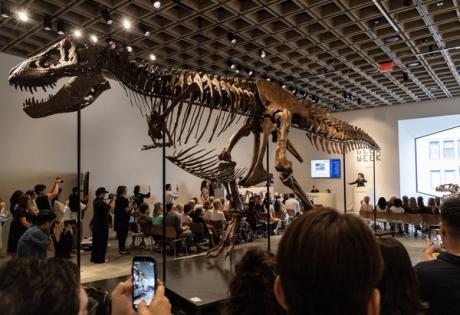
In the vibrant world of high-value collectibles, the recent auction of Gus the T-Rex stands out not merely as a transaction but as a monumental event that bridges the realms of art, history, and investment. This stunning specimen, one of the most complete fossilized skeletons ever discovered, has captivated collectors and enthusiasts alike, culminating in a record-breaking sale at Sotheby’s that surpassed all expectations.
The Price of History
When Gus was sold for an astonishing $50.1 million, it not only set a new benchmark for dinosaur fossils but also underscored the growing appetite for rare and unique collectibles in today’s market. This figure eclipsed the previous record held by Ken Griffin’s Apex by over $5 million, demonstrating an increasing recognition of fossils as not just scientific specimens but as cultural artifacts worthy of investment.
The Allure of Rarity
What makes Gus so extraordinary? The skeleton represents a perfect confluence of rarity and completeness, aspects that resonate deeply with collectors. Fossils, especially those as well-preserved as Gus, offer a tangible connection to the distant past, igniting the imaginations of those who encounter them. Collectors often seek not only aesthetic appeal but also a narrative—something that speaks to their identity and aspirations. Gus, with its dramatic history, serves as a conversation starter and a statement piece.
Market Dynamics and Collector Psychology
The sale of Gus highlights a significant trend within the luxury market, where art and historical artifacts are increasingly viewed as viable investment options. As the lines blur between traditional art forms and natural history, collectors today are motivated by both passion and the potential for appreciation. The psychology behind such acquisitions often intertwines with a desire for prestige, the thrill of ownership, and the deeper engagement with cultural history.
The Legacy of Collecting Fossils
Fossils have long captured the fascination of collectors, but this recent sale signals a shift towards a more mainstream acceptance of such items within the art and collectibles market. The legacy of these pieces—like the ancient creatures they represent—can resonate across generations. As younger collectors enter the scene, their appreciation for such rare finds suggests a bright future for this niche market. This trend also aligns well with Miami’s dynamic art scene, where the intersection of nature and culture is celebrated.
Gus in Context: Miami’s Evolving Art Landscape
While the auction took place far from Miami, the implications of Gus the T-Rex’s sale reverberate through the city’s burgeoning art ecosystem. Miami has become a hub for collectors seeking not just traditional works but also innovative manifestations of artistic expression, including the natural world. Galleries and exhibitions that focus on the intersection of art, science, and history are gaining traction, reflecting the city’s diverse cultural tapestry. The enthusiasm for dinosaurs, particularly as seen in exhibitions and educational programs, continues to grow, indicating a potential shift in how future generations will appreciate such historical treasures.
Editorial note: This article was created by A Bit Lavish Miami’s Magazine as an original editorial reinterpretation based on publicly available reporting. Original source: theartnewspaper.com. Read the original article here: https://www.theartnewspaper.com/2026/07/14/gus-the-t-rex-sells-for-a-record-501-million-dollars-at-sothebys.
Images are used for editorial reference with source credit. If an image requires correction or removal, please contact A Bit Lavish.




Houston’s Art Renaissance: A Canvas of Opportunity
Exploring Houston's burgeoning art scene through the lens of the recent Untitled...
 ABL2 Mins read

Harvesting Talent: Atlanta Art Fair’s Flourishing Platform for Local Artists
Explore how the Atlanta Art Fair is nurturing local talent and shaping...
ABL2 Mins read

Stolen ‘Walking Dead’ Comic Book Resurfaces at Pawn Shop, Seller Linked to Another Theft
A valuable comic book linked to a recent theft has surfaced at...
 2 Mins read


The Eternal Allure of Jean Schlumberger: A Legacy Reimagined
Explore the lasting impact of Jean Schlumberger's innovative jewelry design as Tiffany...
2 Mins read
