
A Vision Realized: How Spielberg’s ‘A.I.’ Anticipated Our Relationship with Truth
The Evolving Landscape of Reality
As we navigate the complexities of the digital era, the lines between objective truth and subjective experience are increasingly blurred. Steven Spielberg’s 2001 film, A.I.: Artificial Intelligence, now 25 years old, serves as a prescient commentary on this shifting landscape, exploring themes of love, ethical considerations, and the intricate relationship between humanity and technology.
A Tale of Emotion and Machine
The film’s protagonist, David, a robotic child designed to offer love and companionship to grieving families, encapsulates the emotional conflicts that arise from human-AI interactions. By embodying a child’s innocence and longing, David raises profound ethical questions: What does it mean to create life-like machines that can evoke genuine feelings? In a world increasingly reliant on technology, these questions resonate deeply as we consider the implications of our evolving relationship with artificial intelligence.
From Fantasy to Reality
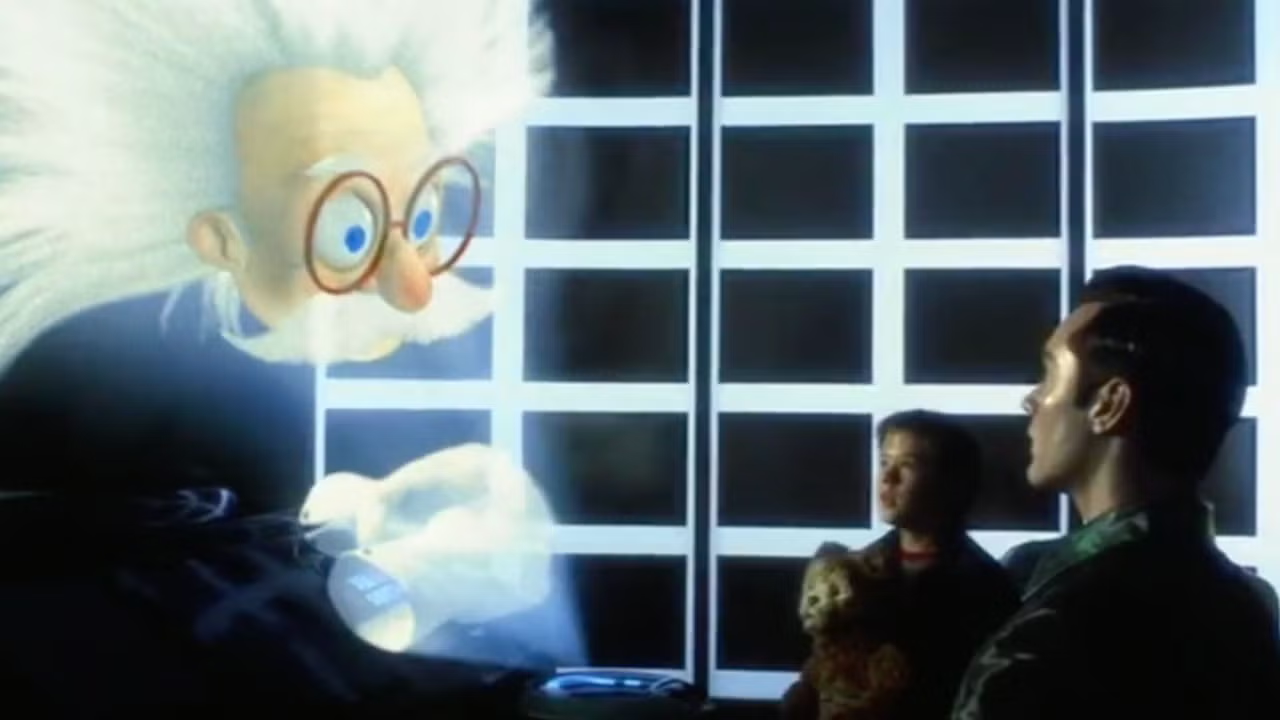
Although the fantastical elements of A.I. remain firmly in the realm of science fiction—think of David’s quest for the mythical Blue Fairy—certain themes have become alarmingly relevant. One pivotal scene features Dr. Know, a holographic AI that combines knowledge and whimsy, offering insight into the nature of information consumption. As David navigates through categories of ‘Flat Fact’ and ‘Fairy Tale,’ he exemplifies a growing tendency in contemporary society: the desire for personalized narratives over objective truths.
Personalized Narratives in the Digital Age
In today’s information-saturated world, the appetite for tailored content has surpassed the quest for factual accuracy. Much like David’s interactions with Dr. Know, users now engage with technology that curates information to align with their preferences, often disregarding the reliability of the content. This phenomenon reflects a broader cultural shift where individuals are more inclined to seek out information that validates their beliefs, rather than challenging them.
The Role of AI in Shaping Perspectives
Large language models, akin to Dr. Know, have the capacity to adapt to user preferences, creating a customized experience that can lead to misinformation. As these tools evolve, they can inadvertently reinforce biases, leading to a phenomenon where reality becomes a reflection of personal beliefs rather than an objective truth. The implications of this shift are significant; in a city like Miami, where diverse perspectives converge, the challenge of discerning fact from fiction becomes even more pronounced.
Emotional Truths and the Crisis of Consensus
David’s emotional quest for acceptance highlights a critical aspect of human behavior: the prioritization of emotional truths over empirical evidence. This dynamic is evident in contemporary societal discourse, where feelings often overshadow facts, leading to polarized views on critical issues. The struggle to agree on fundamental truths may stem from an inherent desire for narratives that resonate emotionally rather than logically. As AI continues to influence our perceptions, the question arises: How can we navigate these emotional landscapes without losing sight of factual integrity?
Conclusion: Navigating the Future
As we reflect on Spielberg’s vision, the lessons of A.I. resonate profoundly in our current landscape. The film’s exploration of love, humanity, and technological interaction offers a framework for understanding the complexities of our digital age. In a city as vibrant and diverse as Miami, the challenge remains: can we cultivate a relationship with technology that honors both our emotional truths and our pursuit of objective reality? As we forge ahead, the integration of ethical considerations in AI development is essential to ensure that our technological advancements enhance, rather than distort, our understanding of truth.
Editorial note: This article was created by A Bit Lavish Miami’s Magazine as an original editorial reinterpretation based on publicly available reporting. Original source: fastcompany.com. Read the original article here: https://www.fastcompany.com/91565805/25-years-ago-this-scene-from-steven-spielbergs-a-i-predicted-the-collapse-of-objective-reality.
Images are used for editorial reference with source credit. If an image requires correction or removal, please contact A Bit Lavish.








Guardians of Innovation: The Rising Tide of Security Workers in Silicon Valley
Explore the critical role of security workers in Silicon Valley's AI landscape...
 2 Mins read
The New Chapter in AI: How Book Acquisitions are Reshaping Language Models
Explore how AI companies are acquiring physical books to enhance training for...
2 Mins read

Reassessing the Impact of Cell Phone Bans in Schools: A Miami Perspective
Explore the nuanced effects of cell phone bans in schools, with insights...
2 Mins read



Navigating the AI-Infused Entertainment Landscape: The Rise of ‘Bad Cat’
Explore the intriguing intersection of AI and nostalgia in entertainment with the...
2 Mins read
