

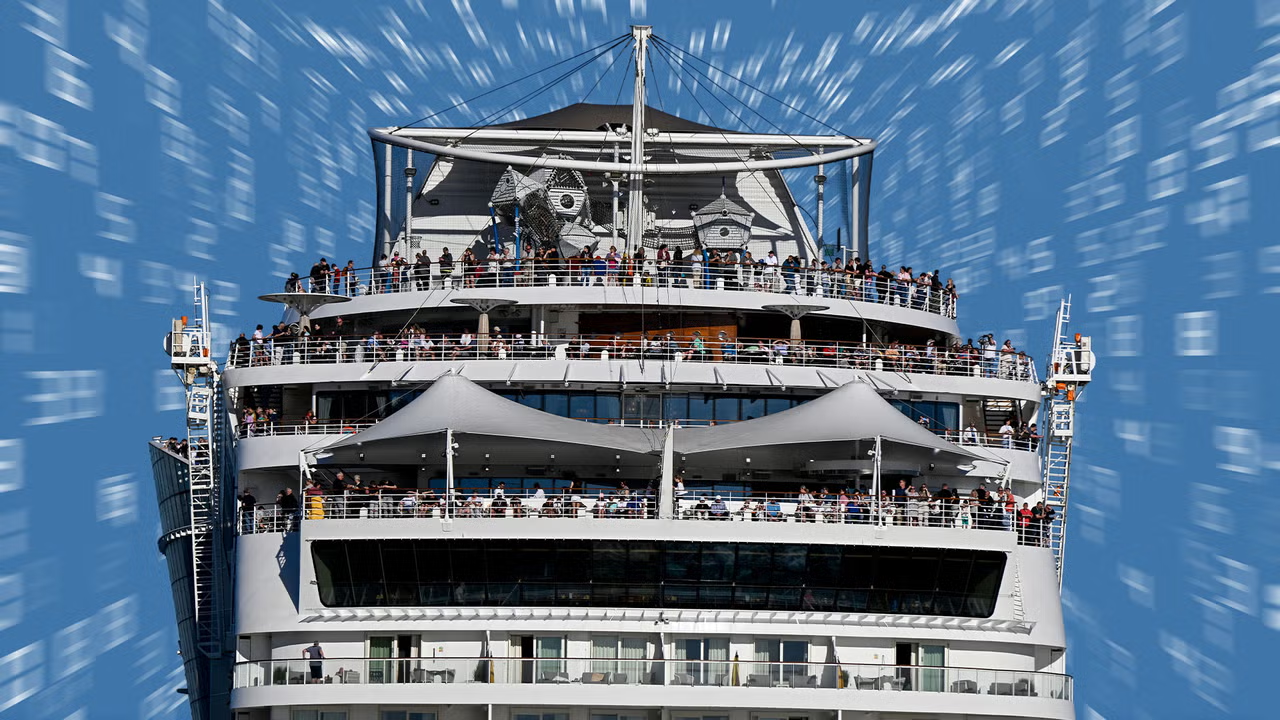
Understanding the Breach
In a troubling turn of events for the cruise industry, Carnival Cruise Lines revealed that nearly 6 million of its customers may have had their personal information compromised in a recent cyberattack. This breach is a stark reminder of the vulnerabilities that exist in the digital infrastructure of even the most established companies. Information accessed included sensitive details such as names, addresses, email contacts, and identification numbers, raising alarms about privacy in an era where data is a valuable commodity.
The Mechanics of Cyber Threats
The breach occurred through a method known as social engineering, where malicious individuals manipulate unsuspecting employees to gain unauthorized access to sensitive systems. This method underscores the importance of employee training in recognizing and responding to potential threats. In Carnival’s case, the company’s IT department detected unusual activity in mid-April, prompting immediate action to secure their systems and investigate the breach.
Response and Recovery
Upon confirming the unauthorized access, Carnival acted promptly to mitigate the damage. Their response included collaborating with third-party cybersecurity experts to not only address the immediate threat but also to enhance their security measures. The company has committed to strengthening its IT security protocols, a necessary step in an age where cyber threats are increasingly sophisticated.
Customer Support Initiatives
As part of their recovery efforts, Carnival began notifying affected individuals via email, providing them with a two-year complimentary subscription to TransUnion credit monitoring services. This initiative aims to empower customers to protect themselves against potential identity theft and fraud. The establishment of a dedicated call center further demonstrates Carnival’s commitment to customer support during this challenging time.
Broader Implications for the Industry
The incident serves as a critical lesson not only for Carnival but also for the broader cruise and hospitality industries. As travel resumes post-pandemic, companies must prioritize cybersecurity as a core component of their operational strategy. The trust of customers hinges on the assurance that their personal information is secure, and any breach can have long-term repercussions on brand reputation and consumer loyalty.
Looking Ahead: The Future of Cybersecurity
In the wake of this incident, Carnival has outlined its plans to bolster its cybersecurity infrastructure further. The cruise line’s initiatives will likely serve as a benchmark for others in the industry, emphasizing the need for continuous innovation in security practices. As the threat landscape evolves, companies must adopt a proactive stance, integrating advanced technologies and training to safeguard against potential breaches.
As Miami stands as a pivotal hub for tourism and travel, the implications of cybersecurity extend beyond individual companies. The city’s economy thrives on its ability to attract visitors, and ensuring that their data is protected will be crucial for maintaining Miami’s reputation as a premier destination. The recent breach at Carnival is a clarion call for businesses across the region to reassess their cybersecurity measures and reinforce their commitment to protecting customer data.
Editorial note: This article was created by A Bit Lavish Miami’s Magazine as an original editorial reinterpretation based on publicly available reporting. Original source: fastcompany.com. Read the original article here: https://www.fastcompany.com/91552559/nearly-6-million-carnival-customers-may-have-had-personal-information-stolen-in-hack.
Images are used for editorial reference with source credit. If an image requires correction or removal, please contact A Bit Lavish.










Beyond the Office: Redefining Connection in the Modern Workplace
Exploring the evolving dynamics of workplace connection in Miami's corporate landscape amidst...
 2 Mins read

Navigating the Social Media Labyrinth: Finding Balance in a 24/7 World
Explore the hidden struggles of social media marketers caught in a relentless...
3 Mins read
Zillow’s New Forecast: A Comprehensive Look at the Future of Home Prices
Explore Zillow's latest home price forecast and the implications for the real...
2 Mins read



Rediscovering Argentina’s Forgotten World Cup Signage: A Masterclass in Design Innovation
Explore the ingenious signage system from the 1978 World Cup in Argentina,...
2 Mins read
