

Transformative Tools for a Troubling Time
In response to the pressing need for enhanced security within educational environments, schools across the United States are increasingly adopting advanced technologies to safeguard their students. Among these innovations, the emergence of drone technology stands out as a groundbreaking yet controversial development. As educational institutions grapple with the reality of mass shootings, the incorporation of drones into school safety protocols is being tested in various states, including Florida, Colorado, and Georgia.
Meet the Campus Guardian Angel
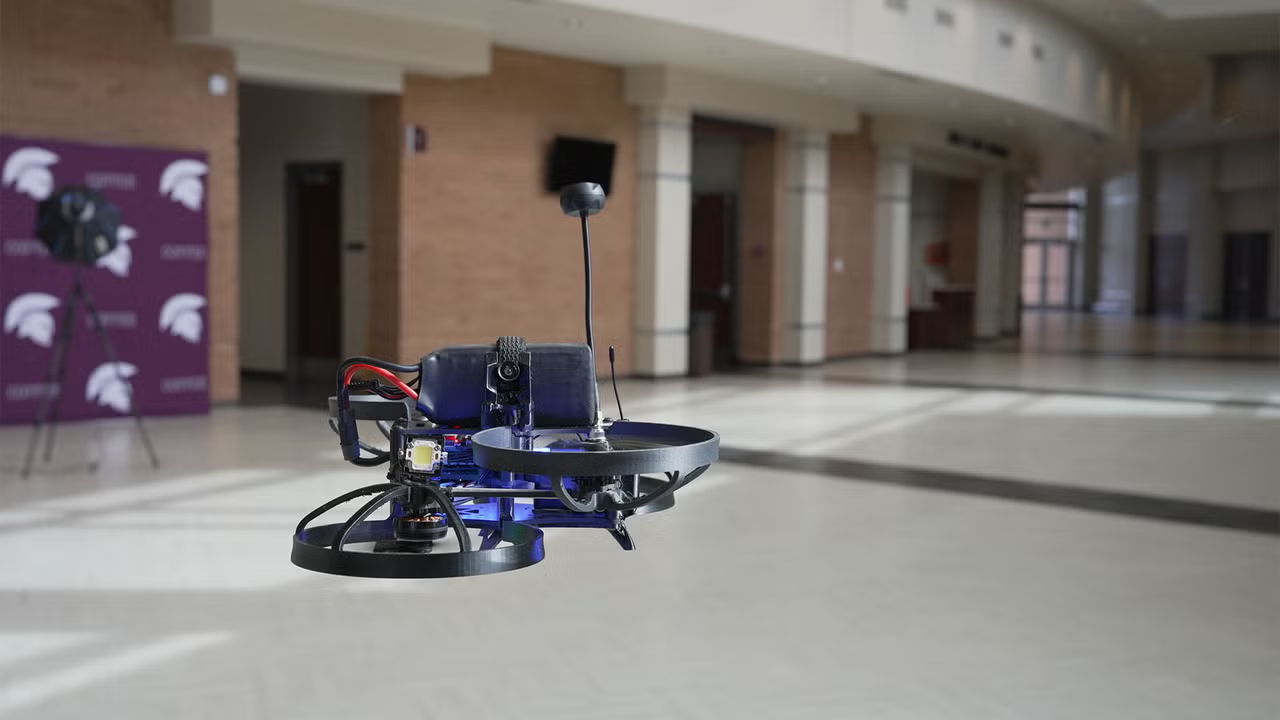
At the forefront of this trend is the Campus Guardian Angel, a drone designed by Mithril Defense. This high-tech apparatus is not merely an aerial observer; it is equipped with capabilities that could redefine the landscape of school safety. The drones can reach speeds of up to 50 miles per hour, enabling rapid response in critical situations. Beyond mere surveillance, these drones are engineered to assist law enforcement by locating active shooters. Features such as pepper gel spray, strobe lights, and sirens are integrated to disorient potential threats and buy time for first responders.
A New Frontier in Safety Spending
The advent of drone technology in schools comes at a time when safety expenditures are on the rise. The Learning Policy Institute reports that U.S. schools allocate approximately $4 billion annually toward physical safety measures, including security cameras and metal detectors. As the number of school shootings—while decreased from a peak of 352 in 2023—remains alarmingly high, the market for safety innovations continues to grow. Mithril’s CEO, Justin Marston, asserts that the future of educational safety may hinge on such proactive measures, suggesting that parents will come to expect these systems in schools.
Balancing Innovation with Ethical Considerations
However, the introduction of drones into school safety protocols has sparked significant debate. Critics have raised concerns that investing in technology aimed at responding to shootings may divert attention and resources away from more fundamental issues, such as gun control. Social media platforms have seen a flurry of reactions, with some commentators arguing that this approach merely sidesteps the root causes of violence in schools. For example, a user on X highlighted the irony of prioritizing drone surveillance over meaningful legislative reform.
The Broader Implications of Aerial Surveillance
Moreover, the potential use of drones extends beyond active shooter scenarios. Concerns have been voiced regarding the implications of monitoring student behavior and the possibility that such technology could be used against student protesters or activists. Prominent figures in the social media space, such as YouTuber Tyler Oakley, have expressed unease about the broader applications of these drones, suggesting that their deployment may not solely focus on student protection but could also serve to suppress dissent.
Miami’s Role in the Evolving Landscape
As a vibrant hub of innovation and technology, Miami finds itself at the crossroads of this evolving narrative. The city’s educational institutions could potentially lead the charge in adopting cutting-edge safety measures while fostering a dialogue about the ethical implications of such technologies. Miami’s diverse population and commitment to progressive educational strategies may provide a unique platform for balancing safety with the preservation of civil liberties.
Looking Toward the Future
The conversation surrounding the integration of drone technology into school safety protocols is only just beginning. As educational leaders and policymakers navigate this complex terrain, the decisions made today will undoubtedly shape the future of how we approach student safety. By examining the efficacy of these innovations alongside a commitment to addressing the root causes of violence, we can strive to create a more secure and nurturing environment for our children.
Editorial note: This article was created by A Bit Lavish Miami’s Magazine as an original editorial reinterpretation based on publicly available reporting. Original source: fastcompany.com. Read the original article here: https://www.fastcompany.com/91581862/would-you-send-your-child-to-a-school-protected-by-attack-drones.
Images are used for editorial reference with source credit. If an image requires correction or removal, please contact A Bit Lavish.










Navigating the New Landscape of Home Affordability: A Deep Dive into Market Trends
Explore the evolving dynamics of home affordability in the U.S. housing market...
 2 Mins read

Rethinking Economic Narratives: The End of the K-Shaped Economy?
Treasury Secretary Scott Bessent declares the end of the K-shaped economy, but...
2 Mins read
Fantasy Baseball Trade Deadline Spurs Strategic Shifts in Bullpen Dynamics
The August 2026 trade deadline reshapes bullpen roles, impacting team strategies and...
1 Mins read



Jefry Yan Celebrations Mark a New Era in Major League Baseball
The global sports community recognizes Jefry Yan's achievements, highlighting the evolving landscape...
1 Mins read

Leave a comment