

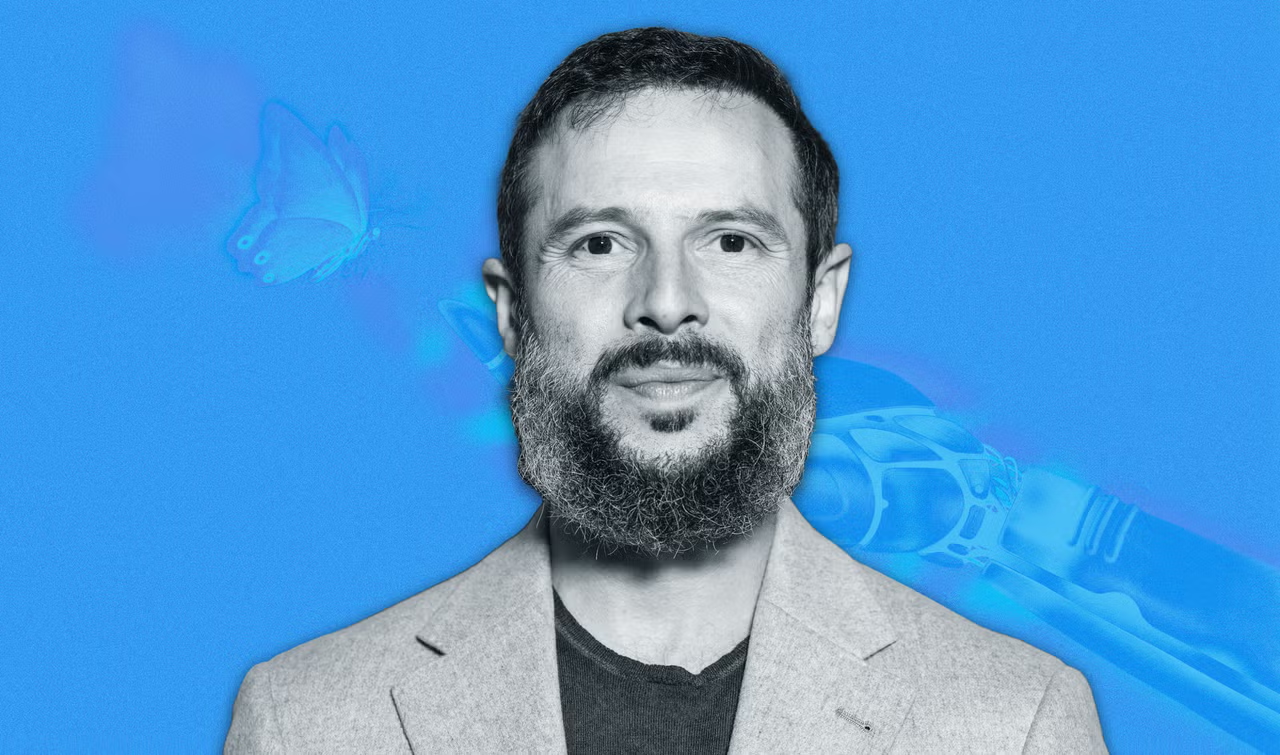
A Call for Humane AI
In a rapidly evolving technological landscape, the conversation surrounding artificial intelligence is more pertinent than ever. Aza Raskin, cofounder of the Center for Humane Technology, highlights the urgent need to reconsider the trajectory of AI development. His recent dialogue reflects a growing concern about how AI could either enhance or undermine our humanity.
The Vatican’s Perspective
Raskin’s insights come shortly after the Vatican released a profound encyclical titled Magnifica Humanitas, which articulates the importance of preserving human dignity amid technological advancements. Engaging with the Vatican signifies a collaboration that transcends typical industry boundaries, as both parties recognize the sanctity of human life in the face of burgeoning technology. This cooperation underscores a universal message: our humanity must not be sacrificed at the altar of progress.
The Race and Its Incentives
The core of Raskin’s argument focuses on the incentives driving AI’s rapid deployment. He draws parallels to the historical development of social media, which initially promised connection but ultimately optimized engagement at the expense of well-being. He posits that AI is currently following a similar path, prioritizing capital and market dominance over human flourishing.
Public Sentiment and Economic Disparity
As sentiments about AI shift from initial excitement to skepticism, Raskin notes a disturbing trend: only a small fraction of the American populace supports unregulated AI development. This reflects a broader economic divide, where the benefits of AI appear to accrue to capital rather than labor. Raskin articulates a vision where AI should enhance livelihoods, but the prevailing market forces suggest otherwise. The question remains: will AI serve humanity, or will it perpetuate existing inequalities?
Learning from Past Technologies
Raskin draws valuable lessons from the evolution of social media, emphasizing that AI, in its current form, is akin to a nascent technology that risks being captured by harmful market incentives. The initial optimism surrounding social media’s potential to foster connection has faltered, leading to increased polarization and distress. This serves as a cautionary tale for AI, urging stakeholders to prioritize human-centered design over mere technological advancement.
Hope Amidst Challenges
Despite these challenges, Raskin holds onto a vision of AI that can be beneficial, citing his work with the Earth Species Project, which endeavors to decode animal communication. This innovative approach illustrates that AI can be harnessed for positive outcomes, provided it is guided by ethical considerations and a commitment to understanding the world around us. Raskin’s optimism is not blind; rather, it is grounded in a belief that a thoughtful approach to technology can yield transformative results.
A Future of Possibilities
The discourse around AI is not merely an academic exercise; it has real-world implications for industries, governance, and societal norms. As Miami continues to position itself as a tech hub, the city must engage in these conversations, fostering an environment where ethical technology thrives. The insights from leaders like Raskin remind us that the future of AI is not predetermined; it is shaped by our collective choices and values.
Editorial note: This article was created by A Bit Lavish Miami’s Magazine as an original editorial reinterpretation based on publicly available reporting. Original source: fastcompany.com. Read the original article here: https://www.fastcompany.com/91552576/can-ai-be-humane-aza-raskin-says-only-if-we-change-the-race.
Images are used for editorial reference with source credit. If an image requires correction or removal, please contact A Bit Lavish.








Guardians of Innovation: The Rising Tide of Security Workers in Silicon Valley
Explore the critical role of security workers in Silicon Valley's AI landscape...
 2 Mins read

The New Chapter in AI: How Book Acquisitions are Reshaping Language Models
Explore how AI companies are acquiring physical books to enhance training for...
2 Mins read

Reassessing the Impact of Cell Phone Bans in Schools: A Miami Perspective
Explore the nuanced effects of cell phone bans in schools, with insights...
2 Mins read



Navigating the AI-Infused Entertainment Landscape: The Rise of ‘Bad Cat’
Explore the intriguing intersection of AI and nostalgia in entertainment with the...
2 Mins read
