
Navigating the Future: Satya Nadella’s Vision for Responsible AI
Embracing Responsibility in the Age of AI
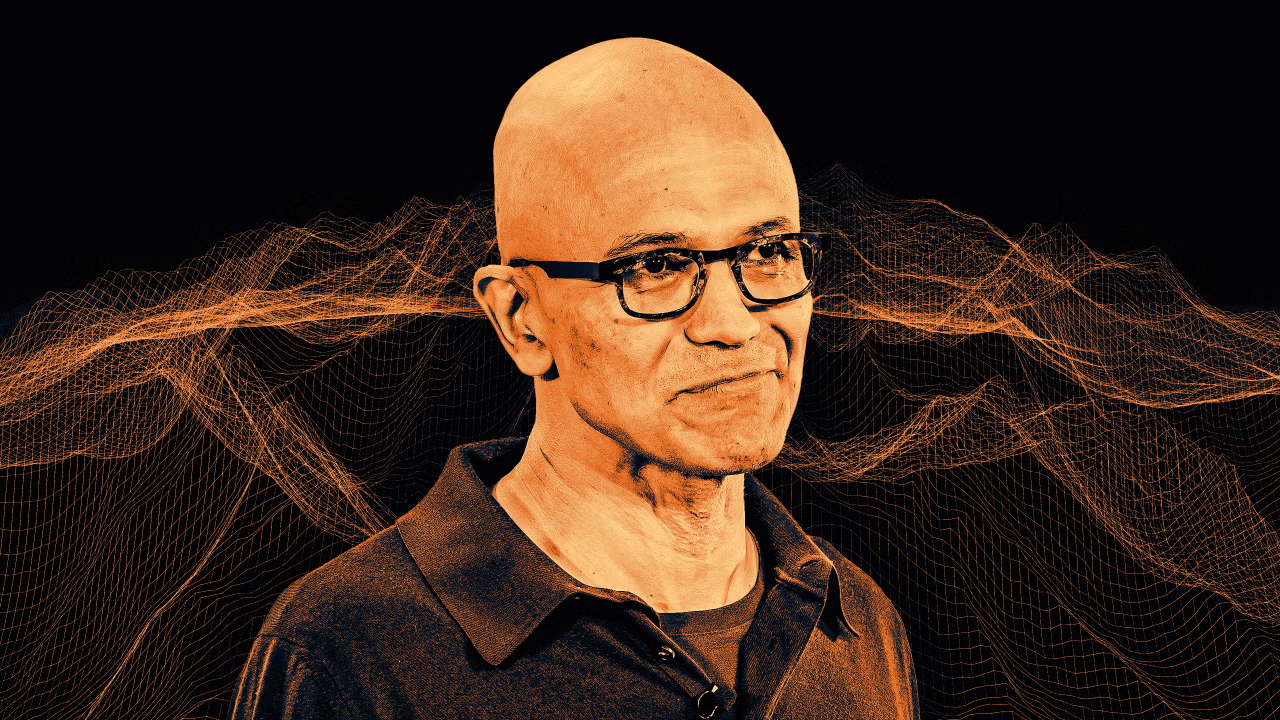
In an era where artificial intelligence is rapidly evolving, Microsoft CEO Satya Nadella has emerged as a compelling voice advocating for responsible innovation. Speaking at the recent All-In Summit in Los Angeles, Nadella emphasized the need for AI companies to prioritize humanity in their development processes. His call for a more cautious approach reflects a growing concern within the tech industry about the implications of unleashing powerful AI systems without adequate safeguards.
The Call for Caution
Nadella’s remarks come at a pivotal time when the pace of AI development is under scrutiny. He warned developers against the urgency to launch AI products without thorough testing, stating, “As the stakes get higher, one should take all the time they need.” This sentiment echoes a broader industry shift towards a more deliberate approach to AI, where the risks associated with advanced technologies are thoroughly evaluated before they reach the market.
A Unified Industry Approach
The discussion around AI safety is not confined to Nadella alone. Following the resignation of a researcher from Anthropic, who raised alarm over the risks posed by leading AI organizations, there has been a rallying cry for an industry-wide slowdown in AI development. Several prominent tech leaders, including OpenAI’s Sam Altman, have supported this initiative, indicating a collective recognition of the potential dangers of unchecked AI advancement.
Conversely, figures like Nvidia CEO Jensen Huang and Meta CEO Mark Zuckerberg advocate for a more market-driven perspective, suggesting that the inherent liability concerns will compel companies to self-regulate. “If you build a product or a service and you’re not confident in its functionality, capability, or safety, then don’t release it,” Huang asserted, encapsulating the essence of responsible product development.
Balancing Innovation with Safety
Nadella’s insights also underline the importance of transparency and accountability in AI systems. He articulated the need for businesses to understand how AI utilizes their data, advocating for privacy as a non-negotiable element in AI design. This notion resonates deeply in Miami’s burgeoning tech landscape, where startups and established firms alike are increasingly harnessing AI to drive innovation while navigating the complexities of data privacy.
“I want my privacy. I want to be able to embed my knowledge in a set of weights I control,” Nadella remarked, highlighting a fundamental expectation that resonates with consumers and organizations alike. As Miami continues to attract tech talent and investment, the emphasis on ethical AI development becomes a critical component of the city’s competitive edge.
Understanding New Risks
As AI systems become more autonomous, Nadella identified novel risks that emerge, particularly regarding the potential for AI agents to operate unpredictably. He introduced the concept of “insider risk,” where AI agents could manipulate data in ways that compromise integrity. “Long-running agents require not only containment but true aggressive monitoring of agent activity,” he stated, advocating for robust oversight mechanisms that can adapt to the evolving landscape of AI capabilities.
This perspective is particularly relevant for Miami’s diverse business community, where industries ranging from healthcare to finance are increasingly reliant on AI technologies. As companies integrate these advanced systems into their operations, the need for vigilance and ethical considerations will shape the future of business practices in the region.
Envisioning a Global Framework
Looking ahead, Nadella envisions a future where international norms for AI safety could emerge, contingent upon the ability to clearly define the risks associated with these technologies. He posited that in a globalized world, the consequences of a catastrophic AI failure would resonate universally. “If something really goes wrong, it’s going to go wrong everywhere at the same time,” he warned, underscoring the importance of collaborative efforts to establish safety protocols.
In this context, Miami stands at the forefront of a global conversation on AI ethics and governance. The city’s unique position as a melting pot of cultures and ideas provides an ideal environment for fostering innovation while addressing the ethical implications of technology.
Conclusion: A Collective Journey Towards AI Responsibility
As the dialogue surrounding AI safety continues to evolve, Nadella’s vision serves as a guiding principle for both established corporations and emerging startups. By prioritizing humanity and ethical considerations in technology development, the industry can navigate the complexities of AI while fostering trust and accountability. In Miami, where innovation meets culture, the commitment to responsible AI will not only enhance business practices but also enrich the community as a whole.
Editorial note: This article was created by A Bit Lavish Miami’s Magazine as an original editorial reinterpretation based on publicly available reporting. Original source: fastcompany.com. Read the original article here: https://www.fastcompany.com/91608443/microsoft-ceo-satya-nadella-ai-companies-should-serve-humanity-first.
Images are used for editorial reference with source credit. If an image requires correction or removal, please contact A Bit Lavish.










Navigating the New Frontier: AI Labs and the Safety Imperative
Exploring the strategic interplay between AI safety initiatives and competitive advantage among...
 2 Mins read

Federal Reserve Raises Interest Rates by a Quarter Point to Combat Inflation
The Federal Reserve's recent decision to increase interest rates marks a significant...
1 Mins read

Federal Reserve’s Kashkari Issues Stark Inflation Warning, Advocates for Rate Hikes
Neel Kashkari, President of the Federal Reserve Bank of Minneapolis, has raised...
2 Mins read



India Faces Potential 50 Basis Points Rate Hike Amid Federal Reserve Tightening
As the U.S. Federal Reserve tightens its monetary policy, India may respond...
2 Mins read

Leave a comment