
The Landscape of Home Prices: A National Overview
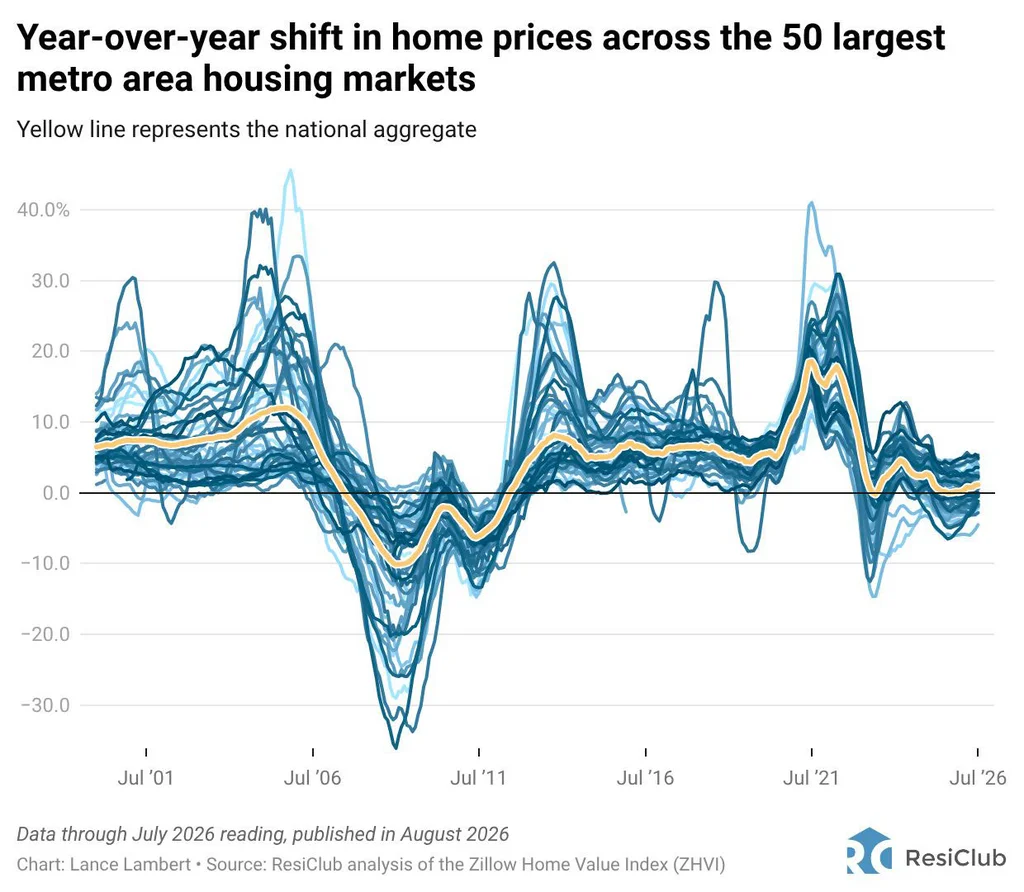
As we delve into the latest data from the Zillow Home Value Index, the national housing market presents a complex picture. Home prices have seen a modest year-over-year increase of 1.1% between July 2025 and July 2026, a slight uptick from the previous year’s meager growth of 0.2%. This shift marks an important pivot away from the historic lows experienced during the pandemic, yet it also highlights the divergent paths being taken by various markets across the nation.
Understanding the Current Declines
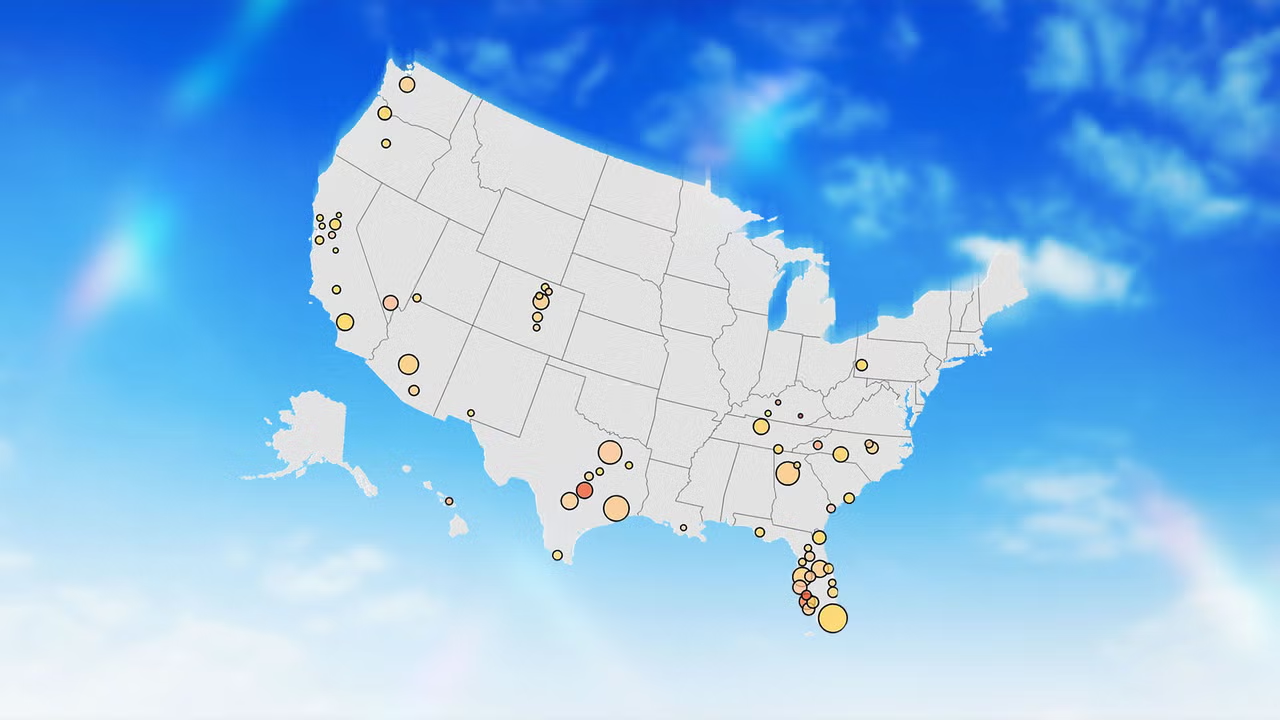
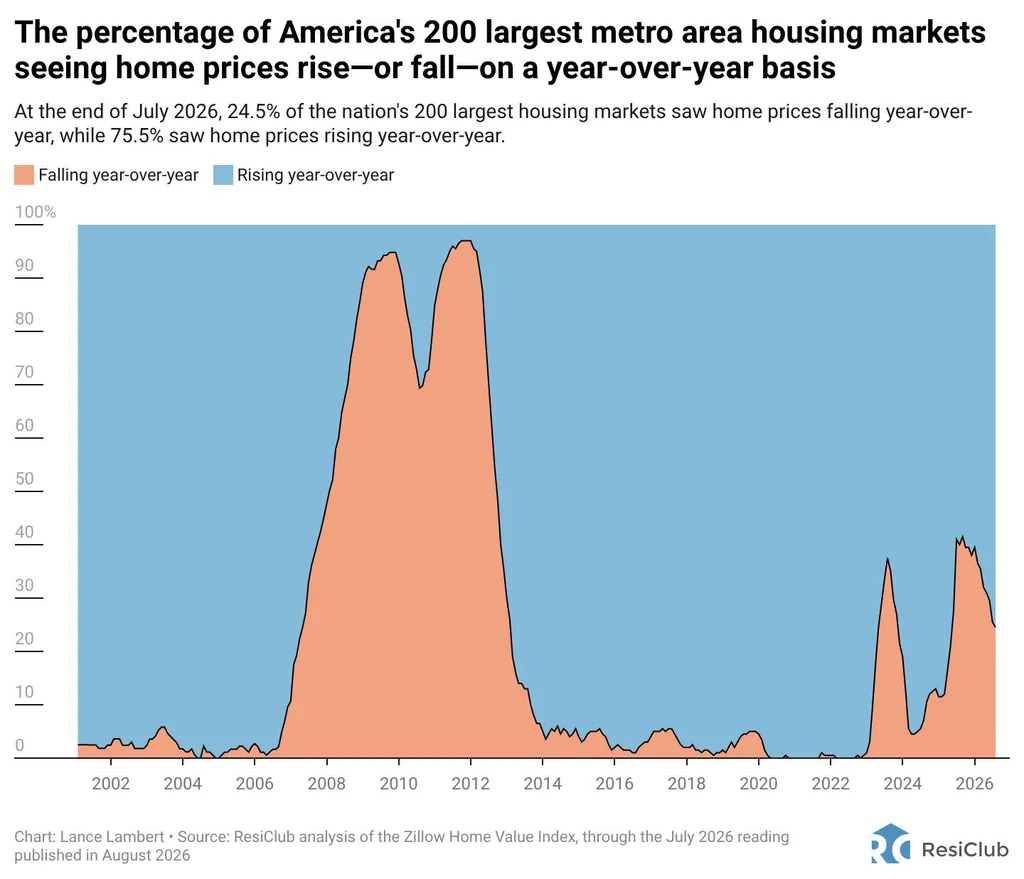
In a stark contrast to the overall national trend, a significant portion of the housing market is grappling with price declines. Currently, 64 of the nation’s largest 300 metro areas are witnessing decreases in home values. This represents a notable 21% of these markets, a figure that underscores the growing challenges faced by specific regions. Notably, the trend of declining home prices has accelerated, with 105 markets reporting decreases from July 2024 to July 2025, and 99 markets in the prior year.
The Shift in Supply and Demand Dynamics
The softening of the housing market is largely attributed to a shift in the supply-demand equilibrium. In recent months, an influx of inventory has given buyers more leverage, particularly in areas that experienced a surge in prices during the pandemic. This change has been especially pronounced in Sun Belt regions and parts of the Mountain West, where demand was once buoyed by rapid domestic migration.
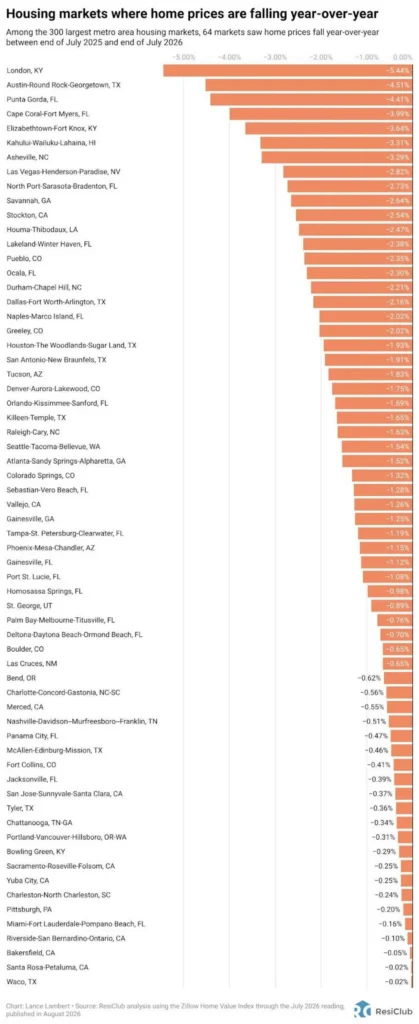
- Sun Belt Areas: Cities such as Tampa, Florida, and Austin, Texas, are experiencing significant challenges as home prices have not only plateaued but are beginning to retract. The oversupply of new homes has further exacerbated these issues.
- Inventory Growth: As builders offer competitive pricing and incentives to stimulate sales, the resale market has felt the impact, leading many potential buyers to choose new constructions over existing homes.
The Miami Perspective: Opportunities Amidst Challenges
In Miami, the housing market presents a unique case. While some areas of the country grapple with declining prices, Miami remains an attractive destination for both domestic and international buyers. The city’s vibrant lifestyle, robust economy, and favorable climate continue to draw interest, yet it is not immune to the national trends of supply and demand.
As local inventory levels rise, Miami could see similar corrections as those occurring in other parts of Florida. However, the city’s unique appeal and ongoing investments in infrastructure and development may help stabilize home prices. The luxury market in Miami, characterized by high-end condominiums and waterfront properties, continues to thrive, suggesting that while broader trends may point to challenges, there are still pockets of resilience.
Charting the Future: A Bifurcated Market
The current housing market reveals a pronounced bifurcation, with some markets experiencing significant price increases while others struggle to maintain value. For instance, while cities like Hartford, Connecticut, have seen home prices soar by nearly 28.7% since their peak, others like Austin find themselves down by 27.2%. This divergence is indicative of a larger trend where markets that overheated during the pandemic are now facing the consequences of rapid mean reversion.
As we move forward, understanding these dynamics will be crucial for investors and homeowners alike. The disparities in market performance suggest that localized strategies will be essential for navigating the complexities of the current landscape.
Strategies for Homebuyers and Investors
For those looking to enter the housing market, whether for personal residence or investment purposes, several strategies could prove beneficial in this evolving environment:
- Monitor Local Trends: Stay informed about specific market conditions in your desired area, as national trends may not reflect local realities.
- Consider New Construction: With builders incentivizing purchases, exploring new developments may offer better value compared to existing homes.
- Evaluate Long-Term Potential: Focus on neighborhoods with strong growth potential and robust economic indicators, as these areas may weather market fluctuations more effectively.
As we navigate this shifting landscape, it’s essential to remain adaptable and informed. The housing market may be softening globally, but opportunities still abound for those willing to look beyond the surface.
Editorial note: This article was created by A Bit Lavish Miami’s Magazine as an original editorial reinterpretation based on publicly available reporting. Original source: fastcompany.com. Read the original article here: https://www.fastcompany.com/91594460/housing-market-home-prices-falling-64-major-markets.
Images are used for editorial reference with source credit. If an image requires correction or removal, please contact A Bit Lavish.










The Rise of Creative Protest Against Surveillance: A Closer Look at Flock’s Backlash
Explore the innovative protests against Flock Safety's surveillance technology, reflecting broader societal...
 ABL3 Mins read

The Unfolding Narrative of Meta’s Smart Glasses: Innovation Amid Controversy
Explore the intricate relationship between Meta's smart glasses and the broader vision...
ABL3 Mins read

The Crypto Renaissance: What Bitcoin’s Resurgence Means for Investors
Explore the recent rally in cryptocurrency, its historical context, and what influential...
ABL3 Mins read



The Hidden Costs of Success: Escaping the Trophy Trap
Explore how the pursuit of success can sometimes lead to dissatisfaction, and...
ABL2 Mins read

Leave a comment