
Navigating the Storm: The Challenges Facing Elon Musk’s Powerhouses
Market Turbulence: A Closer Look
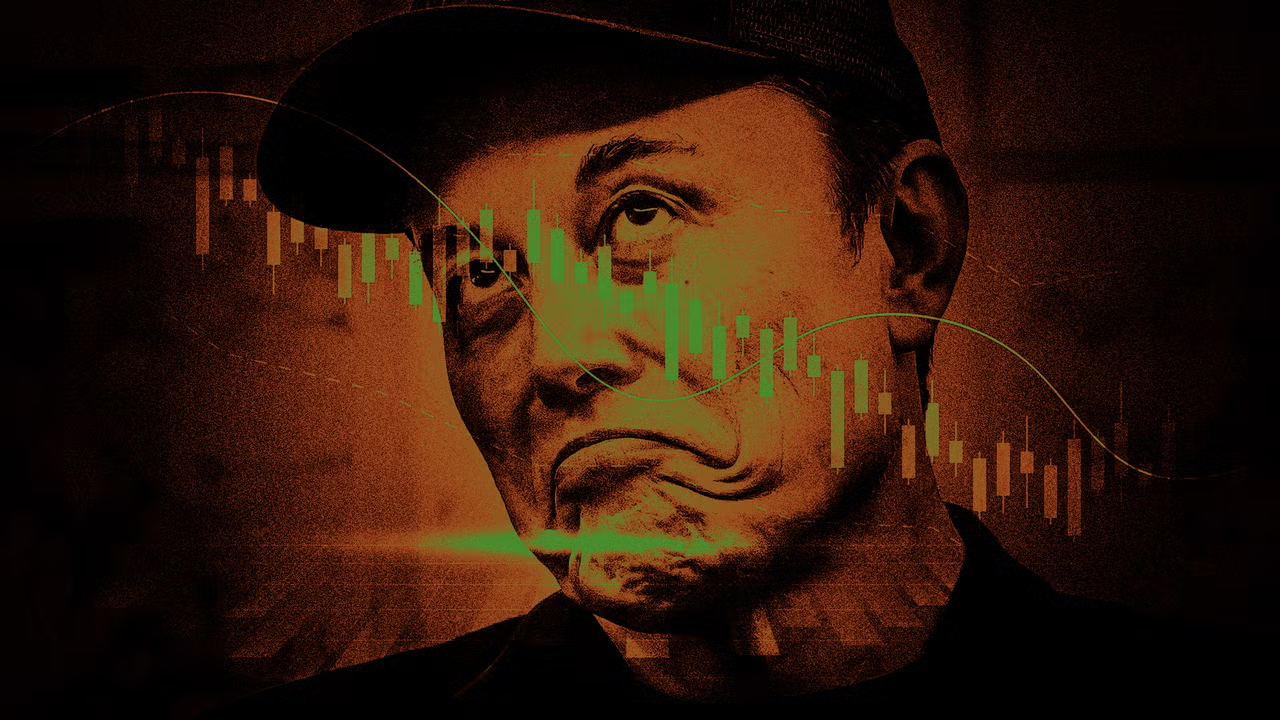
The month of July has proven to be a tumultuous period for two of Elon Musk’s flagship enterprises: Tesla and SpaceX. Investors have witnessed a significant downturn in stock prices for both companies, with declines of approximately 24% for Tesla and a staggering 31% for SpaceX since the end of June. As the markets close on these innovations, the reasons behind this slumping performance reveal a complex narrative of challenges and investor sentiment.
The Tesla Dilemma: A Double-Edged Sword
On July 27, Tesla faced a dramatic stock plunge, with shares dropping over 14.5% in a single day, closing at $319.69. While the electric vehicle manufacturer showcased a commendable revenue growth of 26% year-over-year, totaling $28.24 billion for Q2 of fiscal year 2026, it was the earnings that fell short of expectations that rattled investors. The anticipated adjusted earnings per share (EPS) was set at 51 cents; however, Tesla reported only 33 cents, alongside a 5% decline in net income, which settled at $1.11 billion.
This setback can be attributed to several factors, including aggressive pricing strategies aimed at boosting sales amid increasing competition in the electric vehicle market. Additionally, a notable decrease in revenue from regulatory credits has raised red flags among stakeholders. Compounding these issues, Tesla’s capital expenditure surged by an astounding 142%, reaching $5.79 billion, largely owing to investments in artificial intelligence and robotics research and development. This resulted in a concerning free cash flow deficit of $1.1 billion, leading to heightened skepticism regarding the long-term viability of such expenditures.
SpaceX: A Gradual Descent
Contrast this with SpaceX, which, while experiencing a less dramatic trading day, has endured a more gradual decline in stock value. Closing at $118.24, the company’s share price remains about 44% lower than its all-time high of $225.64 achieved just weeks prior. Despite a slight uptick of 2.6% during the last trading session, the overarching trend is downward, reflecting a deeper market reconsideration of its valuation.
Concerns over SpaceX’s valuation have circulated since before the company’s IPO, and the recent downturn can be attributed to several factors beyond mere profit-taking. The company’s setbacks, including aborted launches of both the Starship Flight 13 and a Falcon 9 Starlink operation, have cast a shadow over investor confidence. Each aborted mission not only delays potential revenue but also invites scrutiny regarding the company’s operational reliability and future growth prospects.
The Road Ahead: Investor Sentiment and Market Implications
As both companies navigate these choppy waters, their future trajectories remain uncertain. Tesla is expected to release its next financial report in late October, a critical moment for investors eager to glean insights into the company’s operational adjustments and market strategy. Meanwhile, SpaceX is slated to announce its first financial results as a publicly traded entity on August 4, an event that will surely garner significant attention.
The expiration of the first tranche lockup for SpaceX shares on August 6 adds another layer of complexity. Many anticipate that this could lead to increased selling pressure from employees and pre-IPO investors, potentially exacerbating the decline in share value. The interplay between a surge in available shares and the underlying financial health of the company will be pivotal in shaping investor sentiment moving forward.
Reflecting on the Broader Implications
The challenges facing Tesla and SpaceX are emblematic of broader market trends where innovation meets investor caution. As sectors across the board witness volatility, the question looms: how will these companies adapt to shifting investor expectations and market realities? In a landscape increasingly defined by rapid technological advancement and fluctuating consumer sentiment, the balance between innovation and investment stability becomes ever more critical.
For Miami’s business community, the stakes are particularly high. The region has emerged as a burgeoning hub for tech and innovation, drawing parallels with Silicon Valley. As local startups and established firms alike seek to carve their niches, the lessons learned from the trials of industry giants like Tesla and SpaceX may offer invaluable insights into navigating the complexities of growth, valuation, and market perception.
Editorial note: This article was created by A Bit Lavish Miami’s Magazine as an original editorial reinterpretation based on publicly available reporting. Original source: fastcompany.com. Read the original article here: https://www.fastcompany.com/91579301/spacex-tesla-stock-prices-why-down-elon-musk-bad-week.
Images are used for editorial reference with source credit. If an image requires correction or removal, please contact A Bit Lavish.










The Rise and Risks of Wildberries: Russia’s E-Commerce Titan in Turbulent Times
Exploring Wildberries, Russia’s largest e-commerce platform, its innovative business model, and the...
 3 Mins read

Navigating the E-Bike Surge: A Call for Unified Safety Measures
As e-bike injuries among children rise sharply, jurisdictions are considering new regulations...
3 Mins read
Navigating the New Frontier: The Rise of Content Creation Degrees in Higher Education
Arizona State University launches a degree in content creation, sparking discussions on...
 ABL2 Mins read



Why we love to hate Flock
The surveillance state has crept up around us, but in at least...
ABL2 Mins read
