

A New Breed of Robotics
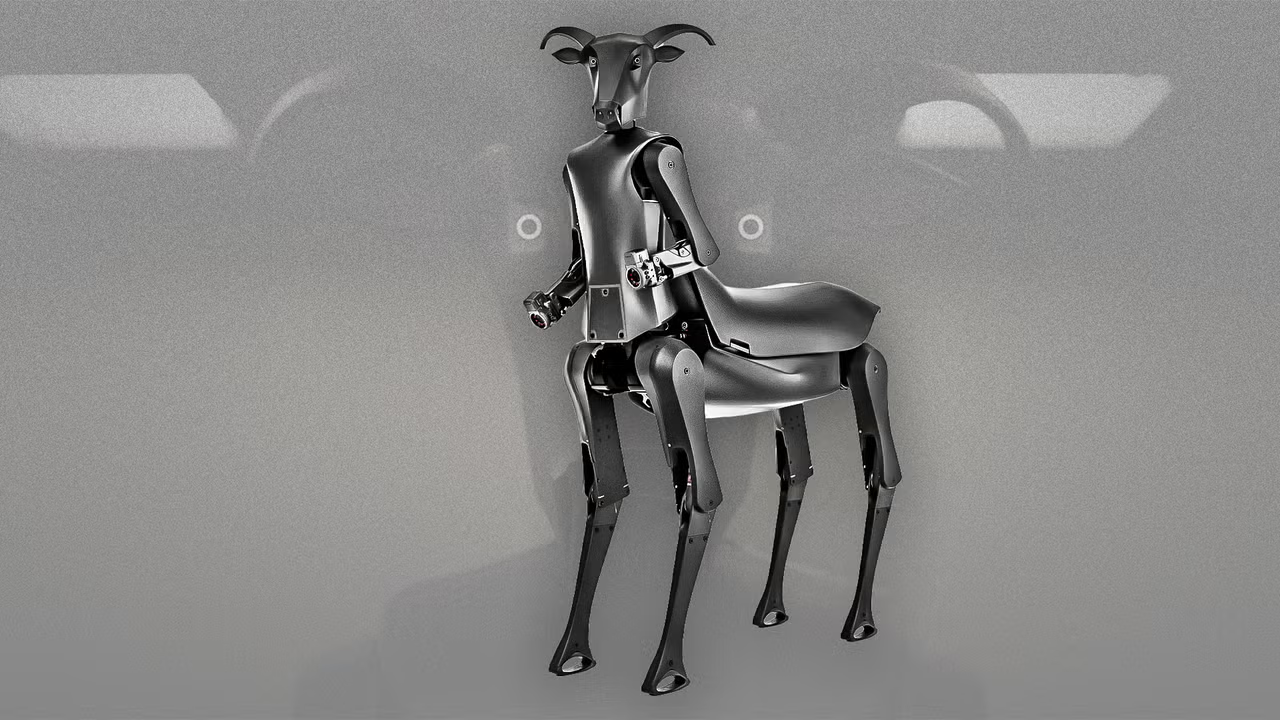
In a landscape where technology often mimics the human form, a groundbreaking innovation emerges from a robotics startup based in Auburn, California. Satyress has ventured into uncharted territory with its latest creation, Threehalves—a centaur-like robot that defies the conventions of traditional robotics design. Standing approximately two meters tall, this remarkable machine combines a humanoid upper body with a sturdy four-legged base, presenting an intriguing alternative to the more commonly seen humanoid and quadrupedal robots.
Functionality Meets Form
Threehalves embodies a philosophy that prioritizes practicality over aesthetics. Its design, reminiscent of mythological centaurs, is not merely for visual impact; it provides tangible advantages in functionality, especially in hazardous environments. The robot’s robust four-legged structure offers stability and energy efficiency—when not in motion, it consumes zero power. This contrasts sharply with bipedal robots, which risk collapsing if they lose power, potentially jeopardizing both the robot’s mission and human lives.
The Essence of Teleoperation
One of the most striking features of Threehalves is its complete reliance on teleoperation. Unlike many autonomous robots, which aim to replace human labor, Satyress has designed Threehalves to empower skilled workers. This approach allows operators to control the robot remotely, using it as an extension of themselves while remaining at a safe distance from dangerous tasks. The mission is clear: to enhance human capabilities in scenarios fraught with peril, from wildfires to industrial accidents.
Redefining the Toolbelt
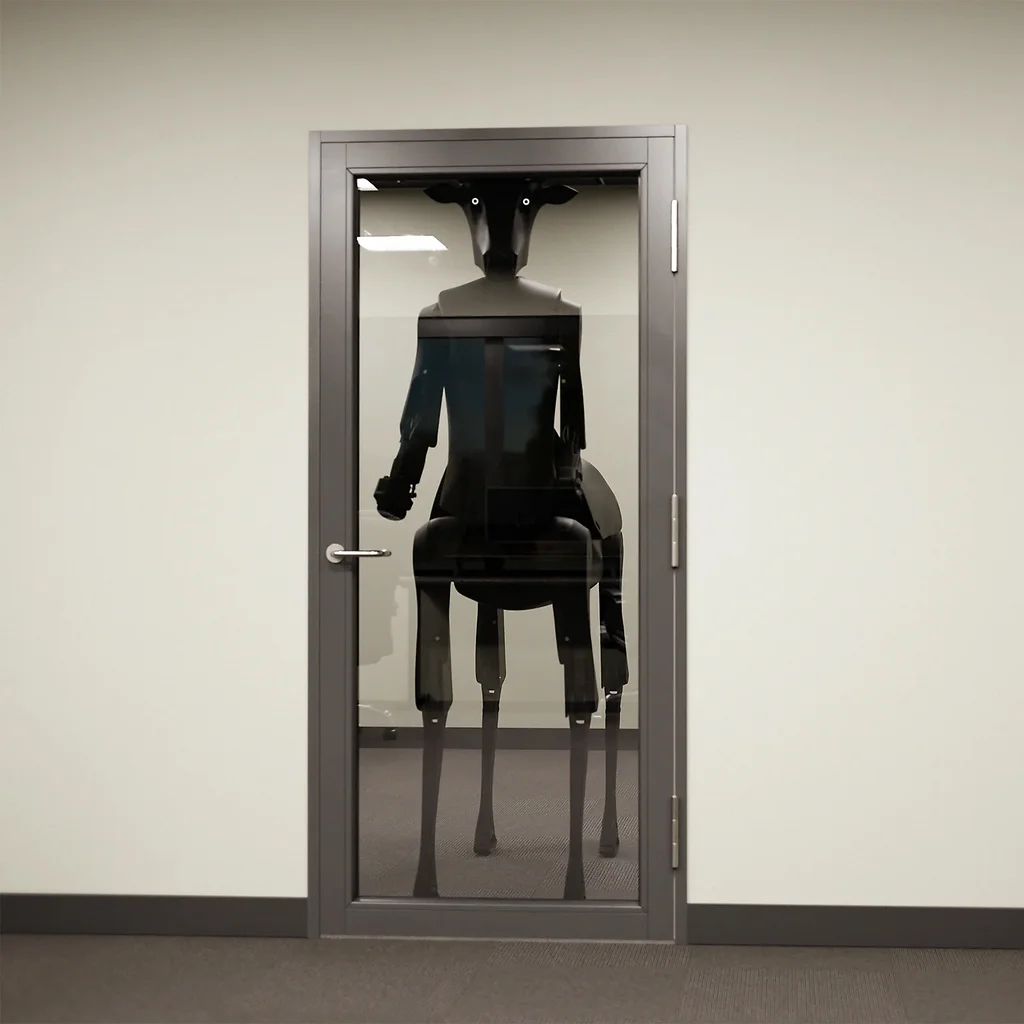
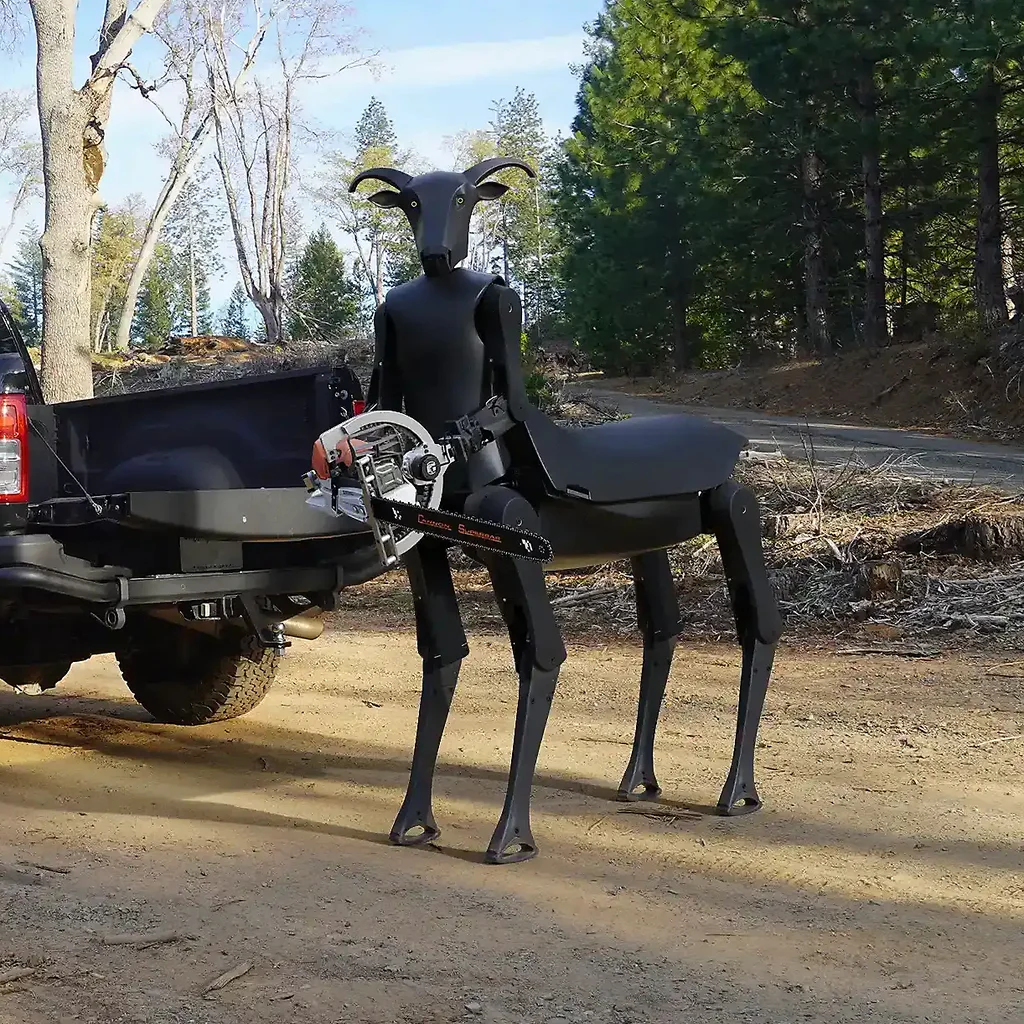
As innovation often involves rethinking existing paradigms, Satyress has taken a bold step by eliminating traditional dexterous hands in favor of tool-centric arms. Each arm is equipped with rugged sockets capable of interfacing with various power tools, such as chainsaws and drills. This design choice reflects a shift away from the fragile nature of humanoid hands, focusing instead on providing operators with the robust tools they need to complete their tasks effectively. By prioritizing tool functionality, Satyress has effectively redefined what a robotic assistant can be.
Designing for Durability and Safety
The engineering behind Threehalves goes beyond mere aesthetics; it emphasizes durability and ease of maintenance. All components of the robot can be replaced and recalibrated swiftly, ensuring minimal downtime. Furthermore, the design facilitates easy transport, with two units fitting comfortably side by side in a standard pickup truck. This practical approach is crucial for performance in the field, where efficiency and reliability are paramount.
Confronting the Future of Robotics
The release of Threehalves signifies a significant moment in the evolution of robotics. As the industry explores a plethora of body designs, each vying for its niche in a rapidly changing market, Satyress positions itself as a pioneer of the ‘anti-humanoid’ movement. The juxtaposition of Threehalves against other humanoid robots, which often prioritize emotional companionship or social interaction, highlights a broader conversation about the role of robots in society. Should they mimic humans, or should they be designed specifically for the tasks they are intended to perform?
A Thoughtful Approach to Safety
In an age where concerns about the implications of advanced robotics are mounting, Satyress demonstrates a responsible approach. The company has designed Threehalves with multiple fail-safes, including a manual kill switch and precise dimensional constraints that prevent it from navigating typical human environments. This foresight in design reflects a commitment to both user safety and ethical considerations in robotic deployment.
As we look to the future, the challenge remains: how can technology serve humanity while ensuring safety and efficiency? Satyress’s Threehalves may just be a significant step toward answering that question, embodying a vision where technology enhances human abilities rather than replacing them.
Editorial note: This article was created by A Bit Lavish Miami’s Magazine as an original editorial reinterpretation based on publicly available reporting. Original source: fastcompany.com. Read the original article here: https://www.fastcompany.com/91582982/satyress-threehalves-robot.
Images are used for editorial reference with source credit. If an image requires correction or removal, please contact A Bit Lavish.









Navigating the New Landscape of Home Affordability: A Deep Dive into Market Trends
Explore the evolving dynamics of home affordability in the U.S. housing market...
 2 Mins read

Rethinking Economic Narratives: The End of the K-Shaped Economy?
Treasury Secretary Scott Bessent declares the end of the K-shaped economy, but...
2 Mins read
Fantasy Baseball Trade Deadline Spurs Strategic Shifts in Bullpen Dynamics
The August 2026 trade deadline reshapes bullpen roles, impacting team strategies and...
1 Mins read



Jefry Yan Celebrations Mark a New Era in Major League Baseball
The global sports community recognizes Jefry Yan's achievements, highlighting the evolving landscape...
1 Mins read

Leave a comment