


The Genesis of Artificial Speech
The quest to replicate human speech dates back centuries, with early inventors attempting to mimic the complexities of our vocal apparatus. From the rudimentary bellows of the 1700s to the first electronic speech synthesizers like the Voder, introduced at the 1939 World’s Fair, the evolution of voice technology has been a fascinating journey. Each innovation has paved the way for the sophisticated systems we now take for granted in our daily interactions with technology.
Transforming Sound into Speech: The Role of Phonemes
At the heart of modern text-to-speech technology lies the concept of phonemes—the smallest units of sound that form words. Advanced computational systems break down language into these phonetic building blocks, allowing for the assembly of coherent speech. Unlike the robotic tones of early systems, today’s software utilizes machine learning to analyze and emulate human speech patterns, including intonation, rhythm, and even emotional inflections.
AI Learning: The New Frontier in Voice Synthesis
Machine learning has revolutionized how computers generate speech. By training AI with extensive datasets of recorded human voices, engineers can teach machines to recognize and reproduce the nuances of natural conversation. This technology allows devices to respond with a level of realism that can sometimes blur the lines between human and machine. As a result, virtual assistants like Siri and Alexa not only understand commands but engage with users in a surprisingly human-like manner, enhancing the user experience.
The Duality of Innovation: Benefits and Risks
While the advancements in speech synthesis technology offer significant benefits—such as aiding visually impaired individuals and enhancing in-car navigation systems—they also present potential risks. The emergence of realistic audio deepfakes has raised concerns about privacy and security. Unscrupulous individuals can exploit these technologies to impersonate others, leading to misinformation and fraud. As the technology progresses, it is imperative for innovators to also invest in tools that can detect and mitigate these risks.
Brand Strategy in the Age of AI
In a city like Miami, known for its vibrant culture and diverse population, the implications of speech technology extend beyond personal use. Brands are beginning to harness AI-driven voices to create more engaging and relatable customer interactions. From personalized marketing messages to customer service applications, the ability to communicate in a voice that resonates with the audience can significantly enhance brand loyalty and customer satisfaction. As companies navigate this new frontier, understanding the subtleties of human speech will be crucial in crafting authentic connections with consumers.
The Future of Communication
As we look ahead, the fusion of technology and human interaction will likely continue to evolve. The ability for AI to learn and adapt will not only refine how we communicate with machines but also how businesses connect with their clients. The journey of creating human-like speech is far from over, and as Miami becomes a hub for innovation, the city is poised to play a pivotal role in shaping the future of digital communication.
Editorial note: This article was created by A Bit Lavish Miami’s Magazine as an original editorial reinterpretation based on publicly available reporting. Original source: fastcompany.com. Read the original article here: https://www.fastcompany.com/91587783/how-siri-alexa-sound-so-human-computer-engineer-explains.
Images are used for editorial reference with source credit. If an image requires correction or removal, please contact A Bit Lavish.








Guardians of Innovation: The Rising Tide of Security Workers in Silicon Valley
Explore the critical role of security workers in Silicon Valley's AI landscape...
 2 Mins read

The New Chapter in AI: How Book Acquisitions are Reshaping Language Models
Explore how AI companies are acquiring physical books to enhance training for...
2 Mins read

Reassessing the Impact of Cell Phone Bans in Schools: A Miami Perspective
Explore the nuanced effects of cell phone bans in schools, with insights...
2 Mins read
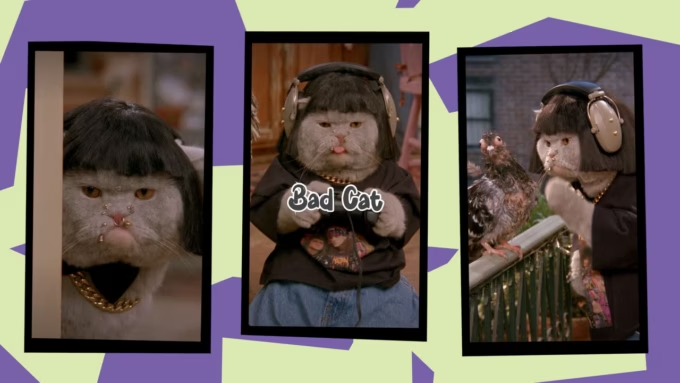


Navigating the AI-Infused Entertainment Landscape: The Rise of ‘Bad Cat’
Explore the intriguing intersection of AI and nostalgia in entertainment with the...
2 Mins read
