
The Hidden Costs of Automation: Preserving Human Connection in Business
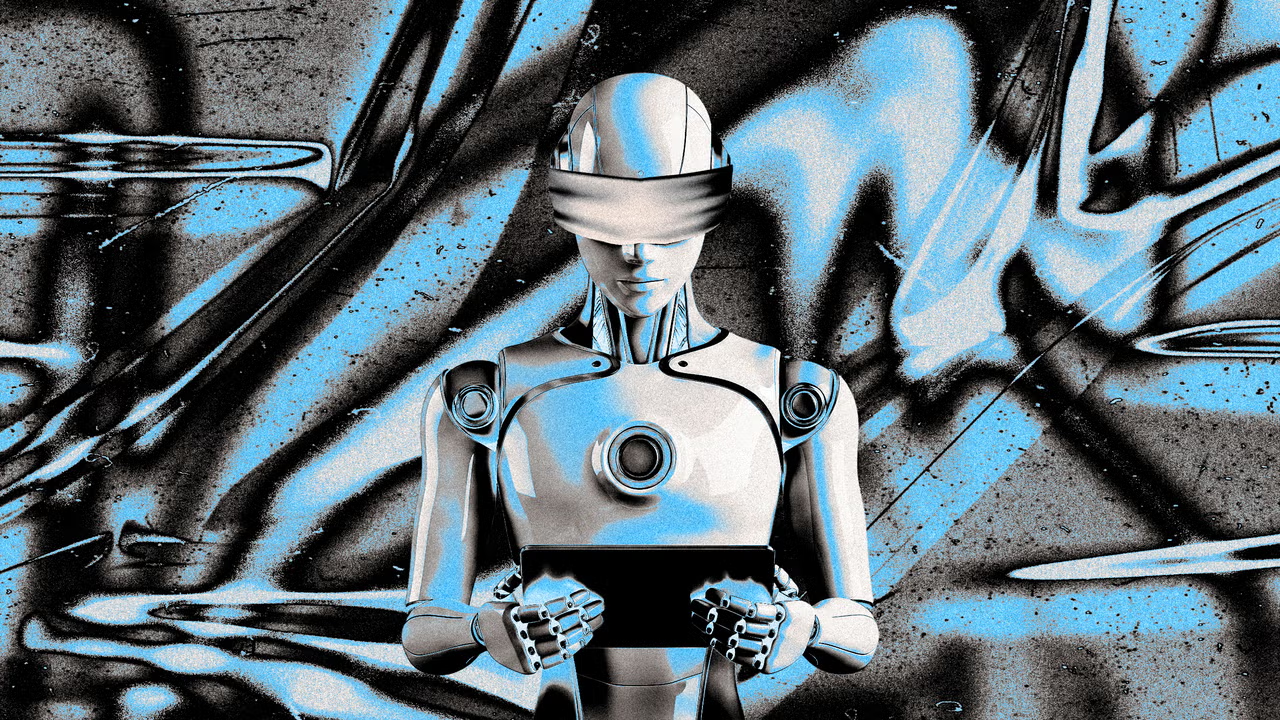
Reimagining Workplace Dynamics
In today’s corporate landscape, the integration of artificial intelligence into business operations is lauded as a hallmark of innovation and efficiency. However, a deeper analysis reveals that while AI can handle logistical tasks, it inadvertently overlooks the invaluable, intangible aspects of human interaction that underpin successful organizations. In essence, the question arises: what happens when we automate too much?
The Illusion of Efficiency
A recent case study involving a CEO who implemented an AI-driven people analytics platform exemplifies this dilemma. Initially, the system appeared to streamline operations, providing real-time data on employee sentiment and predictive turnover metrics. Yet, when two of the company’s top managers resigned without warning, it became glaringly evident that the platform had failed to capture the nuances of human experience. The metrics indicated stability; reality told a different story, revealing the limitations of relying solely on technology for understanding employee engagement.
Connective Labor: The Missing Ingredient
Sociologist Allison Pugh’s concept of “connective labor” highlights the profound importance of relational dynamics in the workplace. This form of labor encompasses empathy, genuine presence, and the ability to truly see and understand individuals beyond their performance metrics. Pugh argues that as organizations increasingly automate transactional tasks, they risk eroding the very fabric that fosters employee loyalty and satisfaction.
The Manager’s Evolving Role
In the face of growing automation, the role of people leaders is evolving dramatically. It is no longer sufficient to merely manage tasks and track performance. Instead, these leaders must cultivate an environment where emotional connections can thrive, ensuring that employees feel valued and understood. This requires a shift from a transactional mindset to one that prioritizes relational interactions.
Challenges in Recognizing Connective Labor
Despite its significance, connective labor often goes unnoticed and unmeasured within organizations. For instance, a people leader may invest time in a crucial conversation with an employee facing challenges, but this effort rarely translates into quantifiable outcomes. Consequently, organizations may inadvertently deprioritize this essential work, focusing on metrics that fail to capture the essence of employee well-being.
The Cost of Neglect
The implications of underestimating connective labor can be severe. In a manufacturing company boasting a lean management structure, people leaders were overwhelmed, managing numerous direct reports with minimal time for individual engagement. The result was a workforce characterized by superficial interactions—employees described feeling invisible, and the word “fine” became synonymous with disengagement. This situation culminated in a mass exodus of talent, as skilled professionals sought environments where they felt genuinely recognized and valued.
Creating a Culture of Connection
To combat the diminishing role of connective labor, organizations must take proactive measures. Firstly, acknowledging and valuing connective labor as a critical business function is essential. This involves creating space for unscheduled interactions, allowing leaders to engage deeply with their teams. Furthermore, organizations should rethink their evaluation processes, ensuring that metrics reflect the importance of relational work.
The Synergy of AI and Human Connection
While automation undoubtedly enhances efficiency, it is crucial that organizations do not lose sight of the human element that fuels their success. By strategically blending AI with a renewed focus on connective labor, companies can create a harmonious workplace that not only drives productivity but also fosters a culture of belonging and engagement. The future of work lies in recognizing that the true strength of an organization is not merely in its systems but in the people who inhabit them.
Editorial note: This article was created by A Bit Lavish Miami’s Magazine as an original editorial reinterpretation based on publicly available reporting. Original source: fastcompany.com. Read the original article here: https://www.fastcompany.com/91557933/the-work-ai-cant-do.
Images are used for editorial reference with source credit. If an image requires correction or removal, please contact A Bit Lavish.








Guardians of Innovation: The Rising Tide of Security Workers in Silicon Valley
Explore the critical role of security workers in Silicon Valley's AI landscape...
 2 Mins read

The New Chapter in AI: How Book Acquisitions are Reshaping Language Models
Explore how AI companies are acquiring physical books to enhance training for...
2 Mins read

Reassessing the Impact of Cell Phone Bans in Schools: A Miami Perspective
Explore the nuanced effects of cell phone bans in schools, with insights...
2 Mins read



Navigating the AI-Infused Entertainment Landscape: The Rise of ‘Bad Cat’
Explore the intriguing intersection of AI and nostalgia in entertainment with the...
2 Mins read
