
U.S. PCE Inflation Data Released, Markets Anticipate Federal Reserve’s Next Move

On August 26, 2026, the United States Bureau of Economic Analysis released the latest Personal Consumption Expenditures (PCE) inflation data, revealing a year-over-year increase of 4.2%. This figure is significant as it serves as the Federal Reserve’s preferred measure of inflation, influencing monetary policy decisions that have far-reaching implications for both the U.S. economy and global markets.
The data release comes at a pivotal moment as investors and policymakers closely monitor economic indicators to gauge the trajectory of inflation and the potential for further interest rate adjustments. Federal Reserve Chair Jerome Powell has indicated that sustained inflation above target levels could prompt additional tightening measures, which would directly impact borrowing costs and economic growth.
The heightened attention to this data is underscored by a backdrop of fluctuating consumer prices and ongoing concerns about economic stability. As inflation remains above the Federal Reserve’s target of 2%, market participants are bracing for potential shifts in the central bank’s policy stance, particularly ahead of the upcoming Federal Open Market Committee meeting scheduled for September 20, 2026.
Looking ahead, analysts predict that continued inflationary pressures could lead the Federal Reserve to increase interest rates by another 25 basis points in its next meeting. Such a move would mark a significant step in the Fed’s ongoing efforts to rein in inflation and stabilize the economy, affecting everything from mortgage rates to corporate borrowing. The implications of these decisions will resonate not only within the U.S. but also across international markets, influencing global economic dynamics.
Source: HOKANEWS.COM







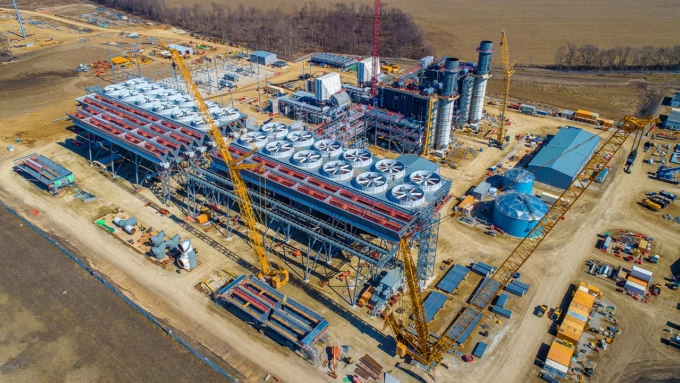
The Gas Renaissance: U.S. Data Centers Drive a New Era of Energy Development
Explore how America's data center surge is reshaping the gas power landscape,...
 ABL2 Mins read

Mastering the Art of Inquisitive Engagement: Elevating Conversations in Miami’s Boardrooms
Explore how to transform your meeting dynamics by asking impactful questions that...
ABL3 Mins read

US Economy Grows at 1.5% in Second Quarter, Confirming Earlier Estimates
The US economy's growth rate of 1.5% in Q2 underscores ongoing challenges...
 1 Mins read



U.S. Second Quarter GDP Growth Holds Steady at 1.5% in Revised Estimates
The confirmation of 1.5% GDP growth underscores ongoing economic challenges and inflationary...
1 Mins read

Leave a comment