
Who Owns Vespa and Where Are Its Scooters Manufactured?
 ABLUpdated 11 months Ago2 Mins read668
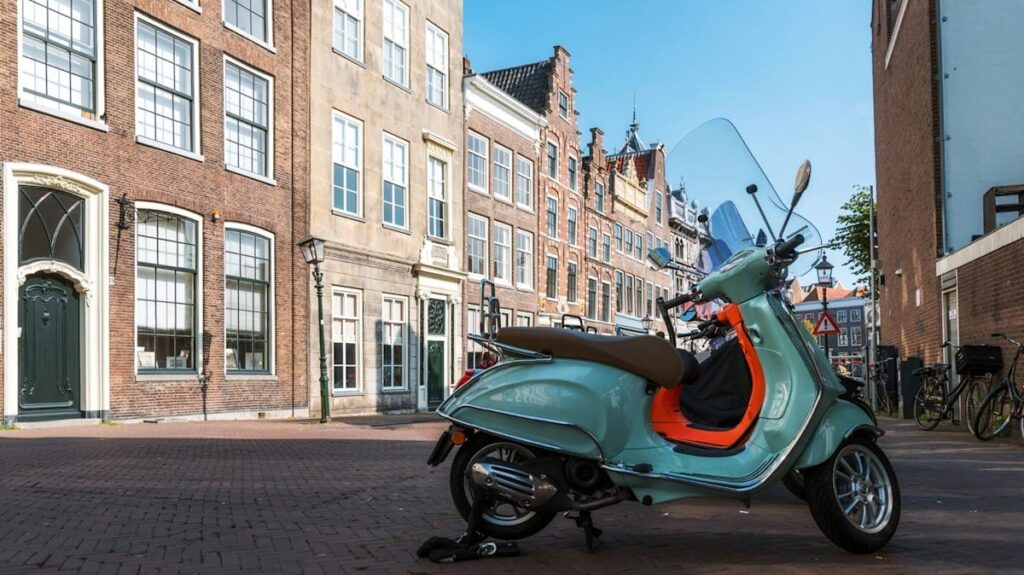
The Iconic Vespa: A Journey from War to Wheels
Today, the Vespa is synonymous with scooters, much like Band-Aid is with bandages or Kleenex with tissues. This wildly successful product originated from a factory in Pontedera, a quaint town in Tuscany, Italy. Remarkably, the company behind it, Piaggio & Co., didn’t start out making vehicles. When Rinaldo Piaggio took over the family business in 1884, the focus was on producing fittings for luxury ships. Under his leadership, Piaggio later pivoted into aviation, building aircraft engines and seaplanes. By the 1930s, it had grown into one of Italy’s largest aeronautical companies.
The Impact of World War II
However, this success took a brief pause during World War II when the Pontedera factory was bombed. After the war, the Piaggio family faced the daunting task of rebuilding their factory and rethinking their entire business model. For Enrico Piaggio, Rinaldo’s son, the options were limited: kitchenware or small vehicles. This necessity led to the creation of the iconic Vespa in 1946.
The Vision Behind the Design
Interestingly, the engineer who designed the Vespa, Corradino D’Ascanio, actually disliked motorcycles. He found them noisy, dirty, and bulky. His goal was to reimagine the ideal two-wheeler—a simple, clean, and easy-to-ride machine. For many people today, the Vespa isn’t even considered a motorcycle. In the post-war era, fuel was scarce, cars were too expensive, and motorcycles were intimidating. There was a clear need for an in-between vehicle: something efficient, affordable, and simple. Decades later, we can confidently say that the Vespa filled that gap perfectly.
Manufacturing Legacy
Just a year after its debut, Piaggio was rolling out over 500 Vespas every month, and the numbers have only increased since then. Over 19 million units have been sold to date. Remarkably, Vespas are still manufactured in Piaggio’s original plant in Pontedera, Italy. To meet global demand, Piaggio also produces scooters in Baramati, India, for the local market and in Vinh Phuc, Vietnam, for Southeast Asia.
The Pontedera facility remains the company’s headquarters and is home to the Museo Piaggio, the largest Italian museum dedicated to two-wheelers. Inside, visitors can see everything from the very first 1946 Vespa prototype to the model Audrey Hepburn and Gregory Peck rode in the 1953 film Roman Holiday, along with several other limited edition models that have shaped pop culture.
Challenges and Resilience
Despite its iconic status, Piaggio is no longer the family-owned business it once was. As the company grew rapidly, it faced its share of ups and downs. In the 1980s, Piaggio briefly pulled out of the U.S. market, leaving customers wondering what had happened to Vespa. By the 1990s, the company was under significant financial strain and could easily have become one of those classic motorcycle brands that are no longer around.
However, a turning point came in 2003 when Italian businessman Roberto Colaninno, through his holding company Immsi S.p.A., took over. Under his leadership, Piaggio acquired Aprilia and Moto Guzzi, consolidating into one of Europe’s largest motorcycle and scooter manufacturers. In 2006, Piaggio went public on the Italian Stock Exchange. Today, the Colaninno family, through Immsi, holds the largest stake in the company, which is now known as Piaggio & C. S.p.A.
Conclusion
The Vespa is more than just a scooter; it’s a symbol of resilience, innovation, and Italian culture. From its humble beginnings in a post-war landscape to becoming a global icon, the Vespa continues to roll off the production line, capturing the hearts of riders around the world. Whether you’re zipping through the streets of Rome or cruising along coastal roads, the Vespa remains a timeless choice for those seeking style and practicality on two wheels.








Alena Ostapenko’s Current WTA Ranking Ahead of Toronto Tournament on August 4, 2026
Ostapenko's ranking impacts global tennis dynamics as she prepares for a key...
 1 Mins read
Alexander Rossi Conducts IndyCar IR-28 Test Ahead of Upcoming Season
Rossi's test underscores the evolving competitive landscape of IndyCar racing, crucial for...
1 Mins read
Tolkien Conference Switzerland 2027 Announces Keynote Speakers John Garth and Martin Simonson
The upcoming Tolkien Conference highlights the enduring global fascination with Middle-earth and...
1 Mins read


New Technology Will Help Keep Your Smart Home from Becoming Obsolete
I understand how that could positively effect your body, but alchemizing means...
ABL2 Mins read
