
The Future of Luxury Automotive: Electrification Takes Center Stage
As the luxury automotive industry accelerates beyond traditional combustion engines, luxury carmakers are increasingly embracing fully electric vehicles (EVs). This shift is not merely a response to regulatory pressures but a strategic move to capture new audiences, test advanced technologies, and future-proof their offerings. From performance sedans to grand touring SUVs and specialty convertibles, electrification is reshaping design and engineering, evolving what premium motoring means in an increasingly carbon-conscious world. The latest electric models from brands like Porsche, Audi, Mercedes-Benz, Rolls-Royce, Maserati, BMW, Cadillac, and Lucid demonstrate that speed and design innovation can coexist on a zero-emissions platform, transcending mere compliance with sustainability standards.
2025 Porsche Taycan
Porsche’s 2025 Taycan represents a significant midcycle refresh, introducing substantial upgrades in battery, charging, and motor technology, alongside subtle styling refinements that echo the new Macan EV while preserving the sedan’s sporty identity. The Taycan 4S model is powered by a permanent-magnet electric drivetrain, delivering 536 hp and 512 lb-ft of torque. It accelerates from 0 to 60 mph in just 3.2 seconds, covering the quarter mile in 11.4 seconds. The vehicle maintains composure and precise steering thanks to rear-axle steering and a refined suspension.
Equipped with an 89-kWh entry-level battery, the Taycan boasts an EPA-rated range of 406 km and can recharge from 5 to 80 percent in just 18 minutes using a 350-kW Level 3 charger. Inside, the cabin combines driver-focused ergonomics with high-end finishes, featuring a curved 16.8-inch gauge display and dual central touchscreens. Starting at USD 120,495, the Taycan 4S exemplifies how luxury brands are embedding performance, advanced technology, and daily usability into an all-electric platform.
Audi S e-tron GT
The 2025 Audi S e-tron GT emerges as the refreshed starting point of the e-tron GT family, boasting performance credentials that position it well above typical entry trims. Equipped with dual permanent-magnet motors, it delivers an impressive 670 hp and accelerates from 0 to 60 mph in just 3.3 seconds with launch control. A new 105-kWh battery extends the range to an estimated 483 km, while an upgraded 320-kW charging system allows the battery to charge from 10 to 80 percent in under 20 minutes.
Exterior updates include redesigned fascias, new wheel choices, and four additional paint options. The cabin introduces a reworked steering wheel and an optional glass roof with adjustable transparency. Audi has made all-wheel steering standard, enhancing agility and cornering stability in this 5,100-lb luxury sedan. Priced from USD 127,700, the S e-tron GT underscores Audi’s commitment to balancing acceleration, range, and design to meet the expectations of premium consumers.
Mercedes-Benz EQS SUV
The 2025 Mercedes-Benz EQS SUV anchors the brand’s electric portfolio as its most luxurious three-row EV. Built on a dedicated EV platform, it offers up to 520 km of range from a 118-kWh battery and comes in multiple configurations, from the EQS 450+ to the Maybach EQS 680. Performance spans from 355 hp in the base model to 649 hp in the Maybach, with 0–60 mph times as quick as 4.1 seconds. Despite its size, four-wheel steering and adaptive air suspension enhance maneuverability, although handling remains less agile than some rivals.
Inside, the SUV showcases the full suite of Mercedes technology, including the 56-inch Hyperscreen, biometric personalization, and advanced driver assistance systems. With seating for up to seven and luxury features such as four-zone climate control and HEPA filtration, the EQS SUV reinforces its flagship status. While its price starts above USD 100,000 and climbs steeply in higher trims, it represents Mercedes-Benz’s effort to define electric luxury through comfort, digital innovation, and brand cachet.
Rolls-Royce Spectre
Rolls-Royce’s entry into the electric era comes with the Spectre, a two-door coupé that translates the brand’s hallmark refinement into a fully electric format. Powered by a dual-motor all-wheel drive system producing up to 577 horsepower, the Spectre accelerates from 0 to 60 mph in 3.7 seconds while maintaining the quiet composure expected of the marque. Range is estimated at up to 468 km, although larger 23-inch wheels may reduce efficiency—a trade-off many buyers are likely to accept.
Charging performance peaks at 200 kW, delivering around 314 km of range in half an hour on a DC fast charger. For 2025, the Black Badge variant raises output to 659 horsepower and introduces additional driving modes, positioning it as the most powerful model in Rolls-Royce history. With a starting price of roughly USD 400,000 and extensive personalization options, the Spectre demonstrates how Rolls-Royce intends to sustain its luxury ethos while advancing into a zero-emissions future.
Maserati GranCabrio Folgore
The GranCabrio Folgore marks Maserati’s first fully electric convertible and sets a benchmark as the fastest open-top EV on the market. Powered by three electric motors delivering up to 818 hp and 1,350 Nm of torque, it accelerates from 0 to 100 km/h in 2.8 seconds and reaches a top speed of 290 km/h. Its 800-volt architecture supports rapid charging—adding 100 km of range in just five minutes—while total driving range is estimated at 375 km on a full charge.
Built with lightweight aluminum and magnesium components to preserve rigidity, the GranCabrio retains the brand’s signature grand touring feel with an added layer of electrified performance. Inside, a four-seat configuration, premium finishes, and technology features such as a 12.3-inch infotainment system reinforce its luxury positioning. Priced just above USD 206,000, the GranCabrio Folgore distinguishes itself as the only luxury electric cabriolet currently available, combining exclusivity with Maserati’s Formula E-inspired engineering.
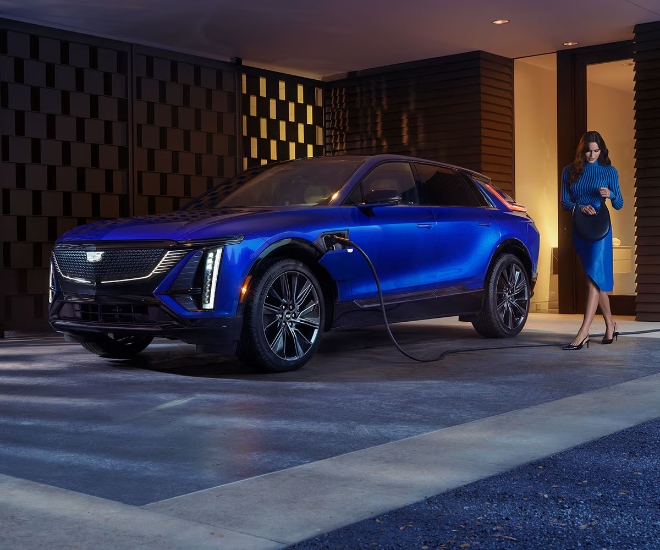
2026 Cadillac Lyriq
Cadillac’s first mass-produced EV, the 2026 Lyriq, has quickly become the cornerstone of the brand’s electrification strategy. Building on the earlier model, the Lyriq offers expanded trims, improved technology, and the introduction of the high-performance Lyriq-V. Available with single-motor rear-drive or dual-motor all-wheel drive, the Lyriq delivers up to 515 hp and 450 lb-ft of torque, with the V variant pushing output to 615 hp and reaching 100 km/h in 3.3 seconds.
Range is competitive, with the rear-drive version achieving an EPA-estimated 525 km, while the all-wheel-drive and V models balance performance with 304–488 km. Charging peaks at 190 kW, adding roughly 161 km in 15 minutes. Inside, a 33-inch curved 9K display dominates the cabin, integrating driver information with infotainment functions. Priced just over USD 60,000, the Lyriq stands out as a value-driven luxury EV that pairs distinctive styling with credible range and technology.
BMW i7
The i7 marks BMW’s first fully electric 7 Series, setting the benchmark for how traditional luxury sedans are being reimagined for a decarbonized future. Built on the brand’s flagship platform, the i7 combines long-range capability with advanced digital features designed to appeal to executives and tech-forward buyers alike. Powered by a dual-motor setup producing 544 hp and 745 Nm of torque, the i7 accelerates from 0–100 km/h in 4.7 seconds.
Efficiency remains central to the package, with a WLTP-certified range of up to 625 km and consumption as low as 18.4 kWh/100 km. High-power charging at 195 kW restores 100 km of range in just six minutes. Inside, the i7 leans heavily into immersive technology, featuring a curved 14.9-inch display and a 31.3-inch Theatre Screen in the rear cabin. Priced similarly to its combustion 7 Series siblings, the i7 signals BMW’s strategy to shift its core clientele into electrification without compromising performance or prestige.
Lucid Air
The Lucid Air has positioned itself as one of the most advanced electric sedans on the market, competing directly with legacy luxury brands by focusing on range, performance, and in-cabin technology. Built on a platform developed in California, the Air offers configurations that extend beyond 805 km of EPA-rated range, making it a benchmark for long-distance electric driving. Its 900-volt architecture supports ultra-fast charging that can add 322 km in about 12 minutes.
Power output varies across the range, with the flagship Sapphire producing 1,234 hp and sprinting from 0–60 mph in under two seconds. The interior underscores Lucid’s ambition to combine sustainability with luxury, featuring soft-touch finishes and a sizeable frunk and trunk. The 34-inch curved Glass Cockpit display integrates key controls with Apple CarPlay, Android Auto, and Alexa. Priced competitively from USD 70,900 to USD 249,000 depending on trim, the Air represents Lucid’s attempt to establish itself as a credible long-term player in the luxury EV space.
In conclusion, the luxury automotive landscape is undergoing a significant transformation as brands embrace electrification. The latest offerings demonstrate that luxury, performance, and sustainability can coexist, paving the way for a new era of premium motoring. For more on the latest in luxury motoring, click here.








Alena Ostapenko’s Current WTA Ranking Ahead of Toronto Tournament on August 4, 2026
Ostapenko's ranking impacts global tennis dynamics as she prepares for a key...
 1 Mins read

Alexander Rossi Conducts IndyCar IR-28 Test Ahead of Upcoming Season
Rossi's test underscores the evolving competitive landscape of IndyCar racing, crucial for...
1 Mins read

Tolkien Conference Switzerland 2027 Announces Keynote Speakers John Garth and Martin Simonson
The upcoming Tolkien Conference highlights the enduring global fascination with Middle-earth and...
1 Mins read


New Technology Will Help Keep Your Smart Home from Becoming Obsolete
I understand how that could positively effect your body, but alchemizing means...
 ABL2 Mins read
