
Cultivating Creativity: The Art of Embracing Boredom in a Hyper-Connected World
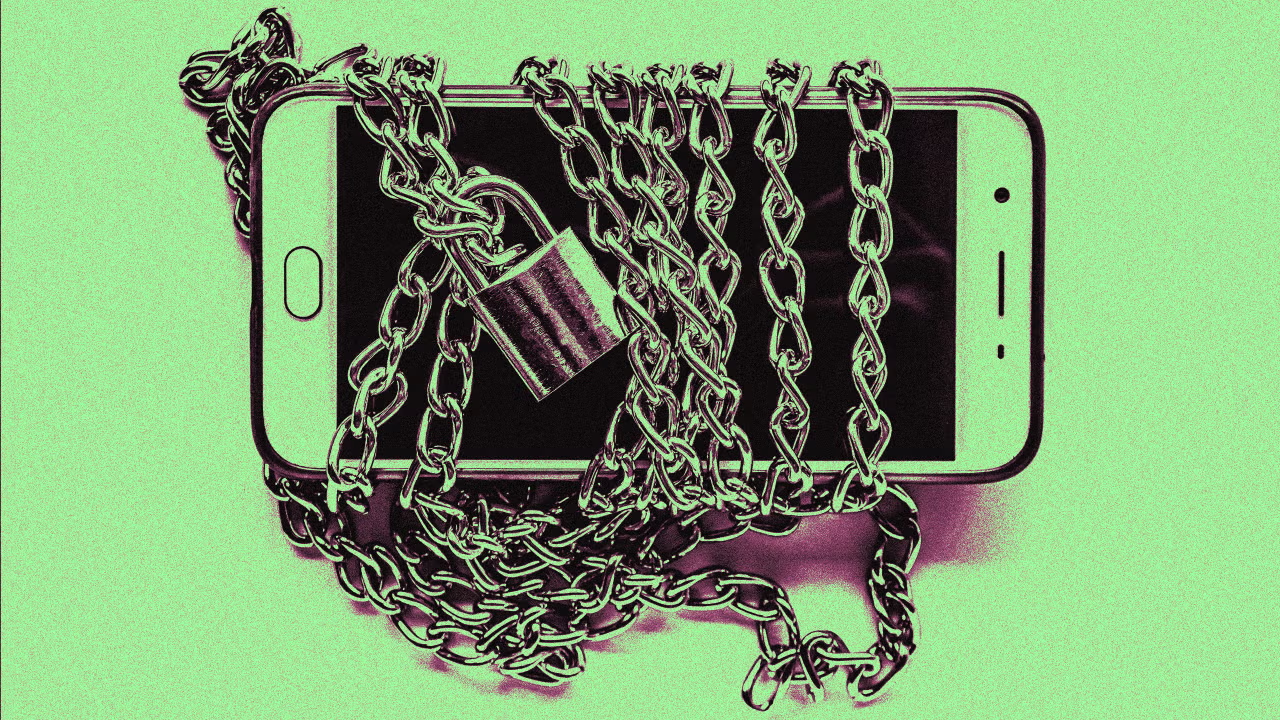
Redefining Our Relationship with Distraction
In an era dominated by connectivity and information overload, the challenge of maintaining focus and nurturing creativity is becoming increasingly prevalent. As individuals immersed in knowledge work, we often find ourselves ensnared by the allure of digital distractions, sacrificing meaningful engagement in favor of instant gratification. Yet, a growing body of insight suggests that the antidote to this chaos might lie in the very practice we often shun: boredom.
The Case for Boredom
Imagine trading the incessant scrolling through social media for moments of stillness, where your mind is free to wander. A recent personal experiment illustrates the potential benefits of intentionally engineering boredom into our daily lives. By limiting digital consumption and reframing waiting periods as opportunities for reflection rather than distractions, one can unlock newfound reservoirs of creativity. During this week-long endeavor, ideas blossomed during mundane moments—on a train ride, or while gazing out of an office window—transforming moments previously filled with anxiety into fertile ground for innovation.
Insights from Cognitive Science
While the connection between boredom and creativity may seem intuitive, it reveals a complex interplay according to experts in cognitive science. Dr. James Danckert, a leading researcher in the field, posits that boredom might not inherently foster creativity. Instead, he suggests that periods of disengagement from stimulating environments allow the mind to reboot, creating a fertile landscape for creative thought. This perspective aligns with findings that indicate a nuanced relationship where boredom can serve as a catalyst for seeking novelty, rather than simply a void to be filled.
The Mind’s Journey Through Stillness
Dr. Daniel Hermens offers a balanced view, highlighting that boredom, when embraced in moderation, can act as a circuit-breaker in a world of relentless stimulation. This mindful approach to boredom encourages individuals to channel their mental energy toward exploration and creativity, steering away from immediate dopamine-releasing distractions. The act of allowing one’s thoughts to drift can lead to unexpected insights, fostering a deeper engagement with personal goals and creative pursuits.
Distinguishing Boredom from Mindfulness
Understanding the distinction between boredom and mindfulness is crucial in this discourse. While boredom often carries a negative connotation, mindfulness embodies a more positive engagement with the present. This delicate balance suggests that embracing moments of boredom can lead to a form of mindfulness that effectively nurtures creativity. As individuals become accustomed to unstructured time, they may find themselves more inclined to grapple with ideas and ask questions—an organic process that ignites creative thinking.
The Risks of Over-Indulgence
However, it is essential to recognize that excessive boredom can also lead to adverse effects, including rumination and disengagement. Striking the right balance is key; a mind perpetually overstimulated risks burnout, while one that is chronically understimulated may spiral into apathy. The journey toward creativity requires a mindful navigation of these extremes, allowing for both inspiration and reflection without veering into the territory of negative mental health outcomes.
Creating Habits for Lasting Change
As we learn to embrace and harness the power of boredom, developing intentional habits becomes paramount. Creativity demands time, effort, and focus, and cultivating practices that invite exploration can transform our relationship with idleness. By consciously choosing to redirect boredom into creative tasks—rather than succumbing to familiar distractions—we can foster an environment ripe for innovation. As Dr. Heather Lench suggests, integrating creativity into daily routines is not just advantageous; it is a practice worthy of commitment.
Editorial note: This article was created by A Bit Lavish Miami’s Magazine as an original editorial reinterpretation based on publicly available reporting. Original source: fastcompany.com. Read the original article here: https://www.fastcompany.com/91564137/what-happened-when-i-engineered-more-boredom-into-my-life.
Images are used for editorial reference with source credit. If an image requires correction or removal, please contact A Bit Lavish.









Guardians of Innovation: The Rising Tide of Security Workers in Silicon Valley
Explore the critical role of security workers in Silicon Valley's AI landscape...
 2 Mins read

The New Chapter in AI: How Book Acquisitions are Reshaping Language Models
Explore how AI companies are acquiring physical books to enhance training for...
2 Mins read

Reassessing the Impact of Cell Phone Bans in Schools: A Miami Perspective
Explore the nuanced effects of cell phone bans in schools, with insights...
2 Mins read



Navigating the AI-Infused Entertainment Landscape: The Rise of ‘Bad Cat’
Explore the intriguing intersection of AI and nostalgia in entertainment with the...
2 Mins read
