
Navigating American Identity: A Shift in National Pride
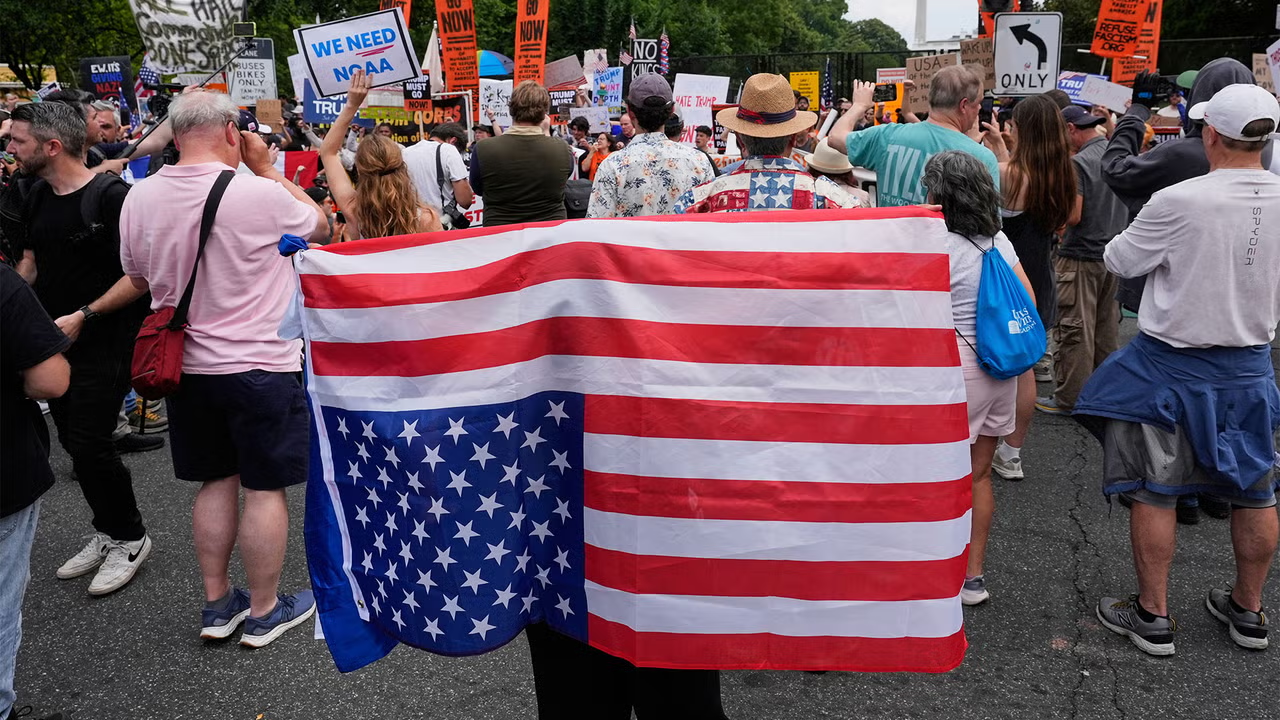
The Pulse of Patriotism
In a landscape marked by political upheaval and social change, the sentiment of national pride among Americans has reached a notable low. Recent polling data reveals that only 53% of adults express being ‘very’ or ‘extremely’ proud to be American, a stark decline from earlier years. This trend emerges from a backdrop of significant events over the past decade, including turbulent political leadership, the COVID-19 pandemic, and rising economic challenges.
Shifting Sentiments Amidst Turbulence
The decline in pride, particularly among Democrats and independents, highlights a broader discontent with the direction of the nation. As political divisions deepen, the sentiment towards key aspects of American identity—such as pride in the military and the democratic process—has notably waned. For instance, pride in democracy has dropped 14 percentage points since 2017, while pride in the armed forces has fallen by 19 points. This suggests that the political climate has not only polarized the nation but also affected how individuals perceive their identity as Americans.
The Role of Politics in National Identity
Interestingly, partisan lines appear to delineate the experience of national pride. A staggering 70% of Republicans report being extremely proud of their country, in contrast to only 14% of Democrats. This discrepancy illustrates how political affiliation shapes personal identity in contemporary America. Many Republicans express staunch pride in the military, viewing it as a symbol of national strength, while Democrats increasingly question the actions and historical relevance of such institutions.
A Generational Divide
Generational perspectives further complicate the narrative of American pride. Older Americans, particularly those over 60, are significantly more likely to assert that being American is crucial to their identity. In contrast, only about one-third of younger adults under 30 share this sentiment. This divide raises questions about how emerging generations perceive their role within the national narrative and the values attributed to American identity.
Race and Ethnicity: The Complex Fabric of Identity
The survey also reveals how race and ethnicity influence the conception of personal identity. A majority of Black Americans (73%) prioritize their racial or ethnic identity over their national identity, reflecting the complex social dynamics at play. For many, the experience of being Black in America carries historical weight and contemporary significance that often supersedes national pride. Hispanic Americans also demonstrate a similar trend, with many valuing their cultural heritage as an integral part of their identity.
The Essence of American Identity
Despite the declining pride and complex factors influencing identity, a common thread persists: the appreciation for the freedoms afforded by American citizenship. Many individuals, regardless of their political affiliation or background, express gratitude for the liberties that come with being American. This duality of pride and criticism suggests that while many may feel disillusioned with the nation’s trajectory, they still hold onto the core values that define the American experience.
Looking Ahead: A Call for Unity
The findings of the recent polls illuminate a pressing need for dialogue and understanding across the political spectrum. As the nation grapples with its identity, fostering a sense of unity and common purpose may be essential in rekindling the pride that once defined the American spirit. Engaging in conversations that bridge divides and embracing the rich tapestry of experiences that constitute American identity could pave the way for a more inclusive and proudly patriotic future.
Editorial note: This article was created by A Bit Lavish Miami’s Magazine as an original editorial reinterpretation based on publicly available reporting. Original source: fastcompany.com. Read the original article here: https://www.fastcompany.com/91566651/new-gallup-poll-shows-only-53-u-s-very-proud-american.
Images are used for editorial reference with source credit. If an image requires correction or removal, please contact A Bit Lavish.








Guardians of Innovation: The Rising Tide of Security Workers in Silicon Valley
Explore the critical role of security workers in Silicon Valley's AI landscape...
 2 Mins read

The New Chapter in AI: How Book Acquisitions are Reshaping Language Models
Explore how AI companies are acquiring physical books to enhance training for...
2 Mins read

Reassessing the Impact of Cell Phone Bans in Schools: A Miami Perspective
Explore the nuanced effects of cell phone bans in schools, with insights...
2 Mins read
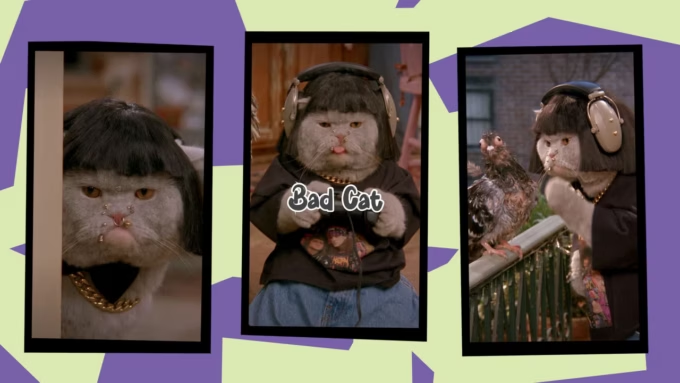


Navigating the AI-Infused Entertainment Landscape: The Rise of ‘Bad Cat’
Explore the intriguing intersection of AI and nostalgia in entertainment with the...
2 Mins read
