
Unveiling the Truth: The Structural Integrity of Chávez’s Housing Legacy
Shifting Narratives in Venezuelan Housing
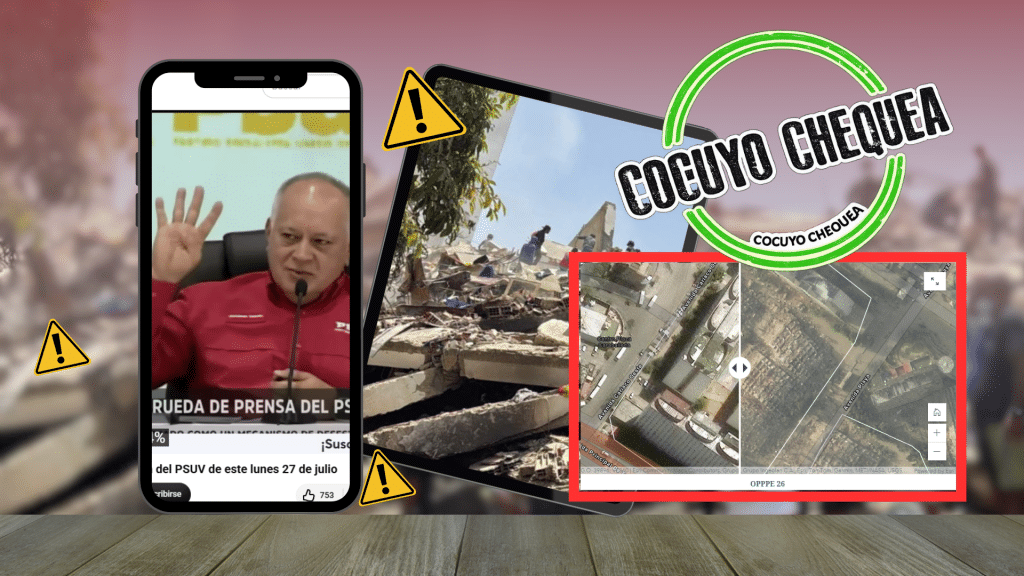
In the wake of seismic events that struck Venezuela’s Central Coast, a heated debate has surfaced regarding the integrity of housing projects initiated under the late President Hugo Chávez. Diosdado Cabello, a leading figure in the ruling Partido Socialista Unido de Venezuela (PSUV), claimed that only 4% of the homes constructed during Chávez’s tenure were damaged. This assertion has been met with skepticism by independent researchers and journalists.
A Closer Look at the Data
Independent investigations, notably one conducted by Armando.info, reveal a more alarming picture. The study assessed the structural status of nine housing complexes built by the Oficina Presidencial de Planes y Proyectos Especiales (Opppe) in La Guaira. The findings indicate that out of 43 towers, a staggering 37.2% collapsed entirely, while 62.8% sustained severe structural damage, rendering them uninhabitable.
The Complexity of Damage Assessment
One of the core issues in the government’s claim lies in the ambiguity surrounding what constitutes ‘damage.’ The distinction between minor and severe structural impairments is critical. While non-structural issues like surface cracks may be dismissed, serious concerns such as fractured columns or complete collapses present a risk that cannot be overlooked. The lack of clarity in these definitions complicates the public’s ability to verify the government’s assertions.
Missing Accountability
Another significant gap in the narrative is the absence of a publicly accessible inventory of the affected buildings. As of late July 2026, no comprehensive census detailing the condition of state-built residences has been released. The absence of such data raises questions about transparency and accountability in the evaluation process. The government has mentioned assessing around 50,000 structures, but the lack of detailed reports undermines the credibility of these claims.
Revisiting the Aftermath of Disaster
The impact of the seismic events serves as a critical lens through which to assess the effectiveness of the Gran Misión Vivienda Venezuela program. As investigations continue, the contrasting narratives about the durability of these constructions highlight the need for further inquiry and independent verification. The ramifications extend beyond mere statistics; they touch on the realities faced by Venezuelan families who rely on these structures for safety and stability.
Understanding the Broader Implications
This discourse surrounding the housing projects of Chávez’s era is not merely an academic exercise; it resonates deeply within the context of Venezuelan society today. As the nation grapples with the consequences of past governance and natural disasters, the quest for accurate information becomes paramount. For residents in Miami with ties to Venezuela, these stories echo the challenges of ensuring safe and sustainable living conditions in a rapidly changing landscape.
Conclusion: The Call for Transparency
The assertion that merely 4% of Chávez-era housing sustained damage is fraught with challenges and contradictions. The realities uncovered by independent investigations demand a more nuanced understanding of the situation. As the diaspora community in Miami watches closely, the call for transparency and accountability in the assessment of these structures becomes increasingly important.
Editorial note: This article was created by A Bit Lavish Miami’s Magazine as an original editorial reinterpretation based on publicly available reporting. Original source: efectococuyo.com. Read the original article here: https://efectococuyo.com/cocuyo-chequea/solo-4-de-las-obras-construidas-por-chavez-sufrieron-danos-como-dice-diosdado-cabello/.
Images are used for editorial reference with source credit. If an image requires correction or removal, please contact A Bit Lavish.






Dinorah Figuera: A Vision for Venezuela’s Institutional Renaissance
Dinorah Figuera returns to Venezuela with a commitment to reinstitutionalization, aiming to...
 2 Mins read
Vargas: Un Camino hacia la Reconstrucción Sostenible
Un análisis sobre el reciente acuerdo en Vargas para la reconstrucción post-sísmica,...
3 Mins read
Resilience Amidst Ruin: The Aftermath of Caraballeda’s Earthquake
Exploring the heart-wrenching impact of the recent earthquake on the educational community...
 ABL2 Mins read


Navigating the Waters of Dialogue: Venezuela’s Political Landscape in Flux
As Venezuela's political factions prepare for a critical dialogue, the return of...
ABL3 Mins read

Leave a comment