
Reassessing the Impact of Cell Phone Bans in Schools: A Miami Perspective
Echoes of the Past
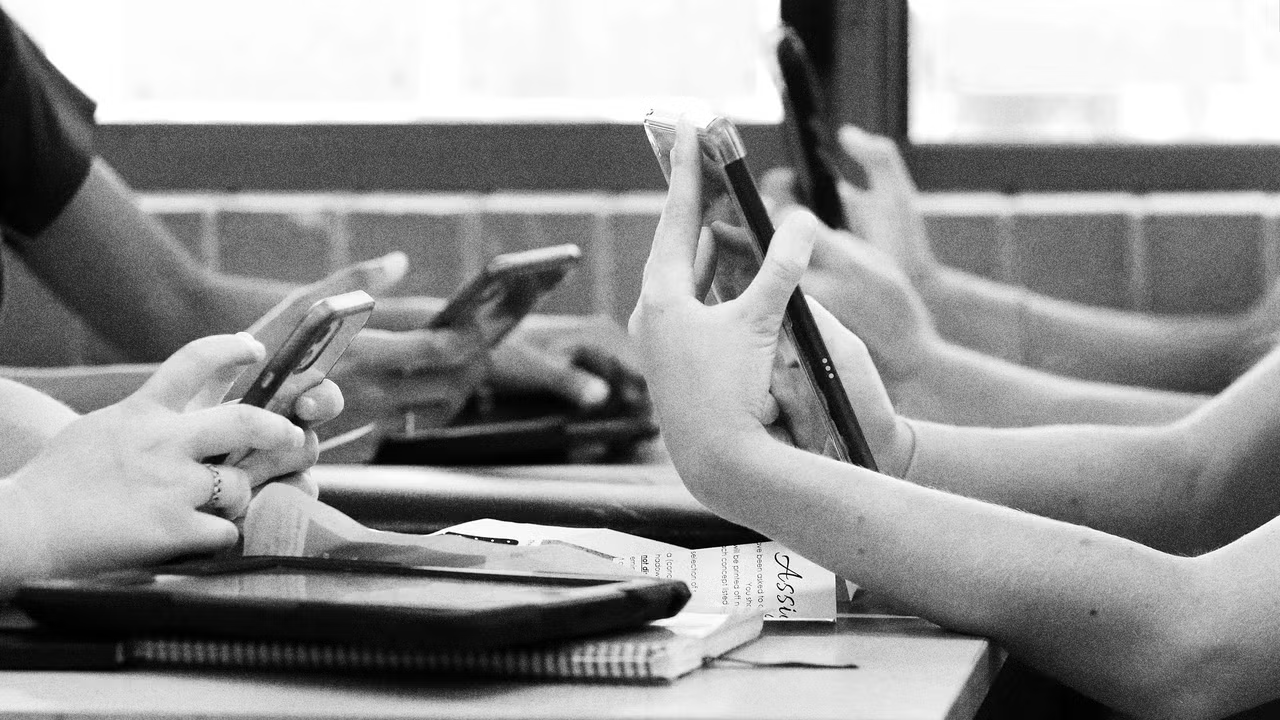
The debate surrounding cell phone bans in schools is far from new. In fact, this practice dates back to 1989, when Maryland implemented restrictions to curb communication among students potentially involved in illicit activities. Fast forward to 2009, and a staggering 90% of schools had adopted similar measures. However, the landscape began to shift as smartphones became ubiquitous, prompting parents to advocate for their children’s connectivity during emergencies. As we witness a resurgence of phone bans in educational institutions, it is essential to scrutinize their efficacy in fostering academic achievement and enhancing the learning environment.
A Surprising Study
Recent research from Stanford University and the National Bureau of Economic Research challenges the anticipated benefits of these bans. Contrary to the expectations of educators and policymakers, the findings indicate negligible improvements in test scores within schools enforcing these restrictions over the past three years. Jason Baron, a co-author of the study and economist at Duke University, remarked that while the initial hypothesis suggested a correlation between the absence of phones and heightened student focus, the reality proved more complex. Simply removing phones does not guarantee that students will engage more deeply with their studies; distractions may simply shift form.
Beyond Test Scores
The study sheds light on the broader implications of cell phone bans. Attendance rates, chronic absenteeism, and incidents of online bullying showed no significant changes following the implementation of these restrictions. Baron suggests that the simplicity of removing phones overlooks the multifaceted nature of student engagement. Instead of focusing solely on academics, the social dynamics of school life play a crucial role. Students may resort to daydreaming or engaging in idle distractions instead of enhancing their academic focus.
Potential Benefits and Long-Term Perspectives
While the immediate outcomes of phone bans may appear lackluster, there are hints of potential benefits that could emerge over time. Data collected over three years indicates that, despite an initial increase in disciplinary issues and reported declines in student well-being, by the third year, the environment began to stabilize. Reports suggest that students’ well-being improved, and disciplinary incidents reverted to pre-ban levels. This evolution raises an important question: what are the ultimate objectives behind enforcing such bans? If the goal extends beyond mere academic performance to promoting a healthier school culture, the results may warrant further exploration.
The Pulse of Public Opinion
Despite the mixed findings, public support for cell phone bans remains robust. A Pew Research Center survey conducted in late July revealed that over 75% of adults favor restricting cellphones in middle and high school classrooms. For the first time, a majority advocate for a complete ban throughout the school day. Across the United States, the trend is clear: more than 30 states have introduced some form of restrictions, with only seven states permitting unrestricted use of these devices.
Miami’s Educational Landscape
As Miami continues to grow both culturally and economically, the implications of educational policies resonate deeply within the community. The influx of families and a diverse student population heighten the importance of creating an optimal learning environment. The findings from studies like Baron’s can inform local educational leaders and policymakers as they navigate the delicate balance between technology integration and fostering a productive learning atmosphere. As Miami’s schools consider the efficacy of cell phone bans, it is essential to engage in dialogue about their long-term impacts and explore innovative strategies that combine technology with educational excellence.
Editorial note: This article was created by A Bit Lavish Miami’s Magazine as an original editorial reinterpretation based on publicly available reporting. Original source: fastcompany.com. Read the original article here: https://www.fastcompany.com/91600222/more-schools-are-banning-cell-phones-the-academic-benefits-havent-materialized.
Images are used for editorial reference with source credit. If an image requires correction or removal, please contact A Bit Lavish.








Guardians of Innovation: The Rising Tide of Security Workers in Silicon Valley
Explore the critical role of security workers in Silicon Valley's AI landscape...
 2 Mins read

The New Chapter in AI: How Book Acquisitions are Reshaping Language Models
Explore how AI companies are acquiring physical books to enhance training for...
2 Mins read

Navigating the AI-Infused Entertainment Landscape: The Rise of ‘Bad Cat’
Explore the intriguing intersection of AI and nostalgia in entertainment with the...
2 Mins read



The Rise of Identity Theft in the Age of AI: Jason Isbell’s Landmark Lawsuit Against Suno
Explore the implications of Jason Isbell's lawsuit against AI music generator Suno,...
3 Mins read

Leave a comment